

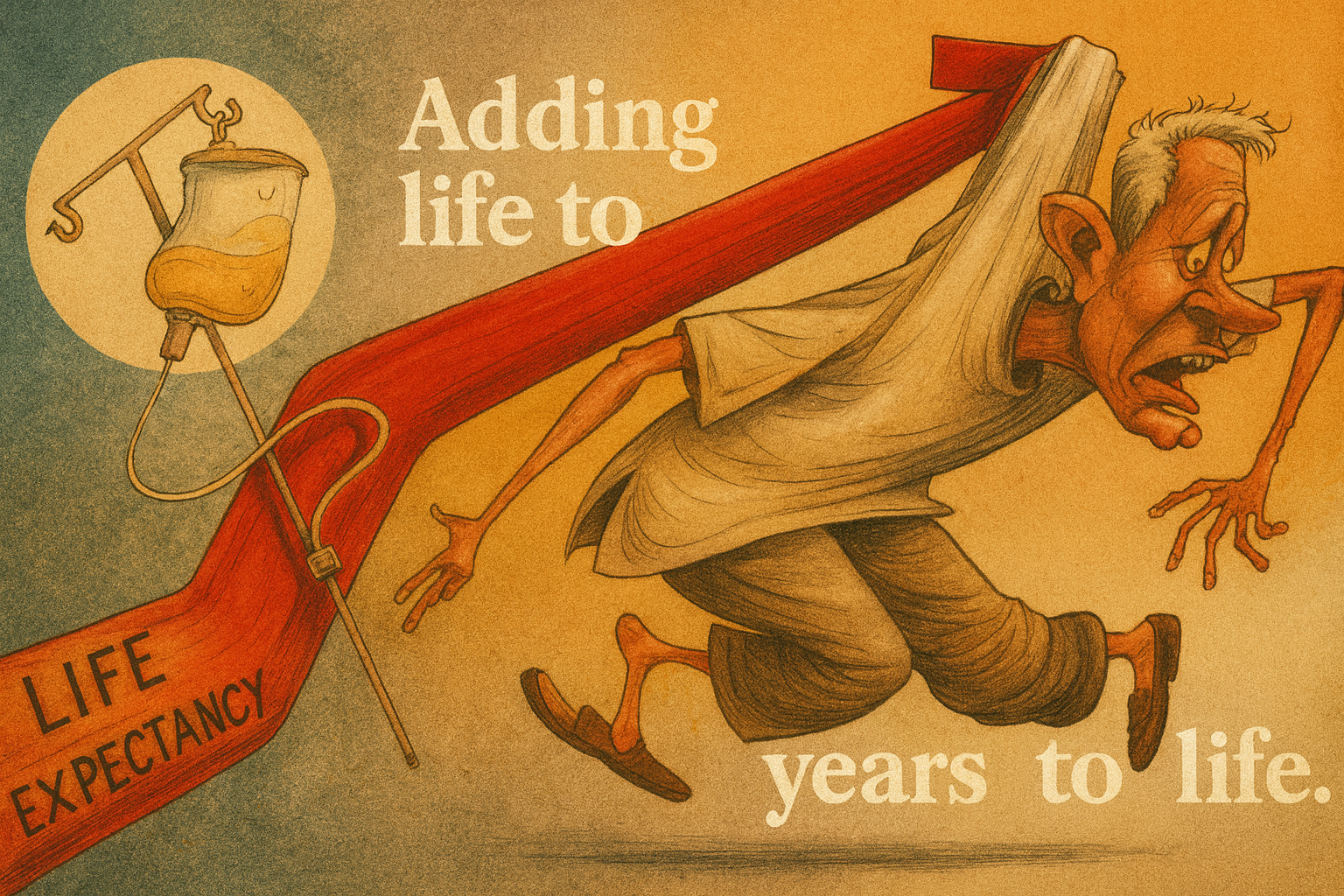
Adding life to years, not just years to life
Morning Standard
KEY ARGUMENTS PRESENTED
- Rise in Life Expectancy Does Not Guarantee Healthy Life Expectancy
LE has increased due to advances in medicine, nutrition, sanitation, and social determinants.
However, HALE has increased only marginally, with a persistent gap between additional years lived and years lived in good health. - Overemphasis on Longevity Undermines Holistic Health
The pursuit of longer life has overshadowed attention to functionality, wellbeing, and prevention of chronic conditions. - Limitations of Current Health Metrics
Traditional measures focus heavily on quantifiable aspects (mortality reduction), neglecting subjective or functional aspects of health. - DALY as a Widely Used Composite Metric
DALYs capture both premature mortality and years lived with disability, helping quantify disease burden more realistically. - Rising Burden of Chronic and Non-Communicable Diseases
Conditions that impair mobility, cognition, sensory function, and emotional wellbeing require earlier and more sustained interventions. - Global Health Governance Recognises QOL
The UN’s 2011 political declaration on non-communicable diseases foregrounds healthy ageing and QOL. - Functional Ability Is Emerging as a Priority
The WHO’s emphasis on functional ability extends beyond disease management to social participation, independence, and mental health.
AUTHOR’S STANCE AND POSSIBLE BIASES
- Public Health–Centric, Preventive Orientation
The author strongly favours a preventive, life-course approach to health, which is consistent with global health literature. - Bias Toward Composite Indicators Like DALYs
DALYs are useful but have limitations, especially in quantifying subjective wellbeing or culturally diverse perceptions of disability. - Underrepresentation of Resource Constraints
The analysis does not fully acknowledge the financial and institutional challenges of implementing holistic QOL-focused systems in low- and middle-income countries. - Limited Discussion of Socioeconomic Inequality
While QOL is discussed, disparities in access to care, gendered differences, and rural–urban divides receive scant attention.
PROS OF THE ARGUMENT (Strengths)
1. Clear Conceptual Explanation of LE vs HALE
The author convincingly explains why increased lifespan does not necessarily translate into improved health.
2. Strong Emphasis on Preventive Health and Early Intervention
This aligns with current global priorities and India’s epidemiological transition.
3. Integration of Global Frameworks
References to WHO and UN positions strengthen the international context of the argument.
4. Highlights Neglected Areas
Mental health, sensory impairment, chronic disability, and functional ability are discussed with needed emphasis.
CONS OF THE ARGUMENT (Critical Gaps and Missing Dimensions)
1. Limited Policy Specificity for Implementation in India
The article calls for enhancing QOL but does not outline concrete policy pathways such as financing models, workforce expansion, or community-level interventions.
2. Underplaying Structural Barriers
Issues such as poverty, low awareness, weak primary healthcare, and out-of-pocket expenditure—crucial determinants of QOL—are insufficiently addressed.
3. No Discussion on Measuring Subjective Wellbeing
Functional ability alone cannot capture psychological, social, and cultural dimensions of wellbeing.
4. Over-Reliance on Health Metrics Without Critique
DALYs and HALE have methodological constraints that deserve acknowledgement.
5. Overshadowing of Social Determinants
Education, employment, living conditions, caregiving burdens, and environmental quality should be more deeply integrated.
POLICY IMPLICATIONS (UPSC GS-II and GS-III Relevance)
- Health Systems Strengthening
Emphasis on primary healthcare, early diagnosis, rehabilitation, and chronic disease management aligns with National Health Mission priorities. - Healthy Ageing as a Policy Priority
India’s demographic transition demands policies for elder care, insurance coverage, long-term care facilities, and assisted living models. - Shift from Curative to Preventive Models
Investment in nutrition, lifestyle modification, mental health services, and health literacy is critical. - Need for Integrated Health Metrics
Policymaking requires a blend of quantitative (DALYs, HALE) and qualitative (self-reported QOL, functional scales) indicators. - Public Financing and Universal Health Coverage
A holistic QOL agenda will require stronger public spending and risk-pooling mechanisms. - Climate Change and Health Nexus
The article rightly notes how climate stress worsens chronic conditions, calling for climate-resilient health systems.
REAL-WORLD IMPACT ASSESSMENT
- Improved Health Equity Through QOL-Focused Policies
Groups with disabilities, mental health challenges, or chronic illness stand to benefit from a shift toward function-based models. - Better Allocation of Health Resources
Policymakers can prioritise interventions with the greatest impact on wellbeing, not just longevity. - Public Acceptance Challenges
Measuring subjective attributes of health may face resistance from clinical communities and funders accustomed to traditional metrics. - Implementation Gaps in Low-Resource Settings
Without adequate infrastructure, the QOL agenda may remain aspirational. - Rise in Demand for Allied Health Professionals
Physiotherapists, occupational therapists, psychologists, and social workers become central to this paradigm.
BALANCED CONCLUSION
The article persuasively argues that health systems should evolve beyond the narrow pursuit of increasing lifespan to ensuring healthier, more functional, and fulfilling lives. It frames global demographic shifts and rising non-communicable diseases as compelling reasons to adopt quality-of-life metrics like DALYs and HALE.
However, the narrative would be stronger with deeper discussion on implementation strategies, socioeconomic barriers, and the complexities of measuring subjective wellbeing—especially in the Indian context. Nevertheless, the call to reorient health policy towards functional capacity, mental health, and equitable access is timely and aligns with the principles of modern public health.
FUTURE PERSPECTIVES (Useful for UPSC Mains Answers)
- Integrate QOL metrics into national health budgeting and outcome assessments.
- Expand primary care to include rehabilitation, mental health, and geriatric services.
- Train multidisciplinary health workers to support functional ability at all ages.
- Adopt a life-course approach focusing on early childhood, adolescence, adulthood, and ageing.
- Develop culturally sensitive tools to measure wellbeing beyond disability metrics.
- Promote environments—social, digital, physical—that enhance functional ability.
- Strengthen preventive programmes for NCD control through lifestyle and behavioural interventions.
A future-ready nation must not merely add years to life but ensure that every added year is lived in dignity, functionality, and wellbeing.
