

After US-Saudi Pact, New West Asia in the Making
Hindustan Times
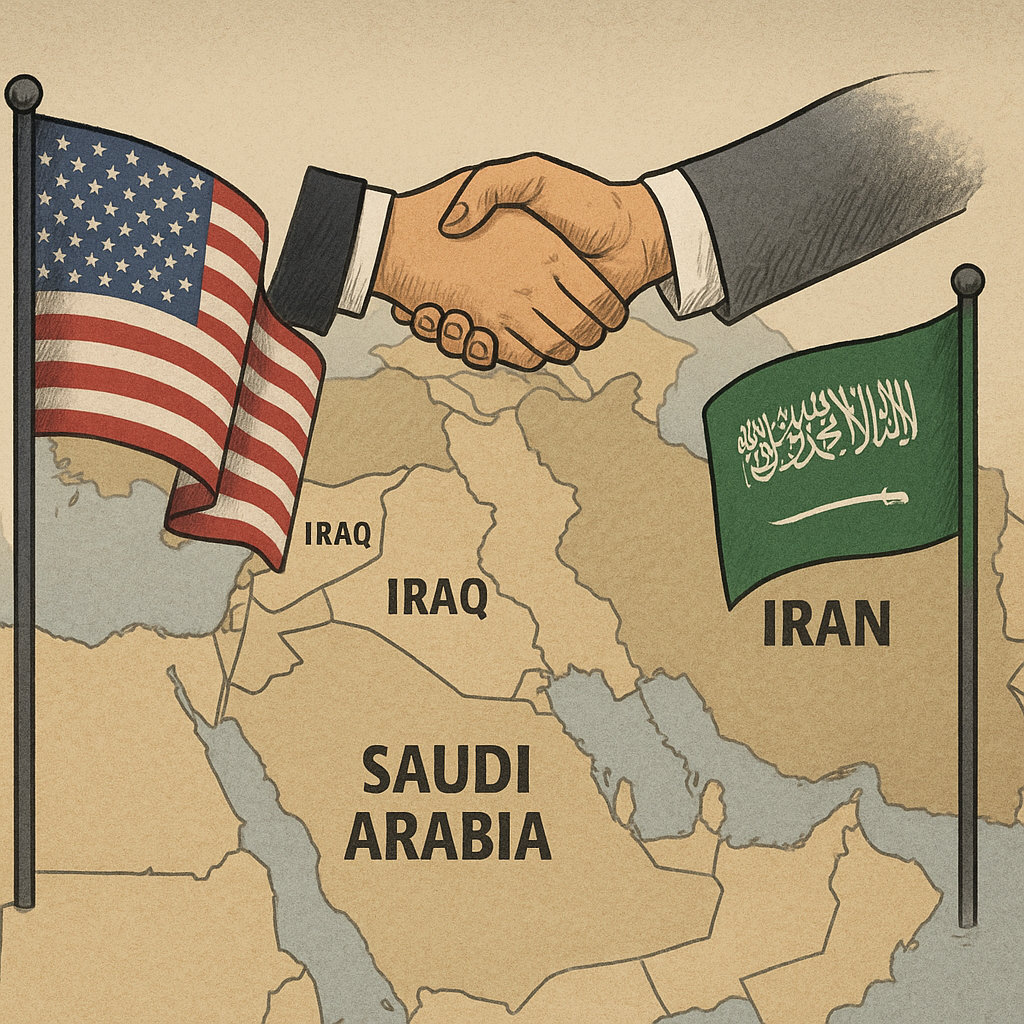
Key Arguments Presented
A. MBS’s new alignment marks a decisive strategic pivot
- Since 2018, Saudi foreign engagement has been reshaped by the Crown Prince’s assertive diplomacy.
- The US-Saudi deal represents a return to transactional ties and stronger military-economic interdependence.
B. Defence cooperation is expanding
- Access to US systems, SDA designation (Saudi Major Non-NATO Ally), and joint defence initiatives enhance Saudi capabilities.
- Deals include approvals for F-35 systems, missile defence networks, and selective technology sharing.
C. Economic integration with the US is deepening
- Collaboration includes investments through sovereign wealth funds, supply-chain shifts, and advanced technologies.
- The US-Saudi partnership competes with China’s Belt and Road Initiative and diversifies Saudi Arabia’s dependency away from Beijing.
D. Abraham Accords as a platform for regional recalibration
- Saudi Arabia is increasingly emerging as a stabilising anchor in regional architecture.
- Its cooperation with Israel—though unofficial—shapes a security ecosystem aligned with US interests.
E. US-Saudi cooperation curbs Chinese influence
- The article notes US strategic concerns about China’s expanding influence in West Asia.
- The US is leveraging new defence and energy ties with Riyadh to counter Chinese technological and geoeconomic footholds.
F. Implications for India
- India must adjust to a West Asia no longer centred on energy or expatriate labour.
- New openings in critical minerals, cybersecurity, renewable energy, defence manufacturing, and connectivity corridors (IMEC) are emerging.
- However, challenges persist in India-Pakistan-Saudi military triangulations and technological access restrictions.
3. Author’s Stance
The author, a former ambassador, adopts a realist, strategic-policy perspective, highlighting:
- The optimism regarding a strong, stabilising US-Saudi partnership.
- The belief that Saudi Arabia is aligning towards a US-led security and economic order.
- A subtle emphasis that India must recalibrate its strategy to engage more deeply with this new geopolitical reconfiguration.
The stance is pro-engagement, suggesting India must not remain complacent with traditional remittance-energy perspectives.
4. Potential Biases or Limitations
A. Diplomatic lens
- The analysis is written by a diplomat, thus it tends to portray the US-Saudi partnership as stabilising, though its consequences may be mixed.
B. Underplays Saudi’s autonomy
- MBS is not fully aligned with any one power; Riyadh still engages China and Russia extensively.
C. Limited examination of regional tensions
Key issues such as:
- Iran’s reaction
- Israel-Hamas conflict
- Region-wide economic vulnerabilities
are insufficiently detailed.
D. India’s risks under-analysed
The article is optimistic about opportunities but does not fully assess:
- India’s technological dependency constraints
- The volatility of US policy shifts
- Vulnerability of Indian diaspora in political crises
- Risks from continuing Saudi-Pakistan defence links
5. Pros and Cons of the Argumentation
Pros
- Offers detailed geopolitical insight.
- Strong understanding of West Asia’s strategic recalibration.
- Highlights opportunities for India.
- Connects military, technological, and economic layers.
Cons
- Slight institutional bias toward US-aligned frameworks.
- Underplays structural instability in West Asia.
- Risks of militarisation and great-power rivalry are understated.
6. Policy Implications for India
A. Strategic Recalibration
India must:
- Engage West Asia not only through oil or diaspora but through technology, defence, AI, rare minerals, and cybersecurity.
- Build stronger trilateral linkages with the US and Saudi Arabia.
B. Defence Cooperation
- Pursue participation in Saudi-U.S. interoperability initiatives.
- Expand defence exports under India’s growing military manufacturing framework.
C. Economic Diplomacy
- Tap into Saudi sovereign wealth funds for major Indian infrastructure projects.
- Participate actively in emerging connectivity corridors like IMEC.
D. Energy Transition
- Engage Saudi Arabia’s Vision 2030 projects in hydrogen, renewables, and green energy.
- Reduce dependence on oil-only frameworks.
E. Middle East Power Balance
- Maintain strategic autonomy while balancing ties with:
- Iran
- Israel
- Saudi Arabia
- UAE
- US
F. Diaspora Protection
- New geopolitical alignments may increase labour policy unpredictability; India must enhance bilateral labour security agreements.
7. Real-World Impact
Positive Impact
- Strengthens regional stability if US-Saudi ties deter proxy conflicts.
- Opens new avenues for India’s technological and defence expansion.
- Reduces China’s dominance in West Asian logistics and infrastructure.
Negative/Complex Impact
- Might escalate great-power competition in West Asia.
- Could limit India’s manoeuvring space with Iran.
- Risks becoming entangled in geopolitical blocs.
- Volatility in Israel-Saudi dynamics may create policy unpredictability.
8. UPSC Relevance
GS Paper 2 (International Relations)
- India-West Asia relations
- US-Saudi geopolitics
- Strategic autonomy
- Middle East power shifts
- India’s energy and diaspora policy
GS Paper 3 (Security & Economy)
- Defence cooperation
- Critical minerals
- Cybersecurity
- Connectivity and trade corridors
- Energy transition
Essay Paper
- Geopolitical alignments
- India’s foreign policy recalibration
9. Balanced Summary
The editorial highlights how the renewed US-Saudi partnership marks a transformative geopolitical moment that reshapes West Asia’s economic and security architecture. The evolution goes beyond traditional axes of energy, labour, and diaspora, extending into defence, high technology, critical minerals, and connectivity.
However, the argument tends to underplay regional uncertainties, Saudi hedging behaviour, Iran’s counter-strategy, and the fragility of US commitments. While India stands to gain significantly, it must navigate the geopolitical realignments without compromising strategic autonomy.
10. Future Perspectives
- Institutionalise a trilateral India-US-Saudi strategic dialogue.
- Accelerate India’s footprint in West Asian defence manufacturing.
- Leverage IMEC to counterbalance China’s Belt and Road influence.
- Strengthen India’s cybersecurity partnerships with Gulf states.
- Deepen cooperation in renewable energy, hydrogen, and critical minerals.
- Protect Indian migrant workers through formal labour agreements.
- Avoid excessive alignment with any power bloc to preserve strategic autonomy.
India must treat West Asia as a strategic theatre of the future, not the past — shaped by technology, supply chains, and geopolitics rather than oil and remittances.
