

An anthropological perspective on development in Nepal
The Statesman
1. Core Theme
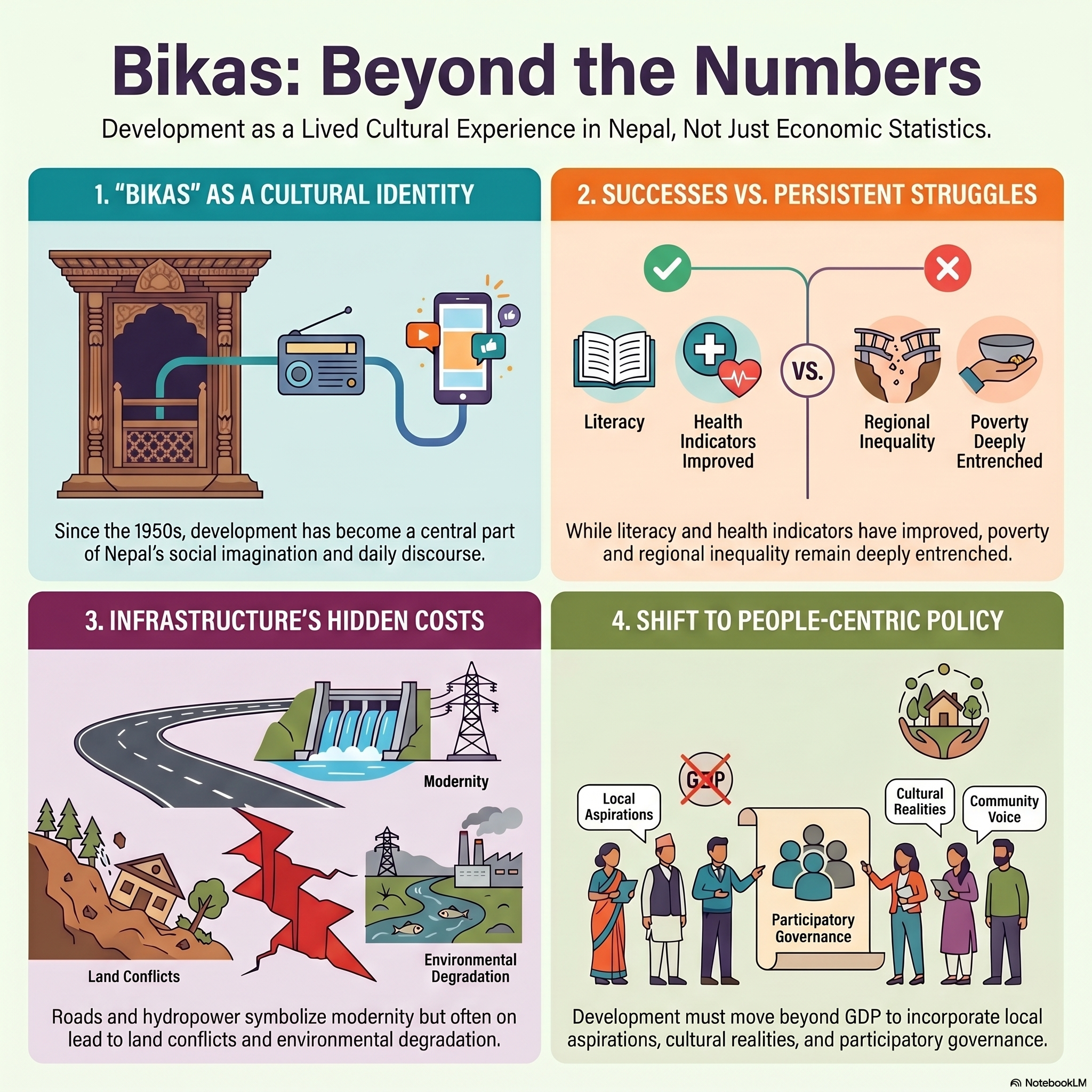
The article interprets development in Nepal through an anthropological lens, arguing that development (bikas) is not merely economic growth but a social, cultural, and experiential process shaped by power, identity, and local aspirations.
2. Key Arguments
(1) Development as a Cultural Idea (‘Bikas’)
Since the 1950s, development has become:
central to Nepal’s socio-political imagination
embedded in everyday discourse
‘Bikas’ functions as:
a cultural category, not just policy
(2) Mixed Outcomes of Development
Achievements:
improved literacy
reduced mortality
better health indicators
Limitations:
persistent poverty
regional inequality
uneven distribution of benefits
(3) Role of External and Internal Drivers
Development driven by:
state policies
foreign aid (bilateral/multilateral)
remittances
local efforts
Highlights:
dependency on external actors
(4) Infrastructure as Symbol of Modernity
Roads, hydropower, telecom:
represent progress
But also:
create land conflicts
environmental degradation
exclusion from benefits
(5) Development as Lived Experience
Not uniform:
varies across class, caste, region
Dual nature:
hope (mobility, dignity)
disappointment (corruption, inequality)
(6) Disconnect Between Policy and Ground Reality
Policy focus:
GDP, poverty reduction, service expansion
Reality:
local aspirations unmet
governance gaps
(7) Power and Inequality in Development
Development shaped by:
unequal power relations
Different actors:
state, donors, local communities
have unequal influence
(8) Anthropological Critique
Development should be understood as:
social transformation
not just economic metrics
Reference to scholarship:
development reshapes identity, aspirations, social relations
3. Author’s Stance
Clearly anthropological and critical
Emphasises:
lived experiences over macro indicators
Advocates:
people-centric, context-sensitive development
4. Biases in the Article
(1) Anti-Modernisation Bias
Skepticism toward:
infrastructure-led development
Underplays:
its long-term benefits
(2) Anthropological Overemphasis
Focus on:
culture and lived experience
Less emphasis on:
macroeconomic necessity
(3) Implicit Critique of State and Donors
Suggests:
external imposition of development
May overlook:
local agency and policy successes
5. Pros and Cons of Development Approach
Pros (Current Model)
Economic Gains
Improved human development indicators
Infrastructure Expansion
Connectivity and market integration
Cons
Inequality
Uneven distribution
Cultural Disruption
erosion of local systems
Environmental Costs
resource conflicts
6. Policy Implications
(1) Need for Context-Sensitive Development
Policies must:
reflect local aspirations
incorporate cultural realities
(2) Participatory Governance
Include:
communities in decision-making
(3) Beyond GDP Metrics
Adopt:
multidimensional indicators
(4) Balance External Aid with Local Agency
Reduce:
dependency syndrome
7. Real-World Impact
Social
Changing identities and aspirations
Economic
Growth with inequality
Political
Contestation over resources
8. UPSC GS Linkages
GS Paper I
Society:
social change
development and culture
GS Paper II
Governance:
development policies
role of international aid
GS Paper III
Inclusive growth
Regional inequality
Anthropology Optional
Development Anthropology
Culture and Development
Globalisation and Local Cultures
9. Critical Insight
Development is not merely about building infrastructure or raising incomes, but about transforming social relations, identities, and lived experiences—often unevenly and contentiously.
10. Balanced Conclusion
The article effectively highlights:
the limitations of purely economic definitions of development
the importance of lived experiences and cultural contexts
However:
it somewhat underplays:
the necessity of infrastructure and macroeconomic growth
11. Way Forward
Integrate:
anthropological insights into policy
Promote:
inclusive, participatory development
Balance:
economic growth with social justice
Final Takeaway
Development in Nepal—and broadly in the Global South—must be reimagined as a people-centric process where economic progress aligns with cultural realities, social equity, and human dignity.
