

Behind China’s $1-tn trade surplus: Numbers hide domestic weaknesses—imports, consumption, currency
Indian Express
I. AUTHOR’S CENTRAL ARGUMENT
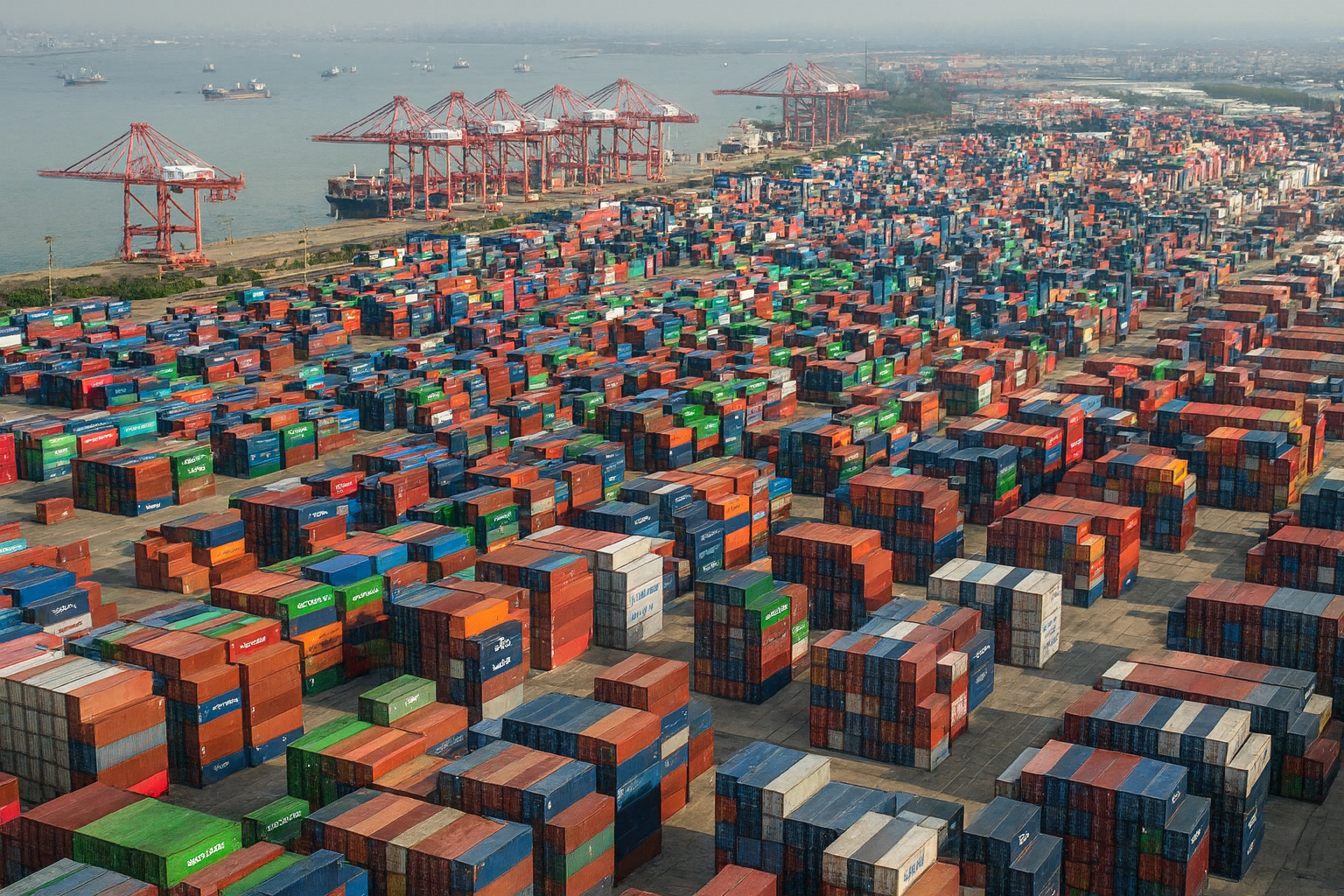
The article contends that China’s record $1-trillion trade surplus is as much a sign of imbalance as of strength. While headline numbers suggest export dominance and competitiveness, the surplus largely reflects weak domestic demand, subdued imports, excess industrial capacity, and currency dynamics, rather than a healthy, consumption-led economy. The core thesis is that export dependence has intensified because internal engines—household consumption and private investment—are underperforming.
II. KEY ARGUMENTS PRESENTED
- Export Dominance Drives the Surplus
– China’s surplus is powered primarily by exports, not by balanced growth.
– Manufacturing overcapacity pushes firms to seek external markets. - Weak Domestic Consumption
– Household demand remains subdued due to property-sector stress, high precautionary savings, and weak confidence.
– This depresses imports and widens the surplus mechanically. - Currency and Price Dynamics
– A relatively weak currency and price competitiveness support exports.
– Deflationary pressures at home make exports more attractive than domestic sales. - Industrial Overcapacity
– Sectors such as steel, EVs, batteries, solar, and machinery exhibit excess capacity.
– Exporting the surplus becomes a release valve. - Global Frictions and Pushback
– Trading partners increasingly view the surplus as destabilising, inviting tariffs, investigations, and industrial policy responses. - Imports Lagging Behind
– Sluggish imports reflect weak investment and consumption, not efficiency gains alone. - Growth Quality Concerns
– The surplus does not translate into broad-based prosperity; it signals imbalanced growth.
III. AUTHOR’S STANCE AND POSSIBLE BIASES
- Sceptical of Headline Triumph
– The author deliberately challenges celebratory readings of the surplus, emphasising vulnerabilities. - Macro-Structural Lens
– Focuses on demand composition and balance rather than firm-level competitiveness alone. - Limited Credit to Policy Intent
– Underplays China’s deliberate industrial strategy and supply-chain positioning as a conscious choice, not merely a symptom. - Trade-Partner Perspective
– Frames risks partly through global reactions, which may bias interpretation toward external concerns.
IV. PROS OF THE ARTICLE (Strengths)
1. Cuts Through Headline Optics
– Explains why a large surplus can coexist with domestic weakness.
2. Clear Link Between Demand Weakness and Surplus
– Connects low consumption and imports to widening external balances.
3. Integrates Currency, Capacity, and Prices
– Provides a multi-factor explanation beyond simple export success.
4. Global Contextualisation
– Anticipates trade tensions and policy backlash abroad.
5. Policy-Relevant Framing
– Highlights risks of over-reliance on exports for sustained growth.
V. CONS OF THE ARTICLE (Critical Gaps & Limitations)
1. Understates Structural Competitiveness
– China’s scale, logistics, and technological upgrading also explain export strength.
2. Limited Sectoral Granularity
– Aggregate analysis could be sharpened by deeper sector-wise diagnostics.
3. Short-Term vs Long-Term Ambiguity
– Does not clearly separate cyclical weakness from long-term rebalancing challenges.
4. Policy Response Pathways Thin
– Diagnoses imbalance but offers limited discussion on feasible domestic demand revival tools.
VI. POLICY IMPLICATIONS (UPSC GS-III & GS-II Relevance)
- Global Trade Stability (GS-III)
– Large, persistent surpluses heighten trade frictions and invite protectionism. - Macroeconomic Rebalancing
– Economies overly dependent on exports face vulnerability to external shocks. - Currency and Industrial Policy
– Exchange-rate dynamics and industrial subsidies shape global competitiveness debates. - India’s Strategic Takeaways (GS-III)
– Opportunity for India to attract supply-chain diversification, but risk of import surges from overcapacity economies. - Multilateral Governance (GS-II)
– Stress on global trade rules and dispute-resolution mechanisms.
VII. REAL-WORLD IMPACT ASSESSMENT
- Rising Trade Tensions
– Greater likelihood of tariffs, anti-dumping actions, and subsidy probes. - Deflationary Spillovers
– Exporting excess capacity can transmit deflation to trading partners. - Domestic Fragility Persists
– Without consumption revival, growth remains unbalanced. - Geopolitical Economy Shifts
– Countries recalibrate industrial policies to counter surplus-driven shocks. - Market Volatility
– Currency and commodity markets react to demand-side weakness signals.
VIII. BALANCED CONCLUSION
The article offers a timely corrective to triumphalist readings of China’s $1-trillion trade surplus. By foregrounding weak domestic demand, lagging imports, and currency-price dynamics, it convincingly argues that the surplus reflects structural imbalance as much as external strength.
That said, a complete assessment must also acknowledge China’s enduring manufacturing competitiveness and strategic industrial positioning. The surplus is both a policy outcome and a pressure valve. Sustainable growth will require rebalancing toward consumption without undermining productive capacity—a difficult but necessary transition.
IX. FUTURE PERSPECTIVES (UPSC Mains-Ready Insights)
- Rebalancing toward household consumption is critical for durable growth.
- Managing overcapacity without exporting deflation will test policy coherence.
- Global trade governance will face renewed strain from persistent imbalances.
- India should leverage diversification trends while guarding against dumping.
- Currency, industrial policy, and demand management will remain central to global macro debates.
In sum, China’s surplus is impressive in scale but troubling in signal—a reminder that external success cannot indefinitely substitute for internal economic balance.
