

Beyond the Hunt: Preserving Tradition, Protecting Wildlife and Building a Shared Future
The Statesman
Core Theme of the Article
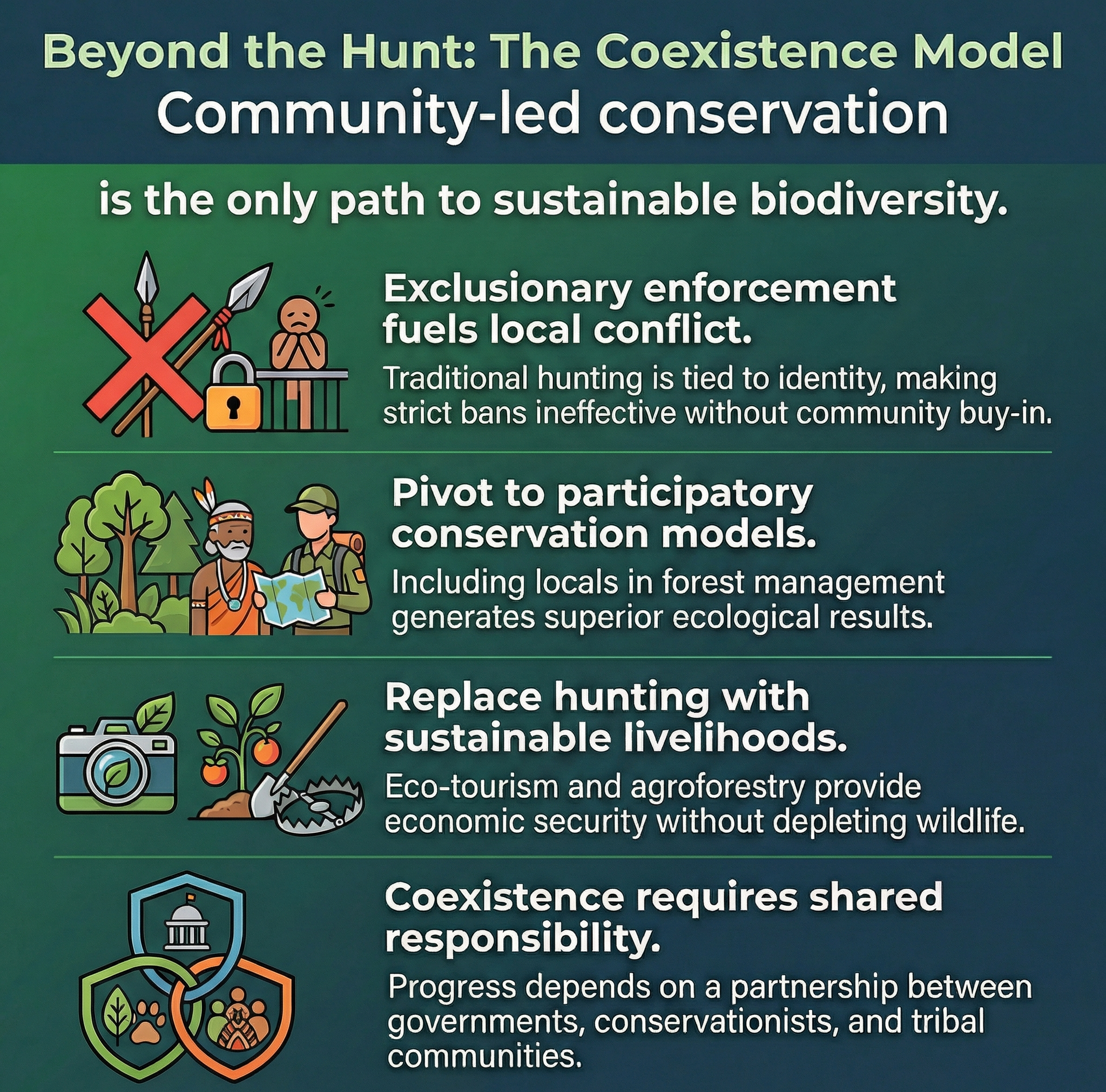
The article argues for a balanced approach between indigenous hunting traditions and wildlife conservation. It advocates moving beyond conflict narratives and building a cooperative framework where cultural heritage and biodiversity protection coexist.
The central thesis is that conservation cannot succeed through exclusion alone; it must incorporate community participation, cultural sensitivity, and sustainable livelihood alternatives.
Key Arguments Presented
1. Hunting as Cultural Practice
The article recognises that in many indigenous and tribal communities, hunting is embedded in tradition, identity, and subsistence patterns rather than mere sport.
2. Conservation Challenges
Unregulated or large-scale hunting, combined with habitat loss, threatens biodiversity. Wildlife decline is a scientific reality requiring intervention.
3. Community-Centric Conservation
Excluding local communities from forests has historically led to conflict. Participatory models generate better ecological outcomes.
4. Sustainable Alternatives
Promotion of eco-tourism, alternative livelihoods, regulated harvesting, and environmental education can reduce dependency on hunting.
5. Shared Responsibility
The article emphasises collaboration among government, conservationists, and communities.
Author’s Stance
The stance is conciliatory and reform-oriented.
• Rejects absolutist conservation
• Rejects unregulated exploitation
• Advocates coexistence model
• Frames conservation as partnership rather than enforcement
The tone is constructive rather than adversarial.
Possible Biases and Framing
Community-Favoring Bias
Strong emphasis on indigenous rights may underplay urgency in critically endangered zones.
Optimistic Participatory Bias
Assumes participatory governance will automatically deliver compliance.
Normative Sustainability Bias
Frames sustainability as achievable through dialogue without deeply addressing enforcement complexities.
However, these biases align with contemporary conservation discourse.
Strengths of the Article
• Integrates culture and ecology
• Recognises socio-economic dimensions of conservation
• Avoids criminalisation narrative
• Promotes long-term sustainability
Limitations
• Limited quantitative assessment of wildlife decline
• Insufficient focus on poaching networks beyond subsistence hunting
• Does not deeply analyse legal contradictions between Wildlife Protection Act and community rights
Policy Implications
1. Strengthen Community-Based Forest Management
Expand Joint Forest Management and participatory conservation models.
2. Align Wildlife Protection with Forest Rights Act
Ensure harmonisation between biodiversity protection and tribal rights.
3. Promote Alternative Livelihoods
Eco-tourism, agroforestry, and skill development to reduce hunting dependence.
4. Evidence-Based Regulation
Scientific monitoring of species population and sustainable harvesting thresholds.
5. Education and Awareness
Cultural adaptation of conservation messaging.
Real-World Impact
Short Term
• Reduced enforcement-community conflict
• Improved dialogue between forest departments and local groups
Medium Term
• Stabilisation of certain wildlife populations
• Community ownership of conservation initiatives
Long Term
• Institutionalised co-management frameworks
• Balanced biodiversity protection with livelihood security
UPSC GS Alignment
GS Paper I
• Tribal communities
• Human-environment interaction
GS Paper II
• Forest Rights Act
• Role of civil society in governance
GS Paper III
• Biodiversity conservation
• Wildlife Protection Act
• Sustainable development
• Community-based resource management
GS Paper IV
• Ethical balance between tradition and law
• Environmental stewardship
Essay Relevance
• “Tradition and modern conservation: conflict or coexistence?”
• “Development with dignity and sustainability”
Balanced Editorial Assessment
The article correctly identifies that conservation divorced from social realities often fails. Wildlife protection must move from coercive enforcement to collaborative governance.
However, ecological thresholds cannot be compromised. Cultural legitimacy does not justify unsustainable extraction. The balance must be scientific, transparent, and enforceable.
Future Perspective
India’s conservation trajectory will depend on:
• Integrating indigenous knowledge into formal conservation frameworks
• Scientific wildlife monitoring
• Climate-resilient ecosystem planning
• Harmonising development, rights, and biodiversity goals
If participatory governance is implemented sincerely, it can reduce conflict and strengthen ecological outcomes. If it becomes symbolic without monitoring, biodiversity risks may persist.
Final Editorial Judgment:
Preserving tradition and protecting wildlife are not mutually exclusive goals. The challenge lies in institutional design that respects culture while safeguarding ecological sustainability.
