

Breast cancer cases to rise by one-third globally, says Lancet study
Indian Express
Key Arguments of the Article
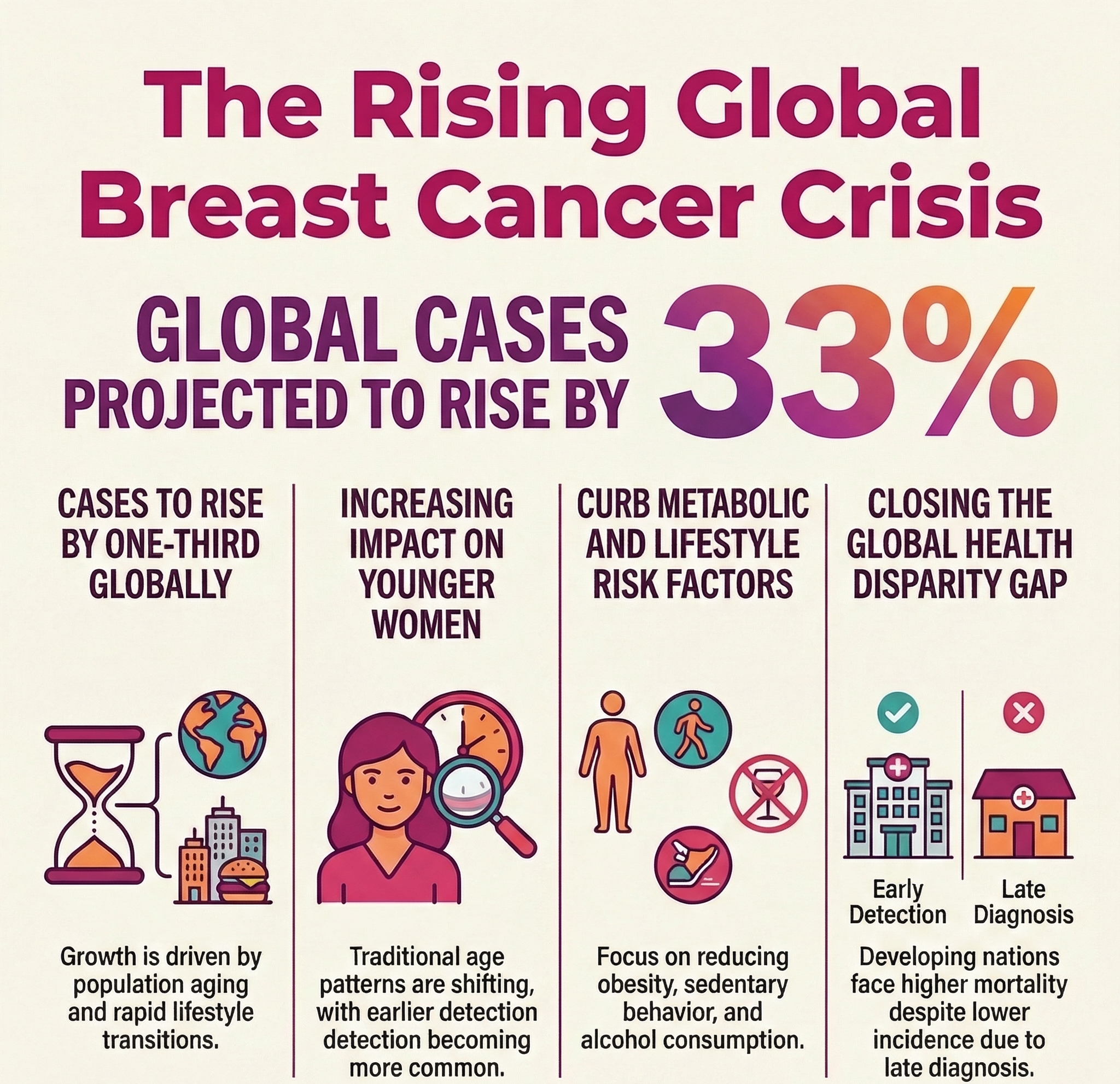
Rapid Rise in Global Breast Cancer Burden
The study predicts that global breast cancer cases may increase substantially in the coming decades. Rising incidence is attributed to demographic changes such as population growth, ageing populations, and lifestyle transitions.
The projection indicates a widening public health burden if preventive and screening mechanisms are not strengthened.
Increasing Impact on Younger Women
A notable concern highlighted is the rising incidence among younger women. Traditionally associated with older age groups, breast cancer is now being detected earlier in life in several regions.
This trend raises concerns about changing risk patterns, reproductive behaviours, and environmental factors.
Lifestyle and Metabolic Risk Factors
The article identifies several risk factors contributing to the rising burden:
• obesity and sedentary lifestyles
• delayed childbirth or fewer pregnancies
• dietary transitions associated with urbanisation
• alcohol consumption and tobacco use
These reflect broader epidemiological transitions linked to economic development.
Global Inequality in Detection and Treatment
One of the most significant findings is the disparity between high-income and developing countries.
High-income countries have better screening programmes, early detection systems, and treatment facilities. In contrast, many developing countries face late diagnosis, limited healthcare infrastructure, and inadequate cancer registries.
This leads to higher mortality despite lower incidence rates.
Data Gaps and Surveillance Challenges
The article notes that many regions lack reliable cancer registries. This results in underreporting and incomplete data, making it difficult to design targeted health policies.
Improving surveillance systems is therefore essential for effective cancer control.
Author’s Stance
The tone of the article is evidence-based and public-health oriented. The author largely relies on scientific findings to emphasise the urgency of strengthening cancer prevention, screening, and treatment systems globally.
There is a clear emphasis on preventive health strategies and health system preparedness.
Possible Biases
Medicalisation of the Issue
The article frames the challenge primarily through a biomedical and epidemiological lens. Social determinants such as gender inequality, healthcare access disparities, and cultural stigma receive relatively less emphasis.
Global Health Perspective
The narrative reflects global health research priorities, which may emphasise statistical projections while underrepresenting regional socio-cultural contexts.
Advantages of Highlighting the Issue
Early Policy Attention
Raising awareness about future projections allows governments to prepare health systems in advance.
Promotion of Preventive Healthcare
The focus on lifestyle factors encourages preventive strategies and public health campaigns.
Strengthening Screening Programmes
Highlighting early detection reinforces the importance of mammography and cancer screening initiatives.
Improved Data Systems
Recognition of data gaps can push governments to expand cancer registries and surveillance systems.
Limitations and Concerns
Health System Capacity
Many developing countries lack adequate oncology infrastructure, trained specialists, and treatment facilities.
Financial Burden
Cancer treatment remains expensive, creating barriers for economically weaker sections.
Rural Health Disparities
Patients in rural and remote regions often face delayed diagnosis due to limited healthcare access.
Awareness and Social Stigma
Cultural stigma and lack of awareness can delay detection and treatment.
Policy Implications
Strengthening Preventive Healthcare
Governments should invest in awareness campaigns promoting healthy lifestyles and early detection.
Expanding Cancer Screening
Population-level screening programmes, especially for women above certain age groups, are essential.
Building Oncology Infrastructure
Investment in cancer hospitals, diagnostic centres, and trained healthcare professionals is necessary.
Improving Cancer Registries
Comprehensive national cancer registries can provide accurate epidemiological data for policymaking.
Integrating Cancer Care with Primary Health Systems
Early detection and referral mechanisms must be integrated with primary healthcare networks.
Real-World Impact
If proactive policies are implemented:
• Earlier detection and improved survival rates
• Reduced treatment costs through preventive care
• Stronger health systems capable of managing non-communicable diseases
If neglected:
• Rising mortality rates
• Overburdened healthcare systems
• Increased socio-economic costs of disease
Alignment with UPSC GS Papers
GS Paper II
Public health policies, healthcare infrastructure, role of government in social sector services.
GS Paper III
Issues relating to health, human development, and challenges posed by non-communicable diseases.
GS Paper I
Social determinants of health, demographic transitions, and changing disease patterns.
GS Paper IV
Ethical governance in healthcare access, equity in medical treatment, and responsibility of the state toward public health.
Balanced Assessment
The article effectively highlights an emerging global health challenge. Rising breast cancer incidence reflects broader demographic and lifestyle transitions associated with economic development and urbanisation.
However, addressing the problem requires more than medical interventions. It demands systemic strengthening of healthcare systems, improved awareness, and equitable access to screening and treatment.
Future Perspective
Breast cancer is likely to remain one of the most significant non-communicable disease challenges globally. The coming decades will require integrated strategies combining prevention, early detection, research, and healthcare infrastructure expansion.
For policymakers and UPSC aspirants, the issue underscores the growing importance of non-communicable diseases in public health governance and the need for health systems that prioritise both prevention and equitable care.