

Canada uranium deal key to nuclear expansion plans
Indian Express
Key Arguments of the Article
Growing Energy Demand and Role of Nuclear Power
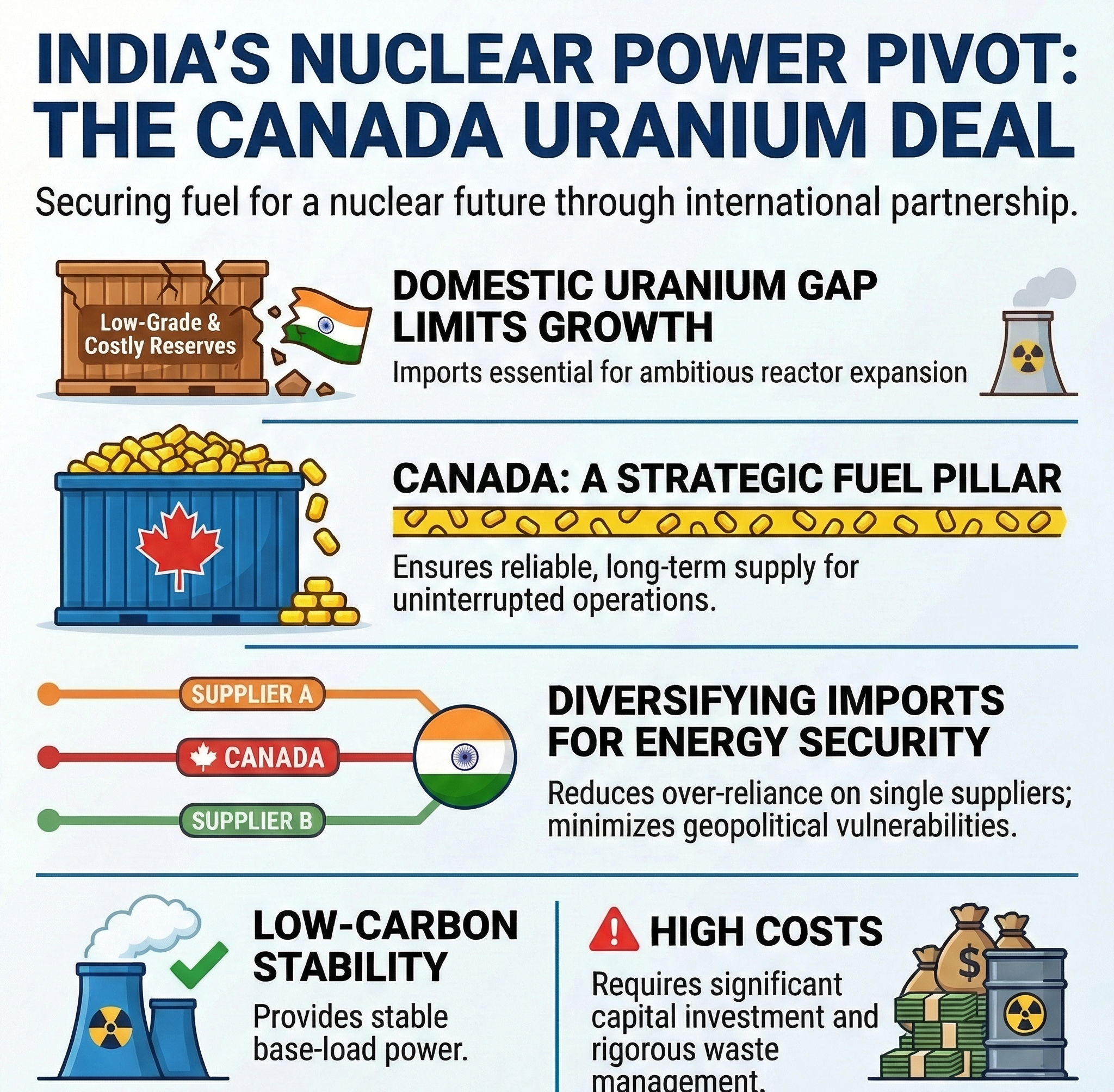
The article highlights that India’s rapidly growing energy demand requires diversification of energy sources. Nuclear power is positioned as a stable and low-carbon energy source capable of supporting long-term energy security.
India plans to significantly expand nuclear capacity in the coming decades.
Dependence on Imported Uranium
Although India has uranium reserves, most of them are low-grade and costly to extract. Domestic production remains limited and cannot meet the requirements of existing and planned nuclear reactors.
As a result, India imports a large share of its uranium from countries such as Kazakhstan, Uzbekistan, Russia, and Canada.
Importance of the Canada Agreement
The uranium supply agreement with Canada is viewed as strategically significant. Canada is one of the world’s largest uranium producers and can provide reliable long-term fuel supply.
This partnership strengthens India’s nuclear fuel security and enables uninterrupted operation of nuclear power plants.
Expansion of Nuclear Energy Infrastructure
India has ambitious nuclear expansion plans. Several reactors are planned or under construction to increase nuclear energy’s share in the electricity mix.
Stable uranium supply is therefore essential to sustain reactor operations and future expansion.
Diversification of Supply Sources
The article also emphasises diversification of uranium imports to reduce reliance on a single supplier. This strategy enhances energy security and reduces geopolitical vulnerabilities.
Author’s Stance
The author adopts a largely supportive stance toward India’s nuclear expansion strategy. The narrative emphasises the strategic and economic importance of securing uranium supplies and strengthening international partnerships.
The tone reflects an energy security perspective that views nuclear power as a necessary component of India’s energy transition.
Possible Biases
Energy Security Emphasis
The article prioritises energy security and nuclear expansion, potentially underplaying environmental concerns, nuclear waste management, and safety risks.
Limited Renewable Energy Comparison
While nuclear power is highlighted as a solution, the article does not extensively compare it with renewable energy alternatives.
State-Centric Perspective
The discussion focuses primarily on government strategy and international agreements, with limited attention to local environmental and community concerns around mining or reactor projects.
Advantages of the Uranium Deal
Reliable Fuel Supply
Ensures continuous operation of existing and future nuclear reactors.
Strengthened Strategic Partnership
Enhances bilateral relations between India and Canada in the energy and technology sectors.
Reduced Energy Dependence on Fossil Fuels
Supports India’s transition toward cleaner energy sources.
Diversified Import Basket
Reduces risks associated with overdependence on a single uranium supplier.
Concerns and Limitations
Import Dependence
Heavy reliance on imported uranium may create strategic vulnerabilities during geopolitical tensions.
Domestic Mining Challenges
India’s uranium mining faces environmental, regulatory, and technological challenges.
Nuclear Safety and Waste
Expansion of nuclear energy requires strong safety mechanisms and long-term waste management strategies.
High Capital Costs
Nuclear power plants require significant investment and long construction timelines.
Policy Implications
Strengthening Domestic Uranium Production
India must invest in exploration, mining technology, and environmental safeguards to improve domestic uranium production.
Strategic Fuel Reserves
Maintaining strategic uranium reserves can reduce supply disruptions.
Expansion of Nuclear Infrastructure
Development of advanced reactors, including fast breeder reactors and thorium-based systems, can improve energy sustainability.
Balanced Energy Mix
Nuclear energy should complement renewable energy sources to ensure a diversified and resilient energy system.
Real-World Impact
If implemented effectively:
• Increased energy security for India
• Reduced carbon emissions compared to fossil fuels
• Strengthened international energy partnerships
• Stable power supply for industrial growth
If poorly managed:
• Continued dependence on imported fuel
• Environmental and safety concerns
• Economic inefficiencies due to high project costs
Alignment with UPSC GS Papers
GS Paper II
India’s foreign relations, international energy partnerships, and strategic cooperation.
GS Paper III
Energy security, nuclear energy development, infrastructure, and environmental sustainability.
GS Paper I
Geographical distribution of natural resources and resource management.
GS Paper IV
Ethical issues related to energy development, environmental responsibility, and sustainable development.
Balanced Assessment
The Canada uranium agreement is a significant step in securing fuel for India’s expanding nuclear power programme. Reliable uranium supply strengthens India’s energy security and supports its transition toward low-carbon energy.
However, nuclear expansion must be accompanied by strong safety frameworks, responsible waste management, and balanced integration with renewable energy systems.
Future Perspective
India’s long-term energy strategy will likely rely on a diversified mix of nuclear, renewable, and conventional energy sources. Nuclear energy can play a stabilising role in ensuring base-load power while supporting climate commitments.
For policymakers and UPSC aspirants, the key challenge lies in balancing energy security, environmental sustainability, technological advancement, and geopolitical partnerships in shaping India’s future energy landscape.
