

Constitutional Patriotism: Taking the Constitution to the People

Constitutional Patriotism: Taking the Constitution to the People
Source: The Hindu | 26 November 2026 | Constitution Day Editorial
Why in News?
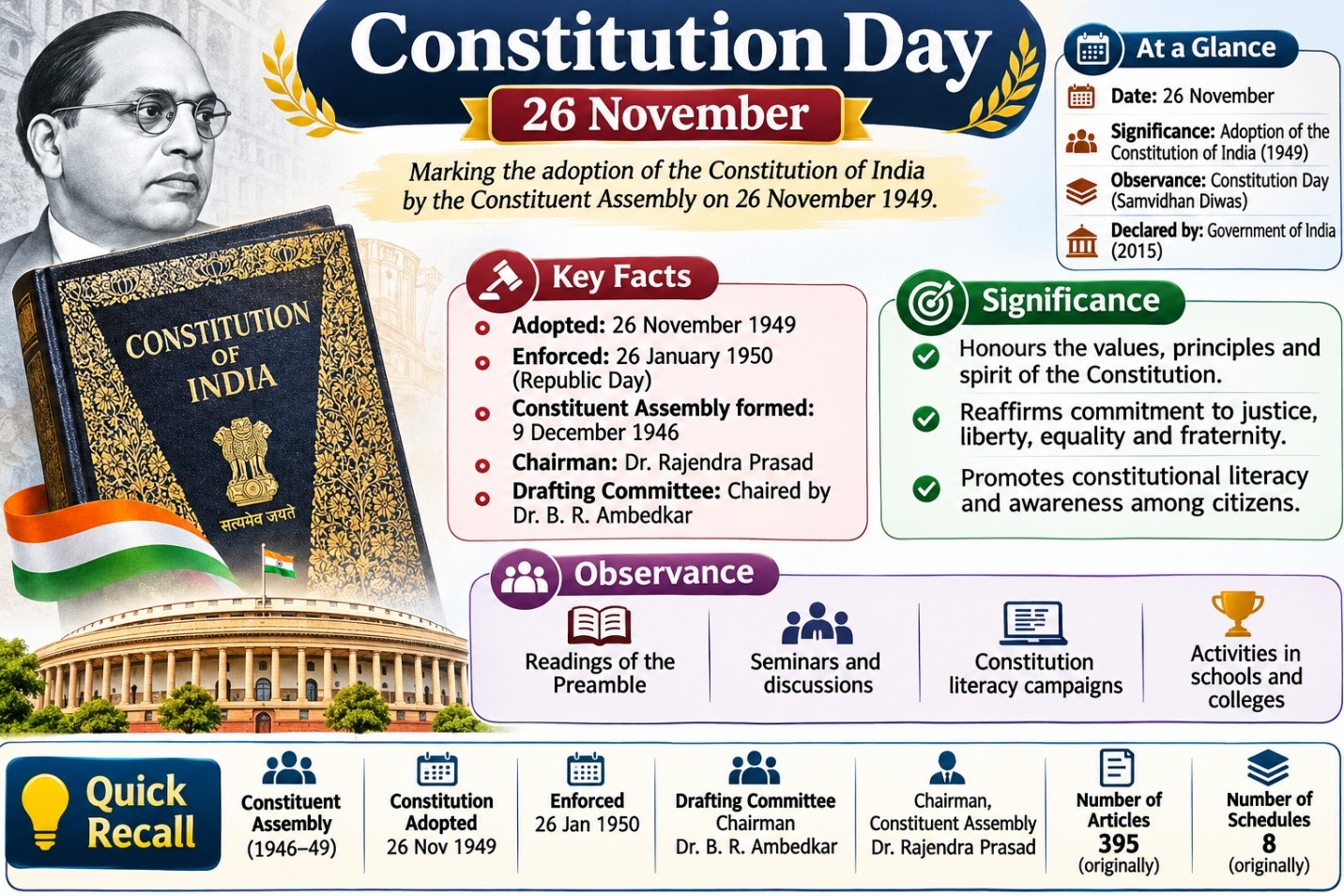
On 26 November 2026 (Constitution Day), the debate over protecting India's constitutional democracy has highlighted the need to promote constitutional patriotism. Displaying pocket-sized copies of the Constitution as a symbol of resistance against majoritarianism is not enough; constitutional values must become part of everyday social and political life.
Constitutional Patriotism: Meaning and Origin
- Constitutional patriotism means loyalty towards constitutional values rather than religion, caste, ethnicity or cultural identity.
- It promotes national unity through liberty, equality, justice, fraternity, human dignity and the rule of law.
- It allows people from different backgrounds to identify themselves as equal citizens without requiring cultural or religious uniformity.
|
Constitutional Amendments – Reshaping Governance and Inclusion 3 amendments as significant milestones: · 101st Constitutional Amendment (2016): Introduced GST, strengthening the framework of cooperative fiscal federalism. · 102nd Amendment (2018): Granted constitutional status to the National Commission for Backward Classes (NCBC). · 103rd Amendment (2019): Introduced up to 10% reservation for Economically Weaker Sections (EWS), extending affirmative action to economically disadvantaged sections outside existing reservation categories. Other initiatives: · Constitution in 22 languages: Making the Constitution accessible in all languages listed in the Eighth · Bharatiya Nyaya Sanhita (BNS), 2023: Replaced the colonial-era Indian Penal Code (IPC), 1860, reflecting a shift towards a citizen-centric criminal justice framework. |
Challenges to Constitutional Democracy
- Electoral Majoritarianism: Electoral majority does not provide unlimited authority to override Fundamental Rights or minority protections.
- Autocratic Legalism: Use of formally legal mechanisms, legislation and administrative powers to weaken democratic institutions and accountability.
- Religious and Cultural Polarisation: Defining national identity through a dominant religious or cultural identity can undermine equal citizenship.
- Institutional Weakening: Restrictions on dissent and weakening institutional independence affect democratic accountability.
Constitutional Provisions Supporting Constitutional Patriotism
|
Provision |
Significance |
|
Preamble |
Justice, Liberty, Equality and Fraternity. |
|
Article 14 |
Equality before law. |
|
Article 15 |
Prohibition of discrimination. |
|
Article 17 |
Abolition of untouchability. |
|
Article 19 |
Protection of freedoms, including speech and expression. |
|
Article 21 |
Protection of life and personal liberty. |
|
Article 25 |
Freedom of conscience and religion. |
|
Article 32 |
Constitutional remedies for enforcement of Fundamental Rights. |
|
Article 51A(a) |
Respect for the Constitution and its ideals and institutions. |
|
Article 51A(e) |
Promoting harmony and common brotherhood. |
Important Judicial Linkages
- Kesavananda Bharati Case (1973): Established the Basic Structure Doctrine.
- S.R. Bommai Case (1994): Recognised secularism as a basic feature of the Constitution.
- Minerva Mills Case (1980): Emphasised limited amending power and harmony between Fundamental Rights and DPSPs.
Making Constitutional Values a Grassroots Movement
Constitutional awareness must extend beyond Parliament, courts and academic institutions.
- Social Justice: Address caste discrimination and protect marginalised communities.
- Gender Equality: Ensure equal opportunities and protection against discrimination.
- Workers' Rights: Promote fair wages, dignity and safe working conditions.
- Minority Rights: Ensure equal citizenship and religious and cultural freedom.
- Public Participation: Promote constitutional literacy through schools, universities, Gram Sabhas and community organisations.
- Legal Awareness: Educate citizens about Fundamental Rights, Fundamental Duties and constitutional remedies.