Angioplasty: When is stenting necessary, when is it not?

Angioplasty: When is stenting necessary, when is it not?
When Stenting is Necessary (The "Gold Standard")
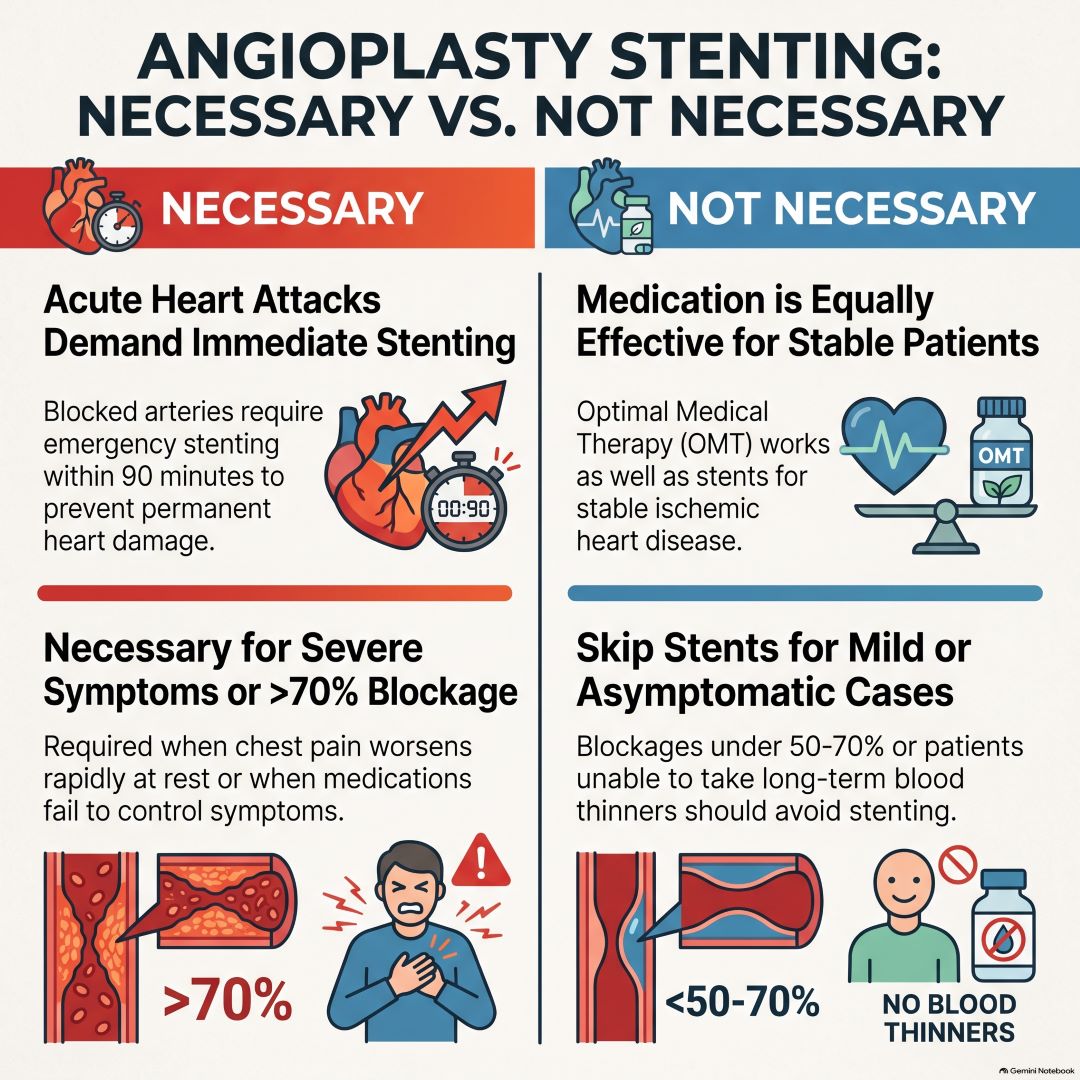
In emergency scenarios, stenting is life-saving and non-negotiable.
- Acute Heart Attack (STEMI/NSTEMI): When an artery is 100% or nearly 100% blocked, immediate stenting is required to restore blood flow and prevent heart muscle death. The goal is to open the vessel within 90 minutes of hospital arrival.
- Unstable Angina: Chest pain that occurs at rest or worsens rapidly. These patients are at high risk for an imminent heart attack.
- Failure of Medical Therapy: For patients with "stable" disease whose chest pain persists despite taking optimal dosages of medications (statins, beta-blockers, nitrates).
- Critical Blockage (>70%): In a major artery where the heart's blood supply is dangerously compromised, especially if the patient is symptomatic.

When Stenting is Not Necessary (The Conservative Route)
For many patients, a "medical-first" approach is equally effective and carries fewer procedural risks.
- Stable Ischemic Heart Disease (SIHD): The ISCHEMIA Trial proved that for stable patients with moderate-to-severe blockages, Optimal Medical Therapy (OMT) is as effective as stenting in preventing death or future heart attacks.
- Asymptomatic Patients: If a blockage is found incidentally (e.g., during a routine check-up) but the patient has no chest pain or shortness of breath, a stent is often unnecessary.
- Mild Blockages (<50-70%): These are typically managed through aggressive lifestyle changes (diet, exercise) and high-intensity statins to stabilize the plaque.
- Contraindications to Blood Thinners: Stents require long-term Dual Antiplatelet Therapy (DAPT). If a patient cannot take blood thinners (e.g., due to high bleeding risk or upcoming major surgery), stenting is avoided.
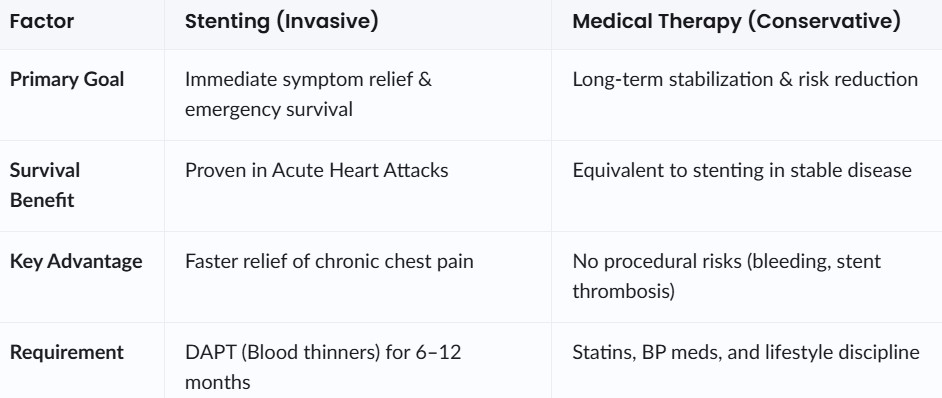
The Comparative Strategy