

Are legal guarantees insuffcient in abolishing untouchability

Are legal guarantees insuffcient in abolishing untouchability
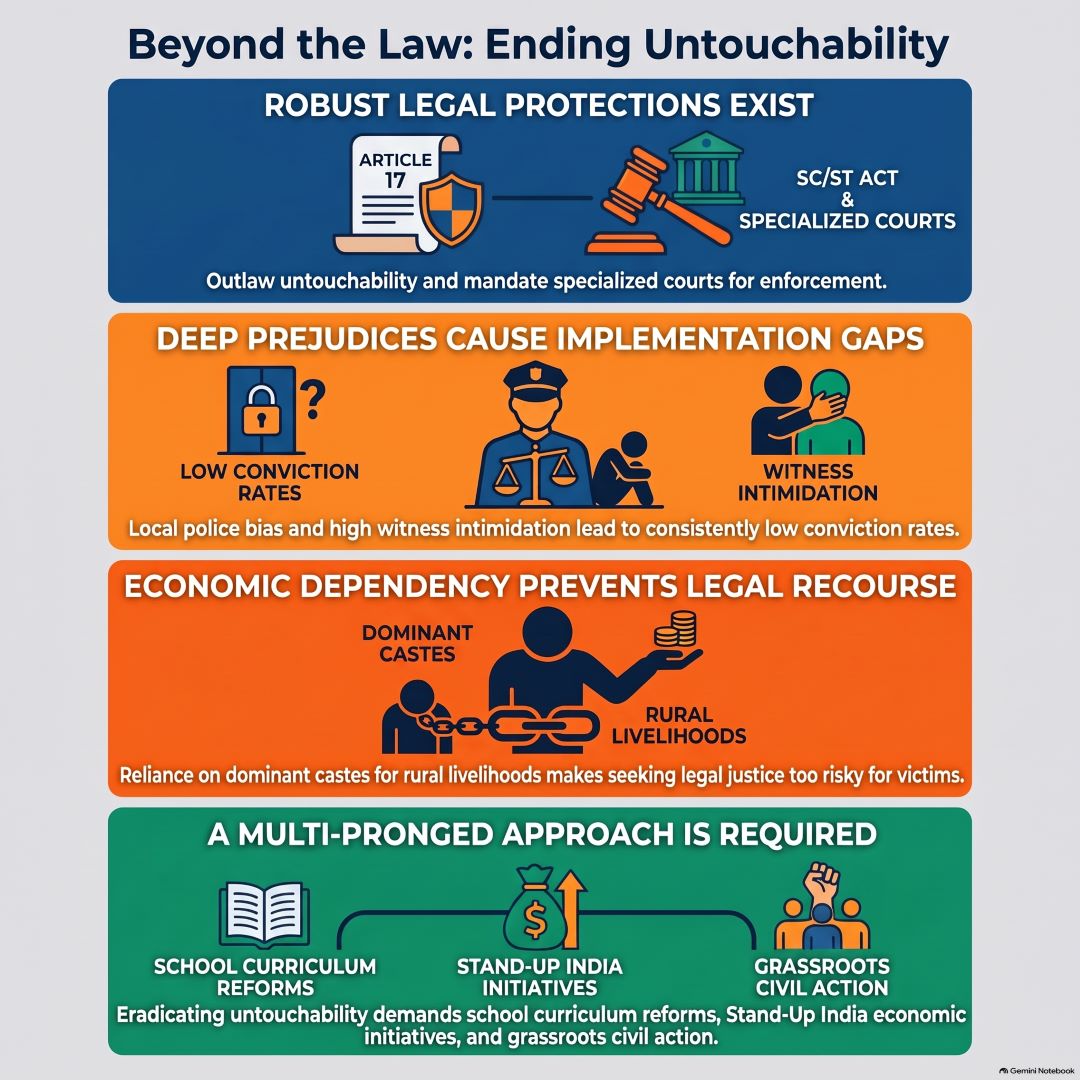
The Role of Legal Frameworks
The Indian state has provided robust legal tools to dismantle the caste hierarchy.
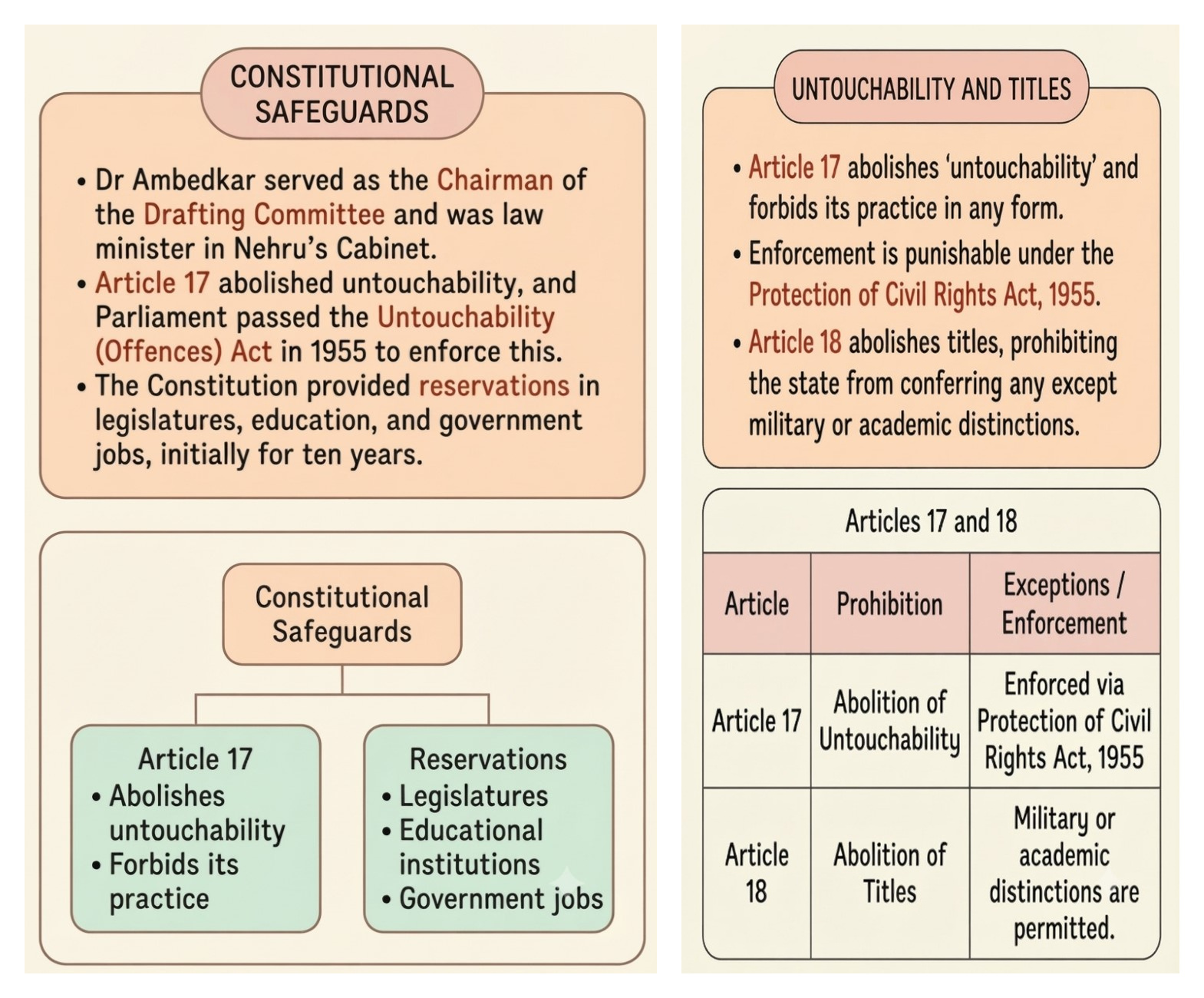
- Constitutional Mandate: Article 17 of the Constitution specifically abolished "untouchability" and forbade its practice in any form.
- Legislative Teeth: To give effect to Article 17, the Untouchability (Offences) Act, 1955 (renamed the Protection of Civil Rights Act) and the more stringent SC/ST (Prevention of Atrocities) Act, 1989 were enacted.
- Enforcement Mechanisms: These laws provide for special courts and enhanced punishments to act as a deterrent against caste-based violence and discrimination.

Why Legal Guarantees Alone are Insufficient?
Despite these laws, the practice persists in subtler, "modern" forms due to several factors:
- Social vs. Legal Sanction: Untouchability is rooted in religio-ritual beliefs. Laws can regulate public behavior (like entry to hotels), but they struggle to influence private prejudices or "mental untouchability."
- Implementation Gaps: Victims often face secondary victimization at police stations, where FIRs are sometimes refused or diluted due to the caste bias of local officials.
- Economic Dependency: In rural areas, many Dalits remain economically dependent on dominant castes for labor (jajmani system remnants). This dependency makes it nearly impossible for them to seek legal recourse without risking their livelihood.
- Low Conviction Rates: Data from the National Crime Records Bureau (NCRB) consistently shows high pendency and low conviction rates in cases of atrocities, often due to witnesses turning hostile under social pressure.
The Need for a Multi-Pronged Approach
To truly abolish untouchability, legal guarantees must be supplemented by:
- Education and Empathy: Curriculum reforms to sensitize students and dismantle caste stereotypes from a young age.
- Economic Empowerment: Moving beyond manual labor through entrepreneurship (Stand-Up India) and land reforms.
- Civil Society Action: Sustained grassroots movements for temple entry and shared communal spaces (like common dining) to break ritual barriers.

