

Ecologists flag violations in Great Nicobar project
The Tribune
1. Core Theme
The article highlights the conflict between strategic infrastructure development and ecological sustainability in the Great Nicobar Island project, raising concerns over:
- Environmental clearances
- Scale of deforestation
- Fragile island ecosystems
- Long-term sustainability
2. Key Arguments
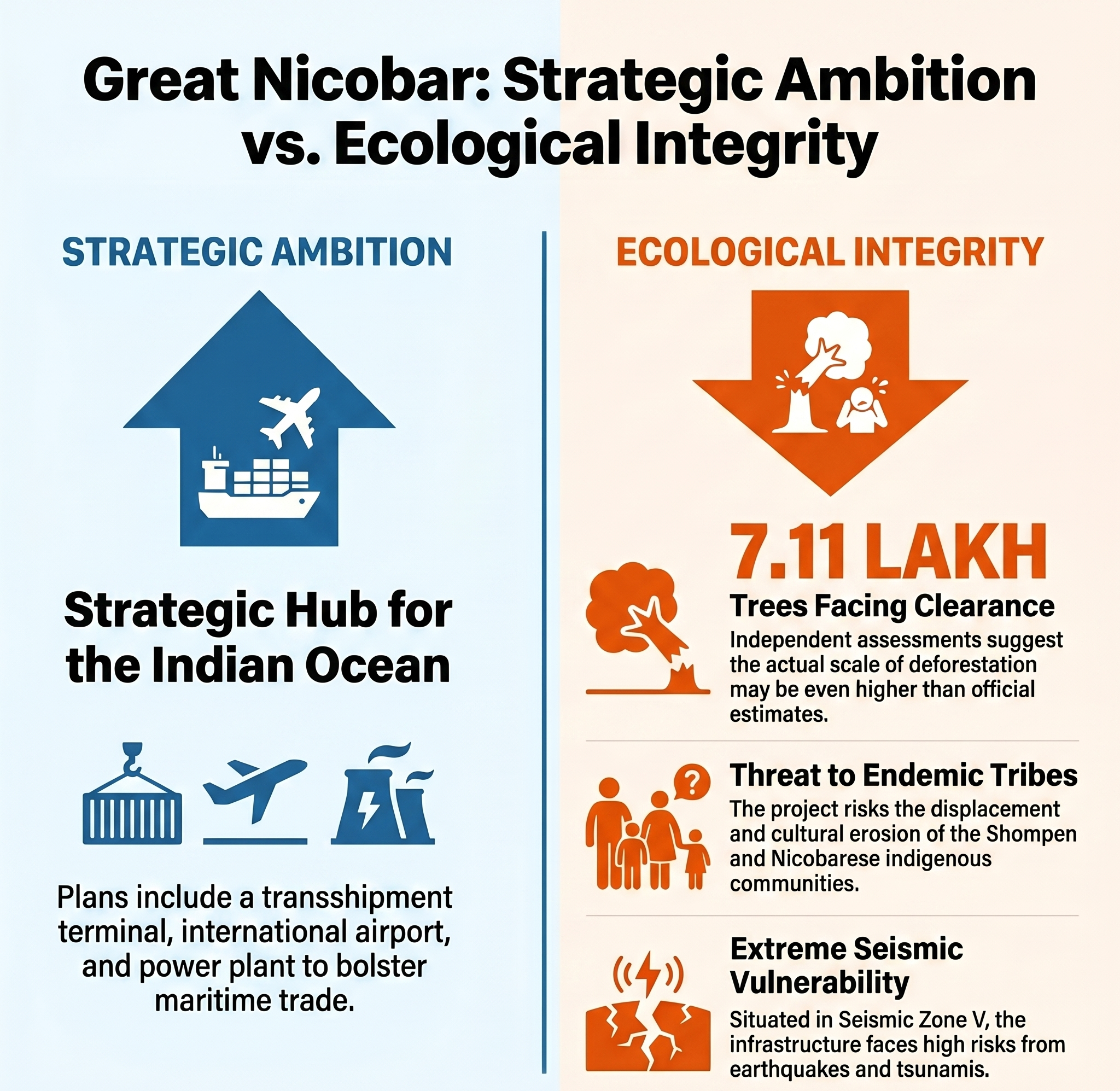
(1) Strategic Importance of the Project
- Positioned as:
- Maritime and economic hub
- Strengthening India’s presence in the Indian Ocean
- Components include:
- Transshipment terminal
- International airport
- Power infrastructure
- Township development
(2) Massive Ecological Concerns
- Government estimate:
- ~7.11 lakh trees to be felled
- Independent assessments:
- Suggest significantly higher numbers
- Indicates:
- Possible underestimation and lack of transparency
(3) Fragile Ecosystem at Risk
- Great Nicobar:
- UNESCO-recognised biosphere reserve
- Rich biodiversity
- Habitat of endemic species
- Threats:
- Habitat destruction
- Loss of biodiversity
- Ecological imbalance
(4) Data Inconsistencies and Governance Issues
- Researchers point out:
- Inconsistencies in official data
- Uncertainty in actual environmental impact
- Raises questions about:
- Environmental Impact Assessment (EIA) credibility
- Scientific rigour
(5) Indigenous Communities at Stake
- Nicobarese and Shompen tribes:
- Risks:
- Displacement
- Cultural erosion
- Livelihood disruption
(6) Sustainability and Carrying Capacity Concerns
- Current population:
- ~5 lakh (regional estimate contextually extended)
- Project may:
- Increase population pressure
- Stress freshwater resources
(7) Disaster Vulnerability
- Region falls under:
- Seismic Zone V
- Risks:
- Earthquakes
- Tsunami vulnerability
- Raises:
- Infrastructure safety concerns
3. Author’s Stance
- Clearly critical and cautionary
- Emphasises:
- Ecological risks
- Procedural lapses
- Suggests:
- Development is being pushed without adequate safeguards
4. Biases in the Article
(1) Environmentalist Tilt
- Strong emphasis on ecological risks
- Development benefits less elaborated
(2) Selective Evidence
- Relies on:
- independent researchers
- Limited government perspective beyond basic claims
(3) Alarmist Undertone
- Focus on worst-case scenarios:
- large-scale deforestation
- ecological collapse
5. Pros and Cons
Pros (of the Project)
Strategic Advantage
- Enhances India’s maritime footprint
Economic Growth
- Trade, logistics, employment
Geopolitical Significance
- Counterbalance in Indo-Pacific region
Cons (as highlighted)
Environmental Damage
- Large-scale deforestation
Biodiversity Loss
- Threat to endemic flora and fauna
Social Impact
- Indigenous displacement
Disaster Risks
- Seismic vulnerability
6. Policy Implications
(1) Reform in Environmental Clearances
- Strengthen:
- EIA process
- transparency and public consultation
(2) Sustainable Development Model
- Balance:
- infrastructure with ecology
(3) Indigenous Rights Protection
- Ensure:
- Free, Prior, Informed Consent (FPIC)
(4) Disaster-Resilient Planning
- Incorporate:
- seismic safety norms
- climate resilience
(5) Ecological Accounting
- Integrate:
- natural capital valuation
7. Real-World Impact
If Concerns Ignored
- Irreversible biodiversity loss
- Increased disaster vulnerability
- Social conflicts
If Managed Properly
- Model for:
- sustainable island development
- Strategic + ecological balance
8. UPSC GS Linkages
GS Paper I
- Geography:
- Island ecosystems
- Society:
- Tribal issues
GS Paper II
- Governance:
- Environmental clearances
- Vulnerable sections:
- Indigenous communities
GS Paper III
- Environment:
- Biodiversity conservation
- Disaster Management:
- Seismic risks
- Infrastructure development
Essay Themes
- “Development vs Environment”
- “Sustainable development in fragile ecosystems”
9. Critical Insight
The Great Nicobar debate reflects a larger governance challenge: whether India can pursue strategic growth without compromising ecological integrity and indigenous rights.
10. Balanced Conclusion
The article effectively raises legitimate ecological and governance concerns regarding the Great Nicobar project, particularly:
- data inconsistencies
- environmental risks
- sustainability questions
However:
- it underrepresents strategic and economic imperatives
11. Way Forward
- Adopt:
- precautionary principle
- Strengthen:
- scientific assessment
- Ensure:
- participatory governance
- Implement:
- phased and adaptive development
Final Editorial Takeaway
The Great Nicobar project is not merely a development initiative—it is a test of India’s ability to reconcile strategic ambition with ecological responsibility and constitutional commitments to sustainability.
