

Economic Survey highlights uneven distribution of secondary schools
Hindustan Times
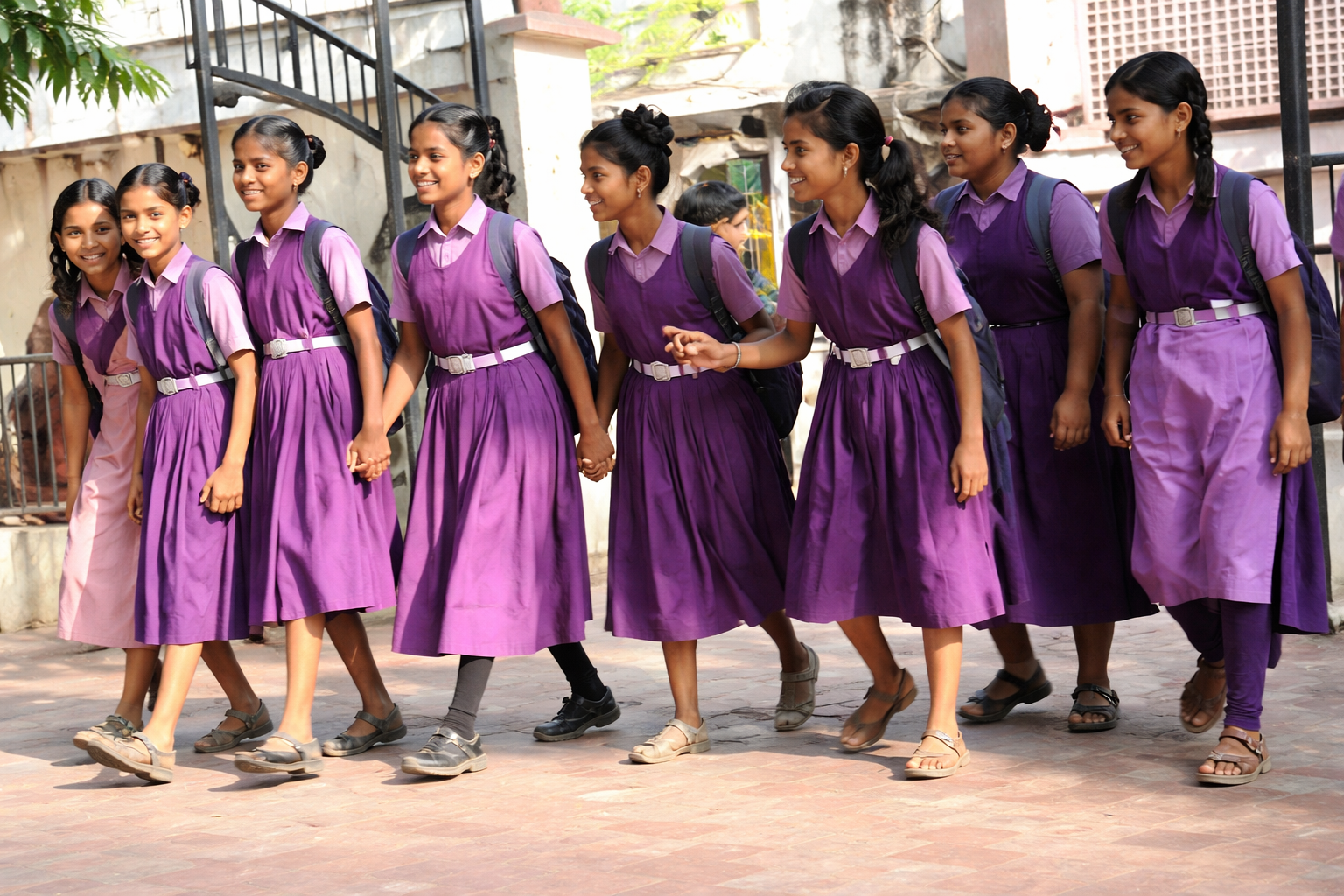
Overview of the Article
The article draws attention to a structural weakness in India’s education system highlighted by the latest Economic Survey: the uneven availability of secondary schools across regions, especially between rural and urban India. It links school dropout rates to household economic pressures, care responsibilities, and limited access to nearby secondary institutions, while situating the issue within broader goals of demographic dividend, skill formation and higher education expansion.
Key Arguments
Uneven spread of secondary schools
The Survey notes that only a small proportion of secondary schools are located in rural areas, forcing students—particularly adolescents—to travel long distances or discontinue education altogether.
Dropouts driven by economic compulsions
Household income constraints, need to supplement family earnings, and domestic or caregiving responsibilities remain primary reasons for children dropping out after elementary education.
Gendered dimensions of dropout
Care responsibilities disproportionately affect girls, reinforcing gender gaps in secondary and higher education participation.
Early schooling success, later-stage failure
While enrolment at primary and upper-primary levels has improved significantly, retention sharply declines at the secondary stage.
Link to higher education and skills
The article connects weak secondary schooling infrastructure to long-term outcomes such as reduced higher education enrolment, skill shortages, and constrained labour-force participation.
Author’s Stance and Bias
Stance
The author adopts a problem-diagnostic and policy-oriented stance, largely echoing the Economic Survey’s concern that infrastructure gaps, rather than lack of aspiration, are central to adolescent dropouts.
Biases
The narrative leans towards supply-side explanations—school availability and state capacity—while giving comparatively less attention to demand-side factors such as learning outcomes, school quality, or student motivation.
Pros Highlighted
Evidence-based diagnosis
Use of Economic Survey data lends credibility and policy relevance to the argument.
Structural framing
The article moves beyond blaming families or students, highlighting systemic constraints.
Clear development linkage
By tying secondary education to higher education, skills and productivity, it strengthens the case for urgent reform.
Limitations and Gaps
Quality dimension underplayed
The focus is on number and location of schools, with limited discussion on teacher availability, learning outcomes, or school effectiveness.
Regional variation insufficiently explored
Inter-state differences and best-performing states receive limited attention.
Implementation challenges glossed over
Fiscal constraints, teacher shortages and governance capacity issues are not deeply examined.
Policy Implications
School infrastructure expansion
Targeted investment in rural and semi-urban secondary schools is essential to improve retention.
Integrated welfare approach
Education policy must be linked with income support, nutrition, transport and childcare measures.
Gender-sensitive interventions
Policies must explicitly address care burdens and safety concerns that push girls out of school.
Centre–State coordination
Education being a Concurrent subject, effective implementation depends on cooperative federalism.
Real-World Impact
Persisting gaps in secondary education access risk weakening India’s demographic dividend by limiting skill formation and employability. Rural youth, especially girls, remain most vulnerable to long-term educational and economic exclusion. Conversely, improved secondary schooling access can significantly raise participation in higher education and formal employment.
UPSC GS Paper Linkages
GS Paper I – Society
Education, gender inequality, rural–urban disparities.
GS Paper II – Governance & Social Justice
Role of the state in education, policy implementation, inclusive development.
GS Paper III – Human Resource Development
Demographic dividend, skills, productivity and employment.
Conclusion and Future Perspective
The article effectively highlights secondary education as the weakest link in India’s schooling pipeline. While progress at the foundational level is commendable, failure to expand and strengthen secondary schooling threatens to stall gains in human capital. Going forward, policy must shift from enrolment-centric success to retention- and transition-focused reform, ensuring that economic necessity does not override educational aspiration.
