

Eggs in PM POSHAN: Nutrition vs Dietary Preferences
Eggs in PM POSHAN: Nutrition vs Dietary Preferences
Source: The Tribune (03-07-2026)
Why in News?
The reported decision of the West Bengal Government to replace eggs with vegetarian alternatives in government-aided schools has revived the debate on whether school nutrition programmes should be guided by scientific evidence or dietary preferences.
Background
- PM POSHAN (Pradhan Mantri Poshan Shakti Nirman Scheme) provides nutritious meals to school children to improve nutrition, enrolment and learning outcomes.
- States have flexibility to design menus while meeting prescribed nutritional norms.
- Eggs have been included in school meal programmes by several States since the mid-1990s.
Nutritional Importance of Eggs
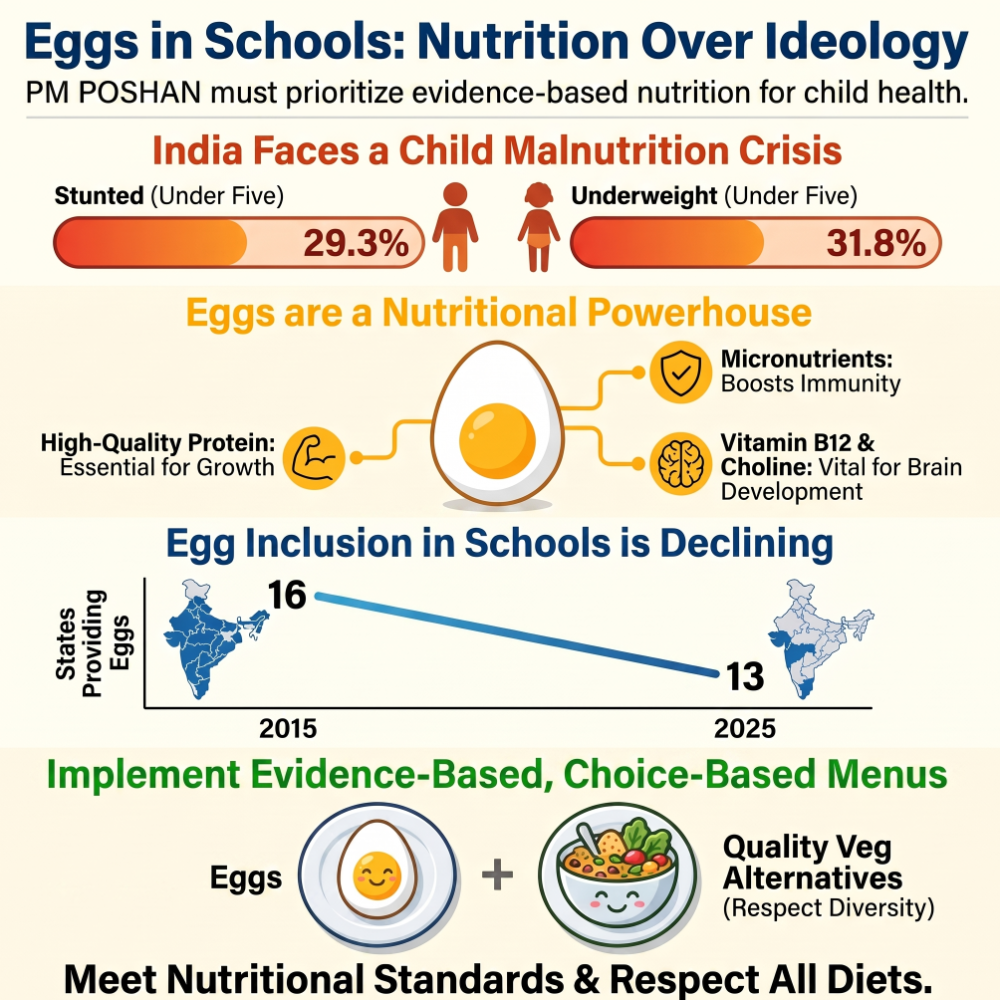
- Rich source of high-quality protein and essential amino acids.
- Provide important micronutrients such as:
- Vitamin B12
- Choline
- Selenium
- Healthy fats and vitamins essential for growth and brain development.
- Affordable, easy to cook, distribute and store.
- Particularly valuable for children from economically weaker households with limited dietary diversity.
India's Child Nutrition Scenario (NFHS-6)
- Stunted children (Under 5 years): 29.3%
- Underweight children (Under 5 years): 31.8%
These indicators highlight the continuing burden of child undernutrition.
Current Status of Egg Inclusion
- Around 13 States provided eggs under school meal programmes in 2025–26, compared to 16 States in 2015–16.
- Southern and several eastern/tribal States have consistently included eggs in nutrition programmes, including:
- Tamil Nadu
- Karnataka
- Andhra Pradesh
- Telangana
- Kerala
Arguments Supporting Egg Inclusion
- Improves protein and micronutrient intake.
- Helps address child malnutrition and learning deficits.
- Supports physical growth and cognitive development.
- Provides an affordable nutrition intervention with high public health benefits.
- Allows children from poor households access to nutritious food.
Concerns Raised Against Eggs
- Religious and cultural preferences favouring vegetarian meals.
- Dietary sensitivities among certain communities.
- Administrative challenges in serving multiple meal options.
Constitutional & Policy Perspective
- Article 21 has been judicially interpreted to include the Right to Food as part of the Right to Life.
- School meals should aim to ensure both food security and nutritional security.
- Public nutrition programmes should be guided by scientific evidence while respecting individual dietary choices.
Challenges
- Balancing nutritional needs with cultural diversity.
- Ensuring adequate vegetarian alternatives where required.
- Preventing nutritional deficiencies among vulnerable children.
- Avoiding politicisation of school nutrition policies.
Way Forward
- Base school meal policies on nutritional evidence and public health needs.
- Offer choice-based menus, allowing vegetarian alternatives alongside eggs.
- Ensure prescribed nutritional standards are met irrespective of menu choice.
- Strengthen nutrition monitoring under PM POSHAN.
- Increase awareness about balanced diets and child nutrition among communities.
Conclusion
School meal programmes should prioritize children's nutritional requirements while respecting dietary diversity. A flexible, evidence-based approach that offers both eggs and suitable vegetarian alternatives can balance public health objectives with cultural preferences.
Final Takeaway
PM POSHAN should focus on nutritional outcomes rather than dietary ideology. Ensuring every child receives adequate protein and essential nutrients is central to improving learning, health and human capital development.
