

Found in TN: 3,500-yr-old ‘pit houses’ that protected people
Times Of India
1. Core Theme
The article reports an archaeological discovery of Neolithic pit dwellings in Tamil Nadu, highlighting:
- Early human adaptation strategies
- Agro-pastoral lifestyle
- Settlement patterns and technological evolution
2. Key Arguments / Findings
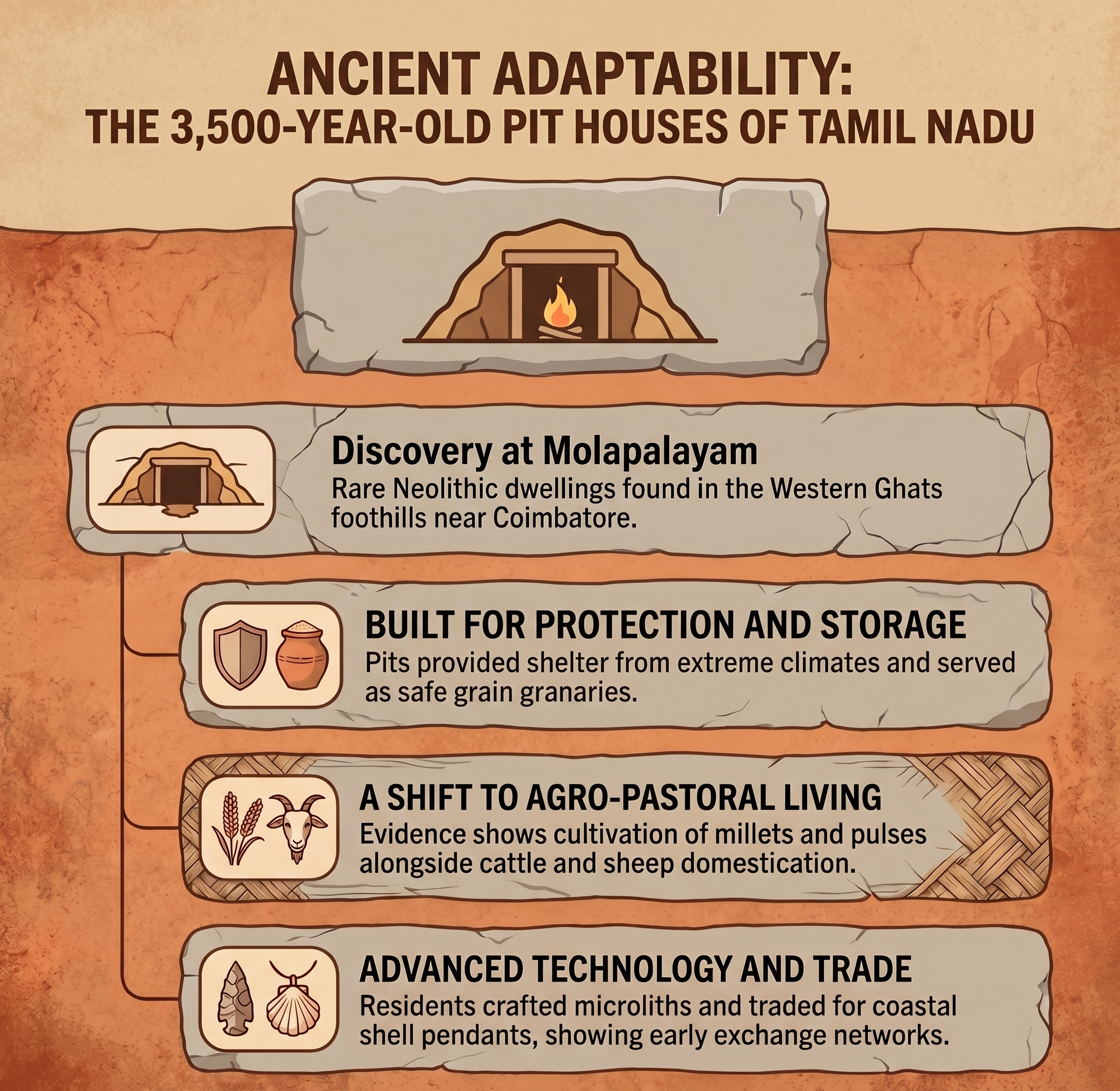
(1) Discovery of Neolithic Pit Houses
- Location:
- Molapalayam near Coimbatore (Western Ghats foothills)
- Dating:
- ~3,500 years old (Neolithic phase)
- Significance:
- Rare evidence of subterranean habitation in South India
(2) Functional Utility of Pit Structures
- Possible uses:
- Grain storage
- Protection from:
- extreme climate
- natural disasters
- Some pits:
- contained querns, grinding stones → kitchen usage
(3) Evidence of Agro-Pastoral Economy
- Findings suggest:
- cultivation of millets and pulses
- domestication of cattle, sheep, goats
- Indicates:
- transition from hunting-gathering to food production
(4) Tool and Craft Development
- Artefacts:
- microliths, arrowheads, bone tools
- pottery (burnished red/black ware)
- Interpretation:
- technological advancement
- specialised skills
(5) Trade and Cultural Linkages
- Shell pendants:
- suggest coastal interaction
- Implies:
- early exchange networks
(6) Burial Practices
- Infant skeletal remains:
- found near habitation
- Indicates:
- burial customs within settlement
(7) Seasonal Migration Pattern
- Hypothesis:
- habitation during monsoon
- movement to riverine areas in dry season
- Reflects:
- adaptive mobility
(8) Archaeobotanical and Faunal Evidence
- Charred seeds:
- help identify plant species
- Animal remains:
- domestic + wild (deer hunting evidence)
3. Author’s Stance
- Primarily informative and descriptive
- Emphasises:
- significance of discovery
- insights into early human life
4. Biases in the Article
(1) Scientific Optimism
- Interprets findings positively
- Limited discussion of:
- uncertainties in dating or interpretation
(2) Limited Comparative Context
- Does not compare:
- similar global or Indian Neolithic sites
(3) Hypothesis-Driven Conclusions
- Seasonal migration, usage patterns:
- inferred, not conclusively proven
5. Pros and Cons
Pros
Enhances Understanding of Prehistory
- Adds data on South Indian Neolithic
Multidisciplinary Evidence
- Combines archaeology, archaeobotany, faunal studies
Shows Human Adaptation
- Climate-responsive housing
Cons
Limited Scale of Evidence
- Based on one site
Interpretative Gaps
- Some conclusions remain speculative
6. Policy Implications
(1) Heritage Conservation
- Need to:
- protect archaeological sites
- prevent encroachment
(2) Research Promotion
- Encourage:
- interdisciplinary archaeological studies
(3) Cultural Tourism
- Potential for:
- heritage-based tourism development
7. Real-World Impact
Academic
- Expands:
- knowledge of Indian Neolithic
Cultural
- Strengthens:
- regional historical identity
Educational
- Useful for:
- curriculum enrichment
8. UPSC GS Linkages
GS Paper I
- Indian culture:
- prehistoric cultures
- Geography:
- human-environment interaction
Anthropology Optional
- Prehistoric archaeology
- Subsistence patterns
- Settlement patterns
Essay Topics
- “Human adaptation to environment”
- “Evolution of early societies”
9. Critical Insight
The discovery underlines that early human societies were not primitive but highly adaptive, technologically aware, and ecologically responsive.
10. Balanced Conclusion
The article effectively highlights:
- the importance of the pit-house discovery
- insights into Neolithic life
However:
- interpretations should be treated cautiously due to:
- limited evidence
11. Way Forward
- Expand:
- excavations in South India
- Integrate:
- scientific dating techniques
- Promote:
- preservation and documentation
Final Editorial Takeaway
The Tamil Nadu pit-house discovery enriches our understanding of India’s prehistoric past, revealing a sophisticated interplay between environment, technology, and early human ingenuity.
