G7 Emergency Oil Release and Global Diesel Prices

G7 Emergency Oil Release and Global Diesel Prices
G7 Emergency Reserve Release
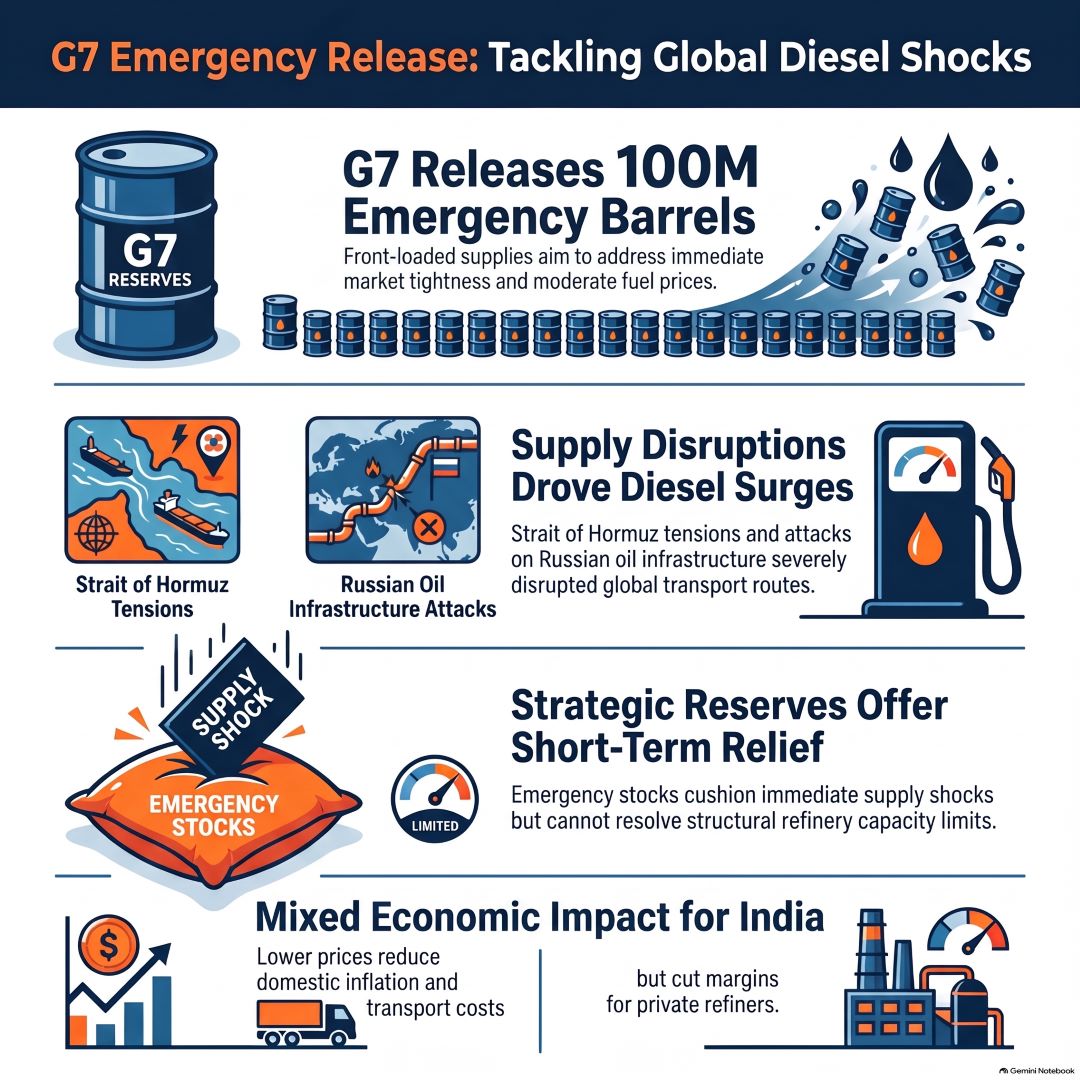
- G7 countries have agreed to release around 100 million barrels of crude oil and petroleum products from emergency reserves through the International Energy Agency (IEA).
- A significant share will comprise diesel, with supplies front-loaded during the initial period to address immediate market tightness.
- The measure is intended to increase short-term supply, moderate international fuel prices and reduce inflationary pressures.
- Emergency stock releases are designed as a temporary response to supply disruptions rather than a permanent solution to oil-market imbalances.
Why Diesel Prices Are Rising?
- Global diesel prices have increased due to disruptions in oil and fuel transportation through the Strait of Hormuz and attacks affecting Russian oil infrastructure.
- Europe’s reduced access to Russian refined products has increased its dependence on alternative sources of diesel.
- Diesel is particularly important because it powers freight transport, agriculture, construction and industrial activity.
- Consequently, a rise in diesel prices can spread through the economy by increasing transportation and production costs, contributing to broader inflation.
How Strategic Reserves Work?
- Strategic petroleum reserves (SPRs) are emergency stocks maintained to respond to major disruptions in oil supply.
- Coordinated releases can temporarily increase market supply and reduce the impact of sudden shortages.
- However, their effectiveness depends on the size and timing of the release, the duration of the supply disruption and overall global demand.
- They cannot permanently resolve structural problems such as refinery capacity constraints, geopolitical instability or dependence on particular supply routes.
Implications for India
- India is heavily dependent on imported crude oil, making domestic fuel prices sensitive to international oil prices and global supply disruptions.
- Lower international diesel prices could reduce the under-recoveries faced by public-sector oil marketing companies when retail prices are not immediately adjusted to market costs.
- Lower diesel prices can also reduce transportation and agricultural costs, thereby easing inflationary pressures.
- However, private refiners and diesel exporters such as Reliance Industries and Nayara Energy could face lower refining or export margins if international product prices decline.
Limits of the Measure
- The release can provide short-term price relief but cannot eliminate geopolitical risks or permanently increase global refining capacity.
- The episode highlights the importance of energy security through diversified crude sources, strategic petroleum reserves, domestic refining capacity and greater adoption of alternative energy.
- For India, reducing vulnerability to oil-price shocks requires both short-term strategic stock management and long-term diversification of the energy mix.
|
Origins and Evolution The group was formed in 1975 (initially as the G6, with Canada joining in 1976) as a response to the 1973 Oil Crisis and the subsequent global recession. It was designed as a forum for the world's major non-communist powers to stabilize the international economy.
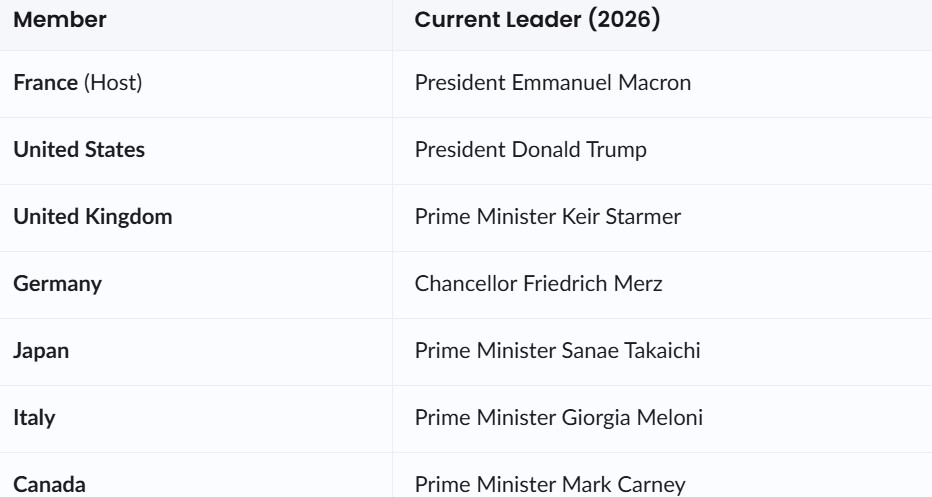
Membership & Current Leadership (2026) The presidency rotates annually among the members. In 2026, France holds the presidency.
|