

Good New Story, But…
Times Of India
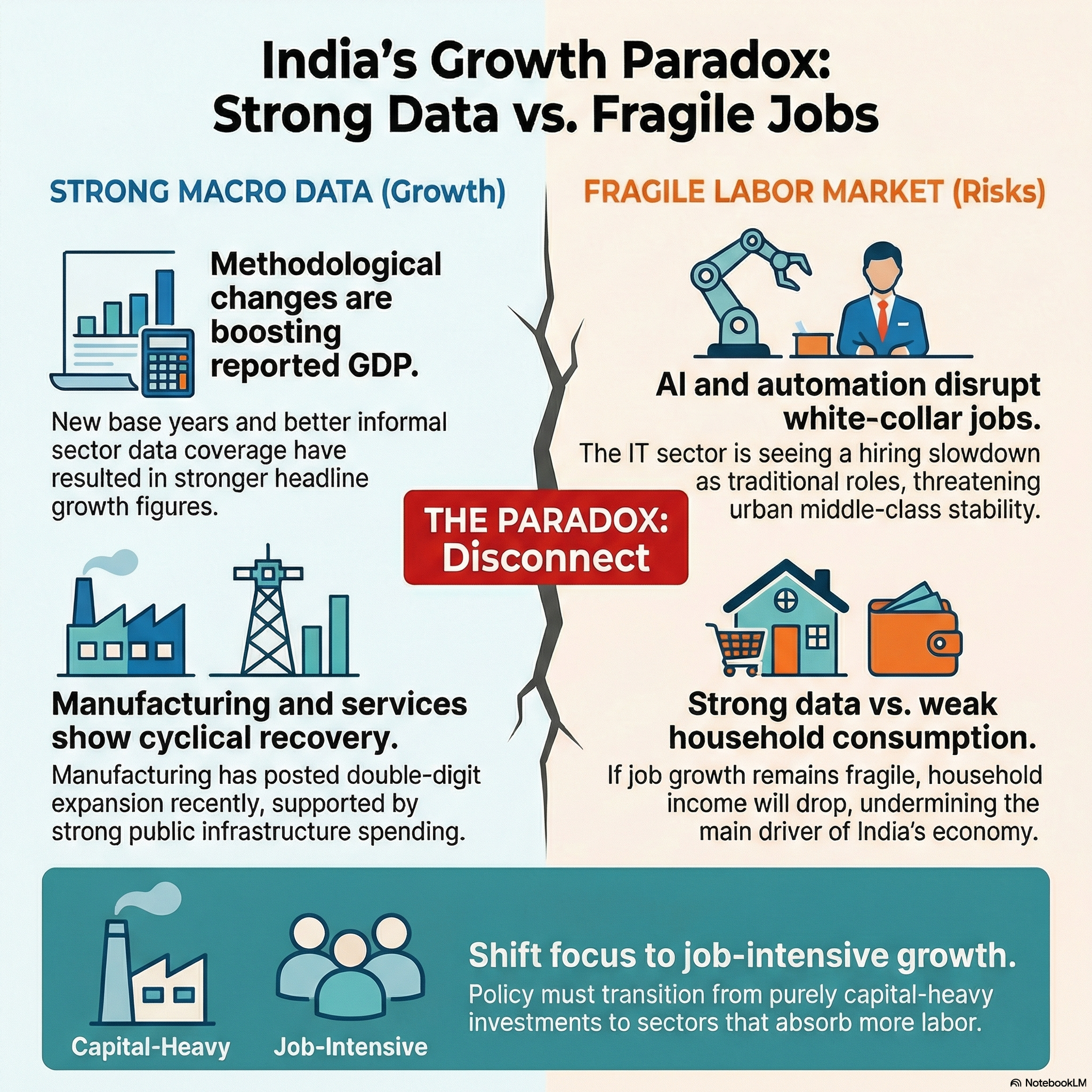
Core Theme of the Article
The article evaluates India’s recent GDP performance following a change in base year and methodology. While acknowledging stronger growth numbers and improved macro indicators, it cautions that structural concerns—particularly white-collar job losses and potential consumption slowdown—may undermine the sustainability of the growth narrative.
The central message: macro data looks strong, but labour-market signals demand caution.
Key Arguments Presented
1. Methodological Changes Boost Reported Growth
The shift in base year and improved data coverage (including technology-driven surveys and better informal sector capture) have resulted in stronger headline GDP figures.
2. Services and Manufacturing Showing Momentum
Services growth remains robust, and manufacturing has posted double-digit expansion in recent quarters, suggesting cyclical recovery.
3. Investment and Capex Push Supporting Growth
Public capex has strengthened infrastructure activity. There are signs of revival in private investment as well.
4. External Sector Moderation
US tariffs and global trade uncertainties have moderated export growth. However, services exports remain resilient.
5. Primary Concern: White-Collar Job Loss
The article flags IT sector hiring slowdown due to automation and AI adoption. Weak employment growth could affect household income and consumption, the main driver of GDP.
Author’s Stance
The tone is cautiously optimistic.
• Accepts improved macroeconomic indicators
• Welcomes methodological refinement
• Warns against complacency
• Highlights employment as the critical missing link
The stance is neither celebratory nor alarmist, but prudently skeptical.
Underlying Biases and Framing
Data-Credibility Sensitivity
The article implicitly defends methodological changes but acknowledges skepticism around statistical revisions.
Urban-Middle-Class Lens
Focus on white-collar job losses reflects concern for urban salaried segments, possibly underrepresenting rural employment dynamics.
Growth Sustainability Bias
Frames growth primarily through consumption and employment sustainability.
Strengths of the Article
• Connects macro growth to labour market realities
• Recognises the importance of methodology transparency
• Balances optimism with structural caution
• Links AI disruption with economic shifts
Limitations
• Limited discussion of rural income recovery
• Underplays informal employment adjustments
• Could have quantified employment elasticity more clearly
Policy Implications
1. Statistical Transparency
Clear communication on GDP methodology to build credibility and investor confidence.
2. Employment-Focused Growth Strategy
Shift from purely capex-driven growth to job-intensive sectors.
3. Skill Transition and AI Adaptation
Reskilling programs to mitigate white-collar displacement in IT and services.
4. Strengthening Domestic Demand
Policies to boost disposable income and consumption resilience.
5. Export Diversification
Mitigate risks from trade uncertainties through diversified trade partnerships.
Real-World Impact
Short Term
• Improved investor sentiment due to stronger GDP numbers
• Continued capex-driven growth momentum
Medium Term
• Risk of consumption slowdown if job creation lags
• Pressure on urban employment segments
Long Term
• Structural transition toward AI-led productivity gains
• Potential widening income disparities if skill adaptation fails
UPSC GS Alignment
GS Paper III – Economy
• GDP calculation methodology
• Base year revision
• Investment vs consumption debate
• Employment elasticity of growth
• Impact of AI on labour markets
GS Paper II
• Policy transparency and institutional credibility
Essay Relevance
• “Growth without jobs: a paradox”
• “Technology as both opportunity and disruption”
Balanced Editorial Assessment
The article rightly celebrates improvements in data robustness and economic momentum. However, it does not allow headline numbers to obscure structural labour-market concerns.
Growth measured statistically must translate into income security and job stability. Without employment expansion, consumption-led growth risks plateauing.
Future Perspective
India’s growth trajectory will depend on:
• Quality and transparency of statistical reforms
• Labour-intensive manufacturing expansion
• Skill adaptation in AI-disrupted sectors
• Sustained private investment revival
If employment aligns with productivity gains, India’s growth story can consolidate. If white-collar displacement deepens without absorption elsewhere, consumption may weaken.
Final Editorial Judgment:
The numbers tell a good story—but sustainable growth will ultimately be judged not by revised GDP series, but by durable employment and income expansion.
