

Green steel can shape India’s climate goals trajectory
Hindustan Times
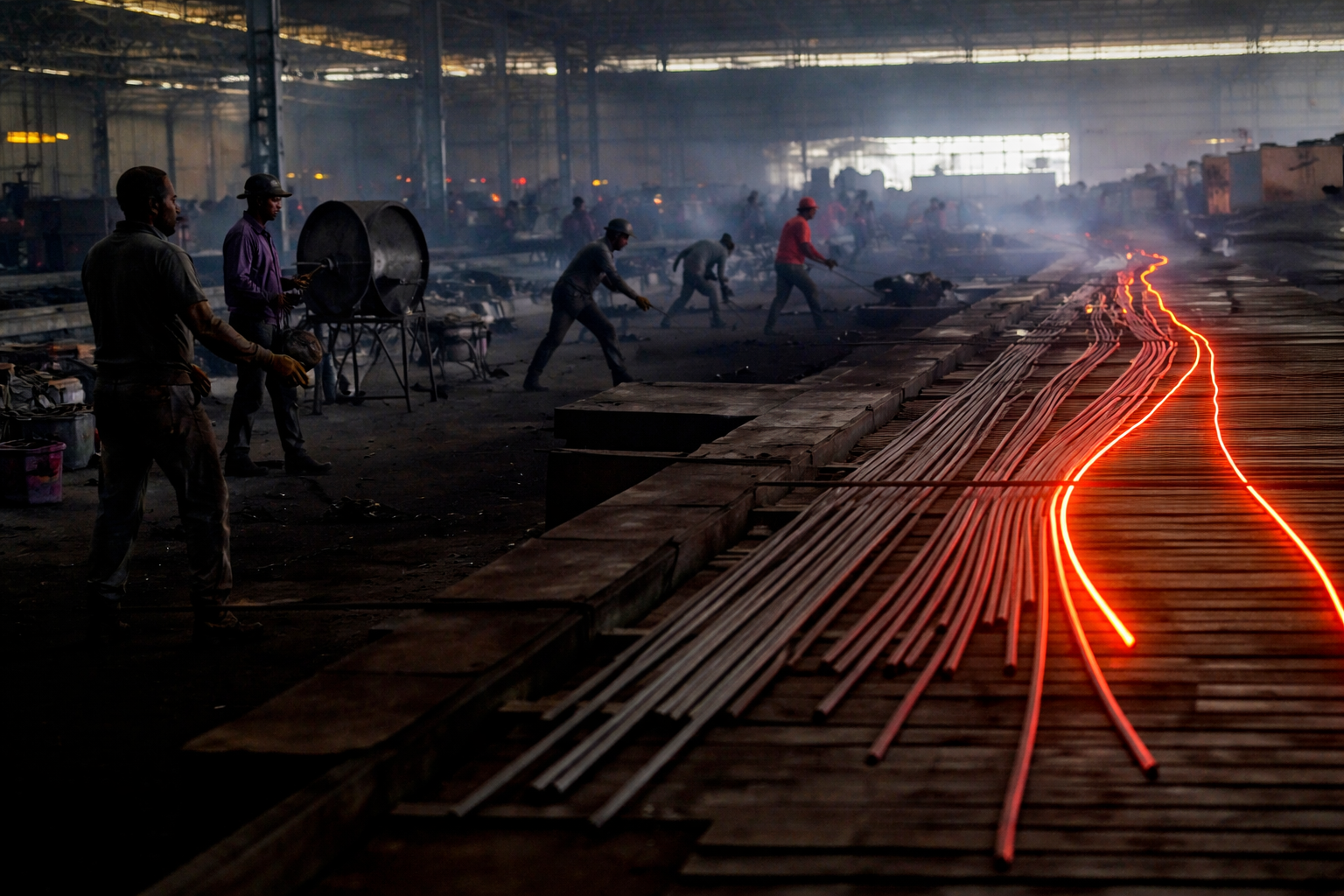
Overview of the Article
The article argues that green steel—steel produced using low-carbon or near-zero-carbon technologies—can become a decisive lever in India’s climate transition. It situates the steel sector at the intersection of industrial growth, emissions reduction, global competitiveness and energy transition, and frames green steel as both a climate necessity and an industrial opportunity.
Key Arguments
Steel at the core of India’s emissions challenge
Steel accounts for a significant share of India’s industrial emissions, making decarbonisation of this sector essential for meeting long-term climate commitments.
Green steel as a strategic industrial pivot
Transitioning to hydrogen-based processes, renewable energy inputs and carbon-capture technologies can future-proof India’s steel industry against global carbon regulations.
Global regulatory pressure as a driver
Emerging mechanisms like carbon border measures in advanced economies are likely to penalise carbon-intensive steel, making early transition a competitiveness imperative.
Technology and cost barriers remain high
Green steel technologies are capital-intensive, technologically complex and dependent on affordable green hydrogen and reliable renewable power.
Policy coherence as the key enabler
The article stresses that alignment across industrial policy, energy policy and climate policy is necessary to scale green steel from pilots to commercial viability.
Author’s Stance and Bias
Stance
The author is clearly supportive of green steel, portraying it as both inevitable and advantageous for India’s climate and industrial future.
Biases
There is a strong techno-optimistic bias. Economic risks, transitional disruptions and fiscal trade-offs are acknowledged but largely subordinated to the strategic narrative of opportunity.
Pros Highlighted
Climate mitigation impact
Green steel offers substantial emissions reduction potential in one of India’s hardest-to-abate sectors.
Industrial competitiveness
Early adoption could position India as a global supplier of low-carbon steel, especially as demand rises in infrastructure and clean-energy projects worldwide.
Energy transition synergy
The shift complements India’s renewable energy expansion and green hydrogen ambitions.
Job creation and innovation
New technologies and supply chains can generate skilled employment and drive industrial innovation.
Cons and Risks
High transition costs
Green steel requires massive upfront investment in hydrogen infrastructure, renewable power and process redesign.
Technology uncertainty
Many pathways remain unproven at scale, increasing financial and operational risk.
Uneven sectoral impact
Large firms may adapt faster than MSMEs, risking consolidation and job losses without targeted support.
Energy system stress
Rising demand for renewable electricity and hydrogen could strain existing energy infrastructure.
Policy Implications
Industrial policy redesign
Steel decarbonisation must be embedded in national industrial and manufacturing strategies.
Green finance mobilisation
Public finance, blended finance and international climate funding will be critical to de-risk early investments.
Energy–industry coordination
Green steel viability depends on affordable green hydrogen, grid stability and renewable capacity expansion.
Just transition planning
Worker reskilling and regional transition strategies are essential to manage social costs.
Real-World Impact
If successfully scaled, green steel can reduce India’s industrial emissions trajectory while preserving growth momentum. Failure to transition, however, risks export losses, stranded assets and long-term competitiveness erosion as global markets move toward carbon-constrained trade.
UPSC GS Paper Linkages
GS Paper III – Environment & Climate Change
Mitigation strategies, hard-to-abate sectors, climate commitments.
GS Paper III – Indian Economy
Industrial policy, manufacturing competitiveness, energy transition.
GS Paper II – Governance
Policy coordination, public investment, international climate cooperation.
Conclusion and Future Perspective
The article persuasively presents green steel as a strategic bridge between India’s development ambitions and climate responsibilities. While the pathway is technologically and financially demanding, delay could prove costlier in the long run. The success of green steel will depend not on intent alone, but on coherent policy design, risk-sharing mechanisms and sustained state–industry collaboration. If managed well, green steel can become a cornerstone of India’s low-carbon industrial future rather than a compliance burden.
