

GST 2.0: Next-Generation GST Reforms

GST 2.0: Next-Generation GST Reforms
Context
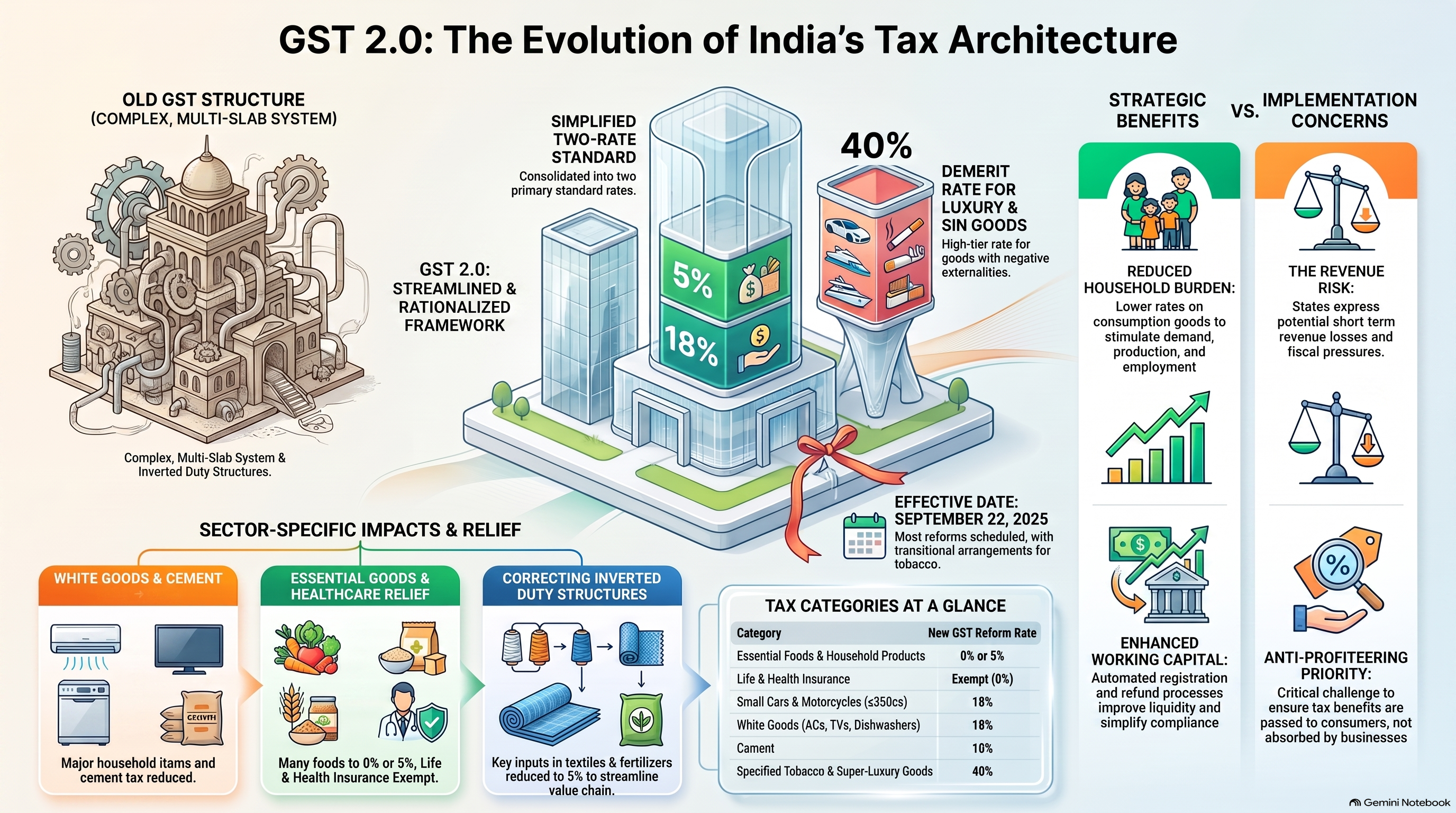
- The 56th GST Council meeting approved a major rationalisation of India’s indirect tax structure.
- The existing multiple slabs are being simplified into a two-rate structure of 5% and 18%, with a 40% demerit rate for select sin and super-luxury goods.
- Most changes are scheduled to take effect from 22 September 2025, while tobacco products are treated separately.
Key Reforms
|
Area |
Reform |
|
GST structure |
5% and 18% standard rates + 40% demerit rate |
|
Essential goods |
Many food and household products shifted to 5% or 0% |
|
Healthcare |
Selected medicines and medical items reduced/exempted |
|
Insurance |
Life and health insurance made GST-exempt |
|
White goods |
ACs, TVs and dishwashers reduced from 28% to 18% |
|
Automobiles |
Small cars and motorcycles ≤350cc shifted to 18% |
|
Cement |
GST reduced from 28% to 18% |
|
Textiles |
Man-made fibre/yarn rates reduced to 5% |
|
Fertilisers |
Key inputs reduced from 18% to 5% |
|
Sin/luxury goods |
40% rate for specified demerit and super-luxury goods |
Benefits
- Reduces the tax burden on households and middle-class consumers.
- Simplifies compliance by reducing classification disputes and multiple slabs.
- Corrects inverted duty structures, particularly in textiles and fertiliser value chains.
- Automated registration and refunds can improve working-capital availability.
- Lower GST rates on consumption goods may stimulate demand, production and employment.
- Reduced taxation of healthcare and insurance can improve affordability and financial protection.
40% Demerit Rate
 Designed for goods generating negative externalities or representing super-luxury consumption.
 - Includes specified tobacco products, pan masala, caffeinated beverages, large automobiles and other luxury goods.
- Tobacco products will initially continue under the existing 28% plus cess arrangement until compensation-related obligations are addressed.
Concerns
- States have raised concerns regarding possible revenue losses following rate rationalisation.
- Lower rates could create short-term fiscal pressures for both Centre and States.
- Effective implementation requires prevention of profiteering and timely transmission of tax benefits to consumers.
Significance
GST 2.0 marks a shift from merely introducing a unified indirect tax to rationalising and simplifying the GST architecture. It seeks to combine lower compliance costs and consumer relief with revenue sustainability and a more efficient tax system.
