

Permitting the End of Life with Dignity
Morning Standard
Key Arguments of the Article
Recognition of the Right to Die with Dignity
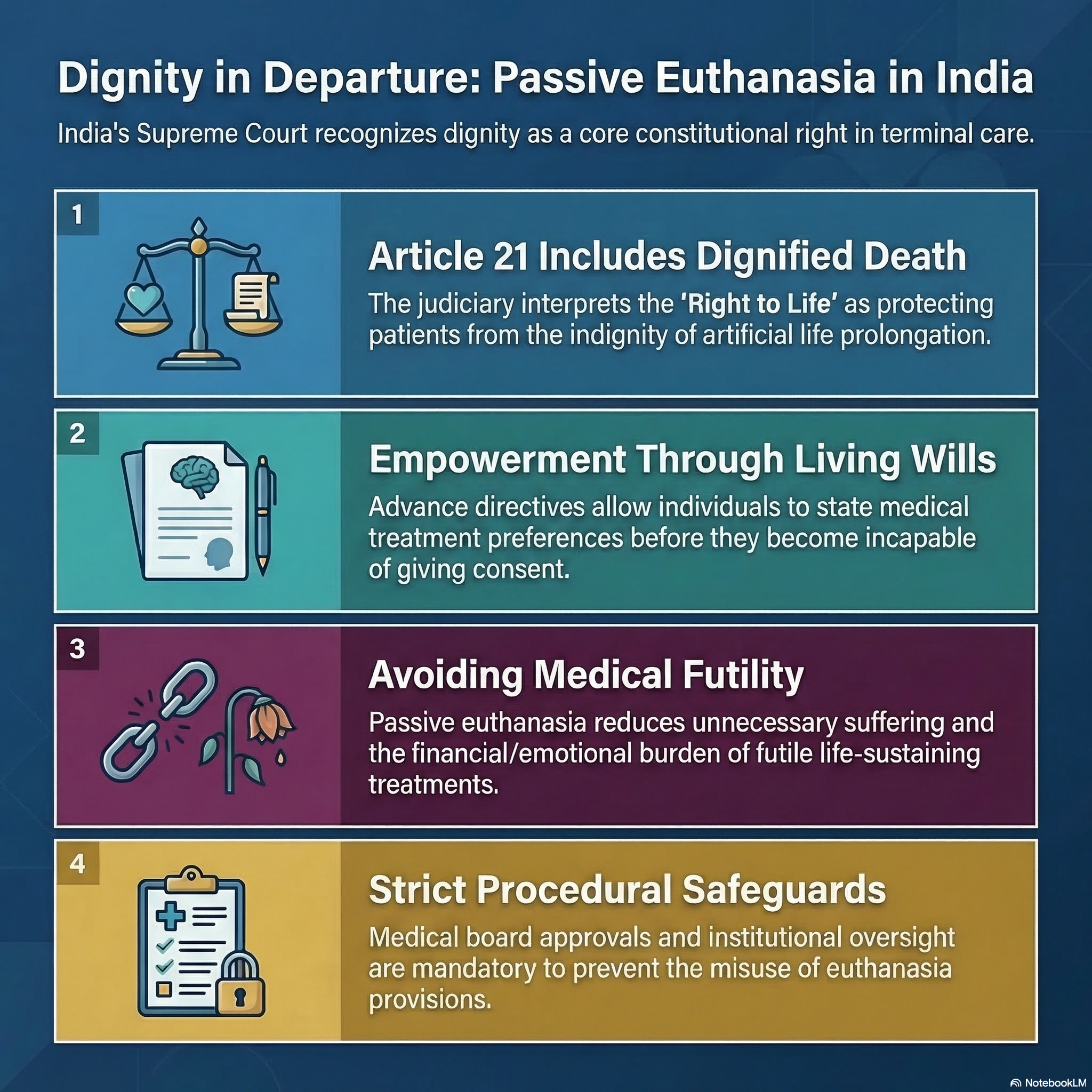
The article argues that the Supreme Court has progressively interpreted Article 21 (Right to Life) to include the right to die with dignity. In cases where patients suffer from terminal illness or irreversible conditions, prolonging life artificially may undermine human dignity.
Judicial recognition of passive euthanasia reflects a broader understanding of individual autonomy and dignity.
Evolution of Judicial Decisions
The article traces the legal journey of euthanasia-related decisions.
• The Aruna Shanbaug case allowed passive euthanasia under strict conditions.
• Later judgments recognised the validity of living wills and advance directives.
• Subsequent rulings simplified procedures to make implementation more practical.
These developments reflect the judiciary’s attempt to balance ethical considerations with constitutional rights.
Importance of Living Wills
Living wills allow individuals to state in advance their preferences regarding medical treatment in situations where they may become incapable of expressing consent.
The article emphasises that recognising advance directives strengthens patient autonomy and ensures that medical decisions respect personal dignity.
Procedural Safeguards
The article notes that the Supreme Court has established procedural safeguards to prevent misuse of euthanasia provisions. These include medical board approvals, verification processes, and institutional oversight.
Such safeguards aim to ensure that decisions are medically justified and ethically sound.
Ethical Debate in Medical Practice
End-of-life decisions involve complex ethical dilemmas for medical professionals. Doctors must balance the duty to preserve life with respect for patient autonomy and dignity.
The article highlights that clear legal frameworks help guide medical practitioners in making difficult decisions.
Author’s Stance
The author broadly supports the judicial recognition of passive euthanasia as a humane and constitutionally grounded step. The article frames the decision as an important development in recognising dignity and autonomy in healthcare.
At the same time, it acknowledges the need for strict safeguards to prevent misuse.
Possible Biases
Human Rights Perspective
The article strongly emphasises individual autonomy and dignity, which may reflect a rights-based approach to healthcare.
Judicial Reform Orientation
The discussion highlights the progressive nature of judicial interpretation and may place less emphasis on cultural or religious objections.
Medical Ethics Focus
The article primarily approaches the issue from legal and medical ethics perspectives rather than broader social debates.
Advantages of Permitting Passive Euthanasia
Respect for Patient Autonomy
Individuals can exercise control over medical decisions at the end of life.
Preservation of Human Dignity
Avoiding unnecessary prolongation of suffering aligns with the principle of dignity in healthcare.
Ethical Clarity for Medical Practitioners
Legal guidelines provide doctors with clearer frameworks for decision-making.
Reduction of Medical Futility
Avoiding unnecessary life-sustaining treatment can reduce emotional and financial burdens on families.
Concerns and Challenges
Risk of Misuse
Without strict safeguards, euthanasia provisions could potentially be abused.
Ethical and Religious Sensitivities
Different cultural and religious traditions hold diverse views on end-of-life decisions.
Institutional Implementation
Hospitals and medical institutions may face practical challenges in implementing complex procedural requirements.
Need for Public Awareness
Limited public awareness of living wills and advance directives may restrict their effectiveness.
Policy Implications
Strengthening Legal Awareness
Public education campaigns are necessary to inform citizens about living wills and patient rights.
Medical Ethics Training
Healthcare professionals should receive training on ethical and legal aspects of end-of-life care.
Institutional Protocols
Hospitals must develop clear protocols for handling advance directives and passive euthanasia requests.
Legislative Clarification
Parliament may consider codifying guidelines to provide a comprehensive statutory framework.
Real-World Impact
If implemented effectively:
• Greater respect for patient dignity
• Clearer ethical guidelines for healthcare providers
• Improved end-of-life care practices
If safeguards remain weak:
• Risk of legal disputes and ethical controversies
• Potential misuse of euthanasia provisions
• Public mistrust in medical institutions
Alignment with UPSC GS Papers
GS Paper II
Judiciary, constitutional interpretation, rights under Article 21.
GS Paper IV
Ethics in healthcare, dignity, autonomy, and moral decision-making.
GS Paper I
Social issues related to healthcare, ageing populations, and ethical debates.
Balanced Assessment
The recognition of passive euthanasia and living wills represents a significant development in India’s constitutional jurisprudence. By linking the right to life with dignity, the Supreme Court has expanded the scope of individual autonomy in medical decision-making.
However, the implementation of such rights requires careful safeguards to prevent misuse and ensure ethical medical practice.
Future Perspective
As healthcare systems evolve and life expectancy increases, end-of-life care will become an increasingly important ethical and legal issue. Developing robust legal frameworks, strengthening medical ethics training, and promoting public awareness will be essential for ensuring that the right to die with dignity is exercised responsibly.
For policymakers and civil services aspirants, the issue illustrates the complex intersection between constitutional rights, medical ethics, and social values in contemporary governance.
