

Right to Vote in India

Right to Vote in India
Why in News?
- An investigation into alleged differences within the Election Commission of India (ECI) has renewed the debate over whether the right to vote should be elevated to a fundamental right.
- The report highlighted objections concerning voter additions/deletions, changes in procedures and access to electoral data.
- It also reported the exclusion of 97 eligible voters in Goa, allegedly due to limitations in the ECINet software that prevented ground-level correction of erroneous deletions.
About / Key Facts
- India adopted Universal Adult Suffrage (UAS) from the beginning of the Republic, with the constitutional basis provided by Article 326.
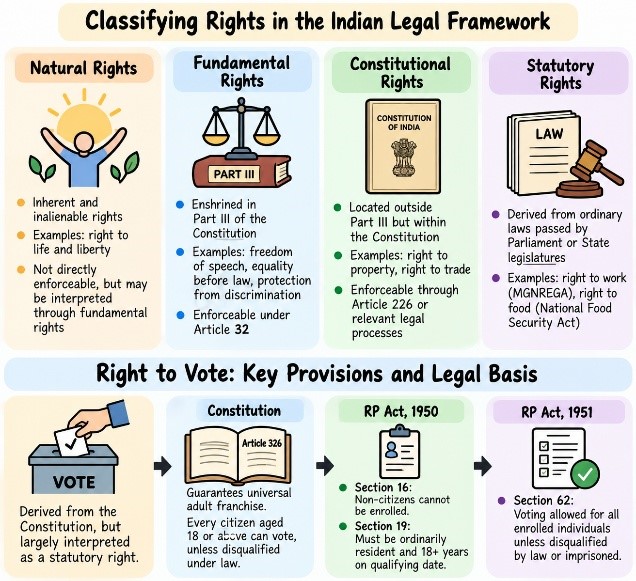
- At present, the right to vote is treated as a statutory right rather than a fundamental right.
- In Kuldip Nayar v. Union of India (2006), the Supreme Court held that the “right to elect” is a statutory right under Section 62 of the Representation of the People Act, 1951.
- Representation of the People Act, 1950: Deals with preparation and revision of electoral rolls.
- Representation of the People Act, 1951: Regulates the conduct of elections and election-related offences.
- Article 324: Vests the ECI with the superintendence, direction and control of elections, including electoral rolls.
- The Chief Election Commissioner and Other Election Commissioners (Appointment, Conditions of Service and Term of Office) Act, 2023 provides the framework for the ECI’s transaction of business.
- The debate concerns whether making voting a fundamental right would provide stronger constitutional and judicial protection against potential administrative or legislative overreach.
- Some scholars and a dissenting Supreme Court opinion have supported considering the right to vote as a fundamental right, while the existing legal position treats it as a statutory right.
|
Arguments Against (The Current Legal Standing) Critics and judicial precedents suggest that the current framework is sufficient and that a change might bring unintended consequences.
|
Global Context and India's Position
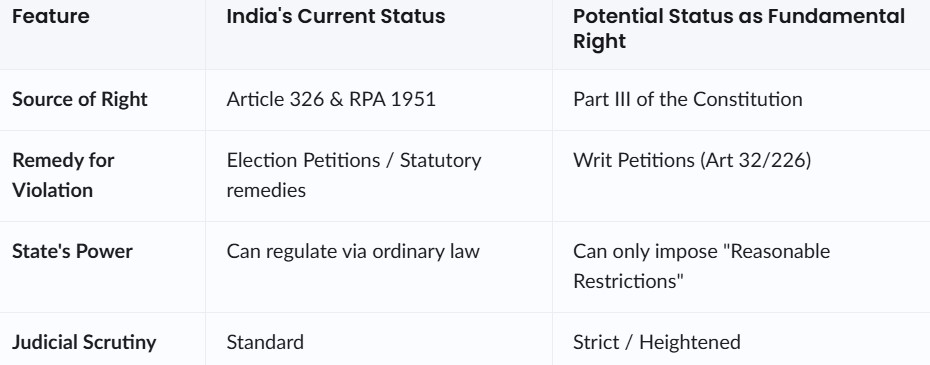
While making voting a Fundamental Right would provide a powerful symbolic boost and stronger legal remedies against disenfranchisement, the real challenge in India lies in enforcement and administrative transparency. As noted by the Law Commission, the goal should be "conviction, not compulsion," focusing on voter awareness (SVEEP) and making registration seamless rather than just changing its legal label.
