

Rupee Depreciation: RBI Measures to Manage Forex Volatility

Rupee Depreciation: RBI Measures to Manage Forex Volatility
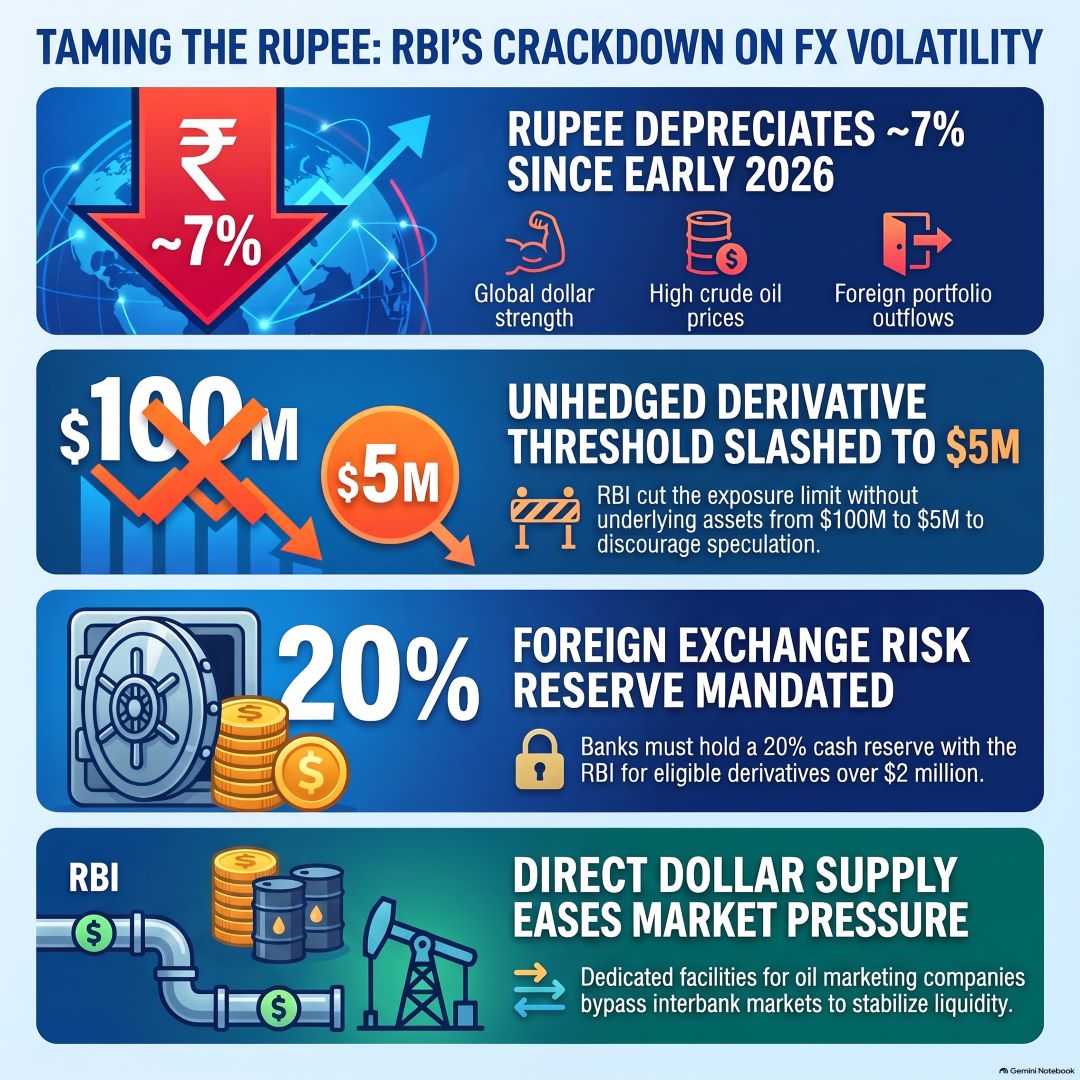
Causes of Rupee Depreciation
- Rupee depreciation refers to a decline in the value of the Indian rupee relative to another currency, such as the US dollar.
- Strong US dollar: Higher US yields and global demand for dollar-denominated assets increase pressure on the rupee.
- High crude oil prices: India’s dependence on imported energy raises dollar demand and the domestic cost of imports.
- Foreign portfolio outflows: Foreign investors selling Indian equities and debt increase demand for foreign currency.
- Geopolitical uncertainty: Conflicts in West Asia disrupt energy supplies and create volatility in global oil markets.
- Interest-rate differentials: Differences between interest rates in advanced and emerging economies influence capital flows and exchange rates.
- According to the supplied report, the rupee had depreciated by approximately 7% since the beginning of 2026.
RBI Measures to Manage Forex Volatility
On October 10, 2026, the Reserve Bank of India announced regulatory measures intended to curb excessive speculation and improve discipline in the foreign exchange market.
- Restrictions on cancelled derivatives: Authorised Dealers (ADs) cannot permit users to rebook INR-linked foreign exchange derivative contracts cancelled after the directions were issued. Contract rollovers at maturity remain permitted, subject to regulatory requirements.
- Lower exposure threshold: The threshold for foreign exchange derivative transactions without an underlying exposure was reduced from $100 million to $5 million. The corresponding threshold for INR-linked exchange-traded currency derivatives was also reduced to $5 million.
- Documentation requirements: ADs must obtain an undertaking confirming that the same underlying exposure has not been hedged through another dealer.
- Foreign Exchange Risk Reserve (FERR): For eligible INR-linked derivatives with a notional value exceeding $2 million, ADs must maintain a cash reserve with the RBI equivalent to 20% of the rupee value of the notional amount.
These measures aim to discourage excessive speculative positions, prevent duplicate hedging and strengthen risk management.
Other RBI Interventions
- Dedicated dollar facility for oil marketing companies (OMCs): Direct dollar supplies for crude purchases can reduce their demand in the interbank foreign exchange market.
- Foreign exchange swaps: Sell-buy swaps help manage foreign exchange conditions and rupee liquidity.
- External Commercial Borrowings (ECBs): Liberalised rules can expand access to foreign funding for eligible Indian borrowers.
- NRI deposits: Measures to attract Non-Resident Indian deposits can mobilise additional foreign currency resources.
- Bank position limits: Restrictions on banks’ net open foreign exchange positions aim to limit excessive proprietary trading.
- International rupee invoicing: Vostro account arrangements can facilitate trade settlements in rupees and reduce dependence on third-country currencies in eligible transactions.
Economic Implications of Rupee Depreciation
- Inflation: A weaker rupee increases the domestic cost of imported crude oil, electronics, edible oils and other commodities.
- Current account deficit: Higher import expenditure can widen the current account deficit if export earnings and other receipts do not compensate.
- Corporate and banking stability: Companies with unhedged foreign currency liabilities face higher repayment costs, potentially increasing credit risks for lenders.
- Capital flows: Expectations of further depreciation may weaken investor confidence and contribute to additional capital outflows.
- Export competitiveness: Depreciation can make Indian exports cheaper for foreign buyers, although benefits depend on imported input costs, global demand and pricing arrangements.
Benefits, Limitations and Way Forward
- Benefits: RBI intervention can moderate excessive exchange-rate volatility, reduce uncertainty for businesses and help contain imported inflation.
- Reserve pressures: Direct dollar supplies may place pressure on foreign exchange reserves, even as they reduce demand in the interbank market.
- Higher hedging costs: Reserve requirements and tighter derivative rules may increase funding costs and widen spreads for customers.
- Temporary relief: Intervention cannot eliminate structural pressures arising from oil imports, persistent capital outflows or global dollar strength.
- Repayment risks: Foreign currency deposits and associated swaps can create liquidity pressures when substantial amounts mature together.
- Way forward: India should strengthen export competitiveness, diversify energy sources, attract stable long-term capital, deepen domestic financial markets and maintain adequate foreign exchange reserves.
Rupee stability is important for inflation management, external-sector sustainability and financial stability. RBI intervention can limit disorderly market movements, but durable stability also requires stronger export performance, lower vulnerability to imported energy and sustainable capital inflows.