

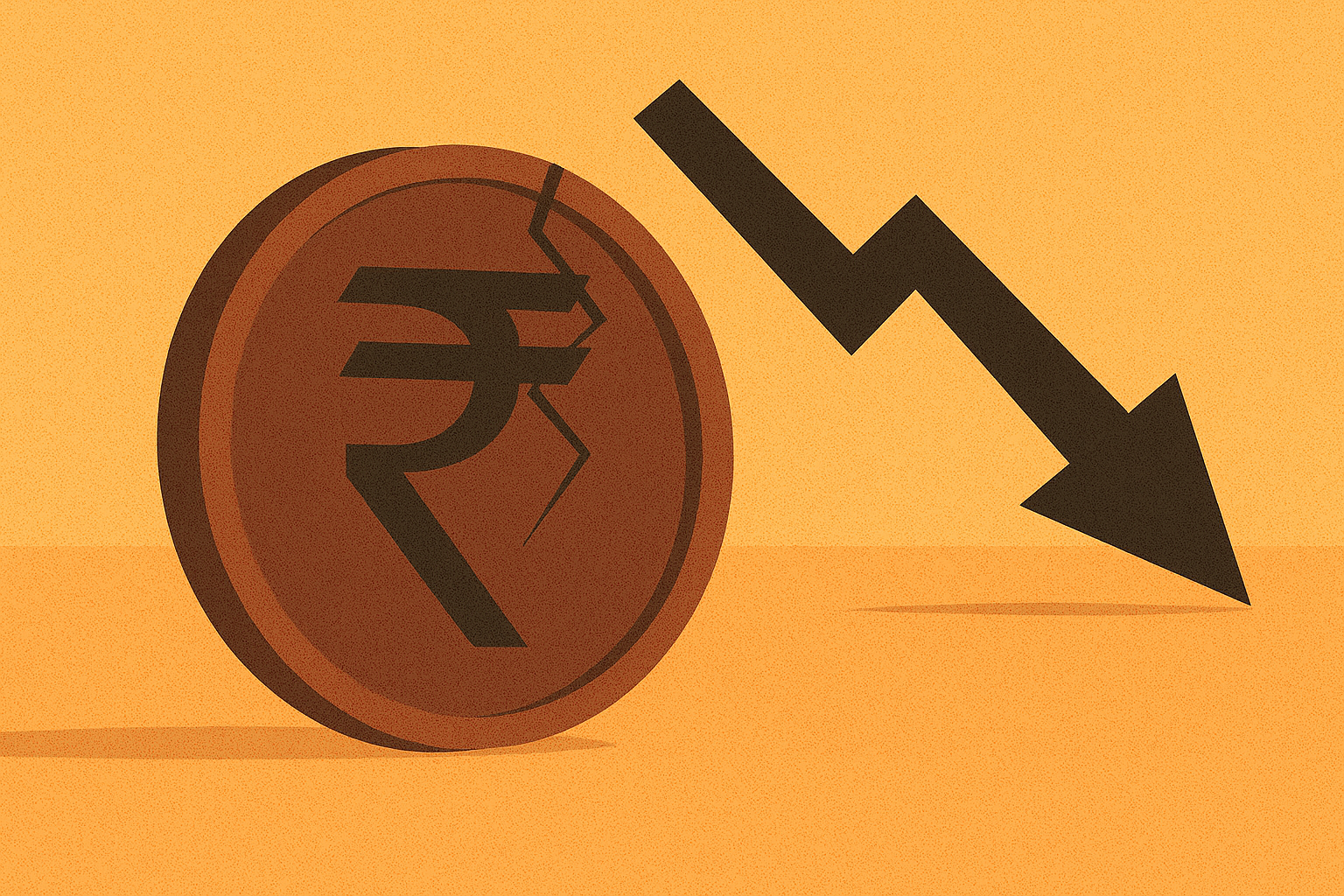
Rupee is Asia’s worst performing currency
The Hindu
Key Arguments Presented
A. Rupee’s sharp depreciation
- INR has weakened more than the Yuan, Won, and Rupiah.
- The rupee’s fall is steeper despite India having stronger macroeconomic fundamentals compared to many Asian peers.
B. Dollar strength is the major driver
- Safe-haven demand for USD amid global uncertainties (trade wars, elections, geopolitical tensions).
- Higher US bond yields and Federal Reserve policy have strengthened the USD globally.
C. Asian currency weakness
- China’s managed exchange rate causes spillover depreciation in other Asian currencies.
- RBI’s limited intervention has led the rupee to adjust more freely.
D. India’s domestic vulnerabilities
- A consistent merchandise trade deficit.
- Concerns over portfolio outflows.
- Pressure from rising crude oil imports.
- Weakening export growth.
E. Possibility of further depreciation
- Analysts warn the rupee could slide to ₹90/$ if:
- India–US trade deal delays
- Capital outflows intensify
- Dollar continues to strengthen
- Global risk-off sentiment persists
3. Author’s Stance
The article is cautious and slightly pessimistic.
It highlights vulnerabilities without overstating India’s structural strengths. The tone reflects concern that India’s currency depreciation signals deeper macroeconomic pressures despite the government's optimistic economic narrative.
There is no political bias, but the emphasis is more on the rupee’s weaknesses rather than the relative macro-stability achieved through RBI’s calibrated approach.
4. Potential Biases / Missing Context
What the article does well
- Accurately reports data-driven depreciation comparisons.
- Highlights external and domestic economic conditions.
- Quotes multiple analysts for balance.
What it misses
- India’s long-term FX strategy
The rupee is a managed depreciation currency, deliberately kept competitive for exports. The article doesn’t mention this structural policy stance. - Comparison with emerging market peers
Many EM currencies (e.g., Turkish Lira, Argentine Peso) performed much worse but are not in Asia. - RBI’s reserves position
India has robust FX reserves (~$650+ billion) which reduce risk of a crisis. - Impact on exports and competitiveness
Weak rupee boosts export competitiveness — but no discussion is provided. - Political neutrality
The article avoids politics but does not explore policy steps the government is undertaking to stabilise the currency.
5. Pros & Cons of the Article
Pros
- Data-backed, factual reporting.
- Balanced quotes from multiple analysts.
- Captures global macroeconomic context.
- Explains broader Asian currency trends.
Cons
- Overly focused on negative sentiment.
- Insufficient exploration of the rupee’s structural managed float regime.
- Lacks discussion on India’s strong foreign exchange reserves, crucial for stability.
- Does not explain how rupee depreciation may support exports.
- Misses out on the US election-cycle volatility that often strengthens the dollar.
6. Policy Implications
A. For India’s Financial Stability
- Need for stronger RBI interventions when volatility rises.
- Encouragement of long-term foreign investment to offset short-term outflows.
- Boosting export competitiveness through PLI, logistics improvements.
B. For India’s External Sector
- Reducing the oil import bill by diversifying energy sources.
- Strengthening trade partnerships (e.g., UAE, EU, ASEAN) to reduce USD dependency.
- Developing local currency settlement systems (as India is doing with 20+ nations).
C. For Common Citizens
- Costlier imports: electronics, crude oil, gold, education abroad, travel.
- Higher inflation risks if depreciation continues.
7. Real-World Impact
Positive
- Exports may become more competitive.
- IT and outsourcing industries gain from a weaker rupee.
- Remittances (NRI inflows) rise in rupee terms.
Negative
- Increased inflationary pressures.
- Higher cost of foreign debt servicing.
- Greater vulnerability to global shocks.
- Potential loss of investor confidence if depreciation becomes sharp and sudden.
8. UPSC Relevance
GS Paper 3 – Indian Economy
- Exchange rate dynamics
- Balance of Payments
- RBI monetary policy
- Impact of global financial markets on India
GS Paper 2 – International Relations
- India–US trade negotiations
- India’s role in the global economy
Essay
- Globalisation and currency volatility
- India’s economic resilience in a multipolar world
Prelims
- Basic facts on exchange rates, depreciation, RBI tools.
9. Balanced Conclusion
The rupee’s depreciation in 2024 is part of a broader global trend driven by the strengthening dollar and heightened global uncertainty. While India faces genuine pressures — trade deficit, oil import dependence, portfolio outflows — the situation is not a currency crisis. India’s large forex reserves, stable macro fundamentals, and proactive RBI management provide resilience.
However, the persistent weakening of the rupee highlights deeper structural challenges in exports, trade competitiveness, and external vulnerability. Strengthening domestic manufacturing, diversifying export baskets, reducing oil dependence, and stabilising capital inflows will be critical to maintaining currency stability.
The future trajectory of the rupee will depend on global dollar trends, geopolitical outcomes, and India’s ability to accelerate economic reforms anchored in resilience and competitiveness.
