

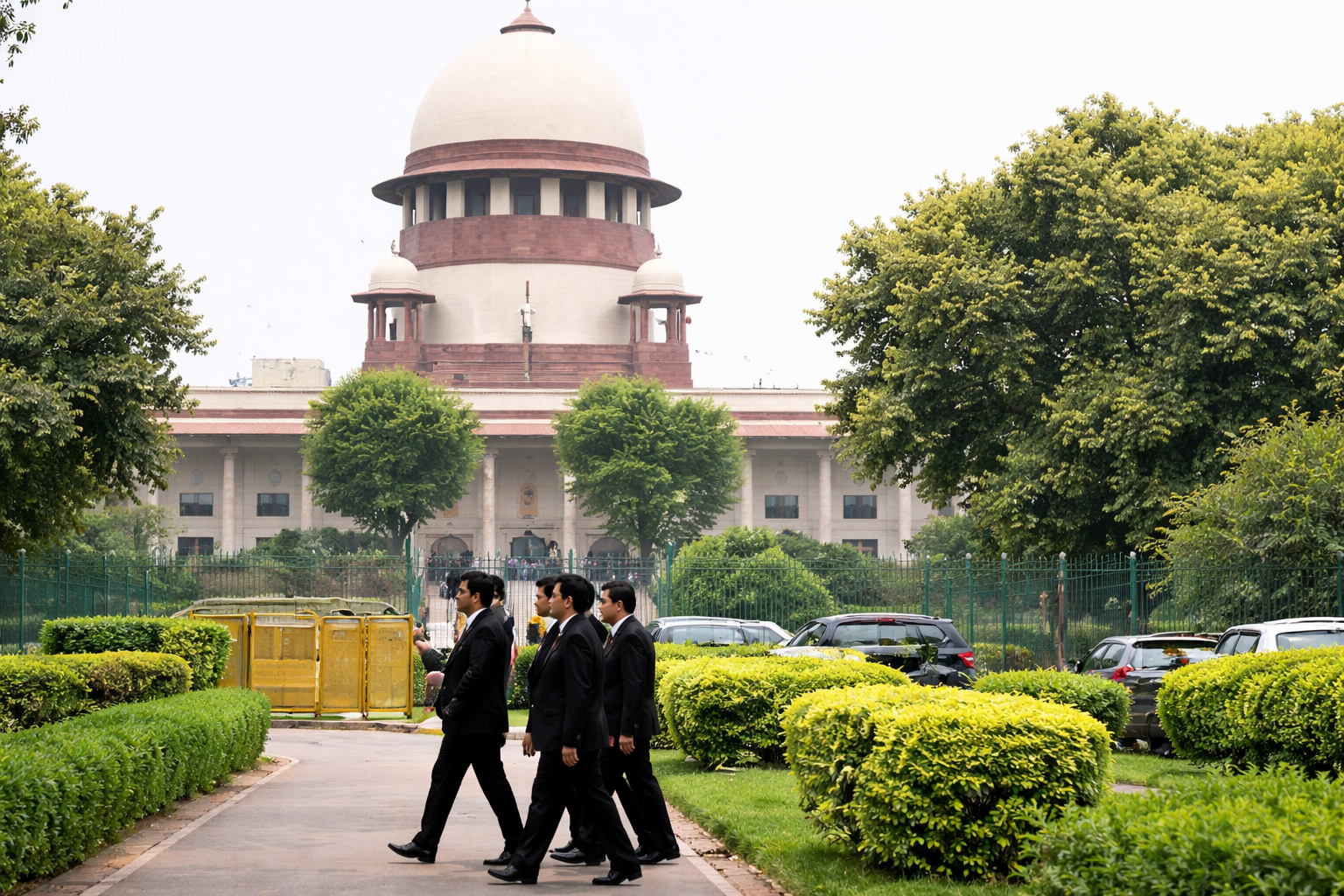
SC slams ‘freebies culture’, says no money left for development
Hindustan Times
I. Core Context
The article reports the Supreme Court’s sharp observations on the “freebies culture” in the context of free electricity schemes announced by State governments such as Tamil Nadu and Punjab. The Court questioned the fiscal sustainability of large-scale subsidies and their long-term impact on development expenditure and financial discipline.
The issue arises within the framework of:
- Fiscal responsibility and budget management
- Subsidy regimes under the Electricity Act, 2003
- Regulatory autonomy of electricity commissions
- Balance between welfare politics and economic prudence
II. Key Arguments in the Article
1. Freebies vs Developmental Priorities
The Supreme Court’s central concern is that indiscriminate subsidies reduce fiscal space for capital expenditure on infrastructure, health, and education.
The Bench questioned whether revenue surpluses exist to fund such schemes, or whether States are borrowing to finance populist measures.
The implicit argument:
Subsidy-heavy budgets crowd out productive public investment.
2. Electricity Subsidy and Regulatory Framework
Under Section 65 of the Electricity Act, 2003:
- States may grant subsidies
- But they must compensate distribution companies transparently
The Court stressed that tariff determination must remain cost-reflective and regulator-driven, not politically manipulated.
The concern: Political interference weakens regulatory independence.
3. Fiscal Stress and Inter-generational Equity
States already face:
- High revenue deficits
- Rising debt-to-GSDP ratios
- Power sector losses
The Court linked excessive freebies to long-term fiscal instability and warned that future generations will bear the burden.
This introduces a constitutional morality dimension:
Can electoral populism justify structural fiscal erosion?
4. Welfare vs Competitive Populism
The Bench drew a distinction between:
- Targeted welfare measures for the poor
- Blanket subsidies benefiting even those who can pay
The criticism is directed at universal, non-discriminatory subsidies that distort incentives and weaken tax morality.
III. Author’s Stance
The article reflects a fiscally conservative, institutionalist stance.
It aligns broadly with the Supreme Court’s concerns and frames freebies as:
- Politically attractive
- Economically risky
- Administratively distortionary
The tone suggests that unchecked welfare populism undermines long-term development.
IV. Possible Biases or Missing Dimensions
1. Underexplored Social Justice Perspective
The article does not sufficiently explore:
- Energy access as a developmental right
- Electricity as an enabler of education, livelihoods, and dignity
- Political economy of welfare in a developing society
Subsidies in India often compensate for structural inequality.
2. Conflation of Welfare and Freebies
The debate frequently blurs the line between:
- Rights-based entitlements (food security, MGNREGA)
- Purely populist transfers
The article does not sharply differentiate redistributive justice from electoral populism.
3. Federalism Dimension
States have policy autonomy under the Constitution.
The judicial commentary, while advisory, raises questions about:
- Separation of powers
- Limits of judicial intervention in fiscal policy
This constitutional angle is not deeply interrogated.
V. Pros and Cons of the Argument
Pros
• Reinforces fiscal discipline and long-term sustainability
• Protects regulatory independence in electricity pricing
• Highlights inter-generational equity
• Encourages targeted rather than universal subsidies
Cons
• Risks oversimplifying poverty and welfare realities
• May delegitimize social sector support in a low-income country
• Does not fully address political mandate of elected governments
• Ignores that capital expenditure alone does not guarantee inclusive growth
VI. Policy Implications
1. Fiscal Reforms
- Strengthening State-level Fiscal Responsibility laws
- Transparent subsidy accounting
- Outcome-based welfare budgeting
2. Power Sector Reforms
- Direct Benefit Transfer (DBT) of electricity subsidy
- Cost-reflective tariffs with targeted support
- Strengthening DISCOM finances
3. Governance Reforms
- Clear demarcation between regulator and executive
- Public disclosure of subsidy burden
- Medium-term fiscal planning frameworks
VII. Real-World Impact
If unchecked:
- Rising debt burdens
- Credit rating downgrades
- Reduced private investment
- Decline in infrastructure spending
If corrected prudently:
- Improved fiscal space
- Sustainable welfare architecture
- Better power sector viability
- Balanced growth model
VIII. UPSC Relevance
GS Paper II
• Federalism and fiscal relations
• Role of judiciary in policy oversight
• Separation of powers
• Welfare state vs constitutional morality
GS Paper III
• Fiscal deficit and public debt
• Power sector reforms
• Subsidy rationalisation
• Inclusive growth vs populism
Essay Topics
• Welfare vs Populism
• Fiscal Responsibility and Democratic Politics
• Rights-based entitlements in developing economies
IX. Balanced Conclusion and Future Perspective
The Supreme Court’s observations raise a legitimate concern:
Fiscal sustainability cannot be sacrificed at the altar of short-term political gains.
However, in a country marked by structural poverty and inequality, the solution is not withdrawal of welfare — but smarter welfare.
The future lies in:
- Targeted subsidies
- Transparent budgeting
- DBT-based transfers
- Regulatory independence
- Electoral accountability
India must evolve from competitive populism to responsible welfare governance.
The debate is not about whether the State should support citizens.
It is about how to design support without mortgaging development.
