

Thorium Fuel Integration in India’s PHWRs

Thorium Fuel Integration in India’s PHWRs
Context:
- Nuclear scientist Anil Kakodkar has advocated early integration of thorium fuel into India’s indigenous PHWRs.
- The proposal aims to accelerate India’s transition towards nuclear fuel self-reliance and utilise its substantial thorium resources.
Why Thorium?
- India has relatively limited domestic uranium resources but possesses substantial thorium reserves.
- Thorium-232 is not itself fissile; it is converted into Uranium-233, a fissile fuel, inside a reactor.
- Greater thorium utilisation can reduce long-term dependence on imported nuclear fuel.
|
Thorium-based nuclear fuel The Science: Fertile vs. Fissile Thorium-232 itself cannot sustain a nuclear chain reaction; it is fertile, not fissile. To unlock its energy, it must be converted into Uranium-233.
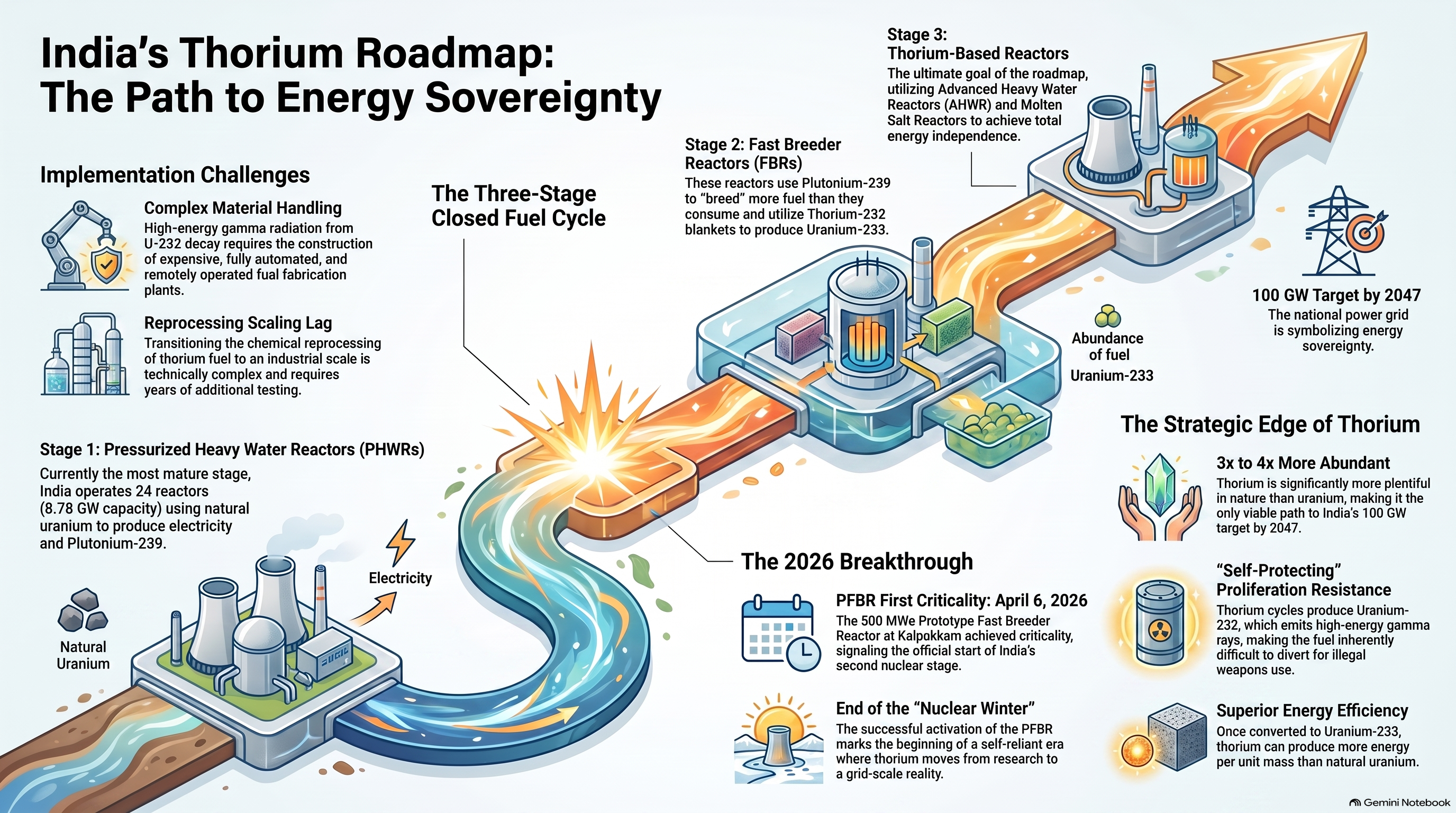
India’s Strategic Advantage India holds nearly 25–30% of global thorium reserves, primarily in the monazite sands of coastal states like Kerala, Odisha, and Andhra Pradesh. The Three-Stage Roadmap India's nuclear strategy, envisioned by Dr. Homi J. Bhabha, is a sequential "closed fuel cycle" designed to reach Thorium utilization:
|
Why PHWRs Now?
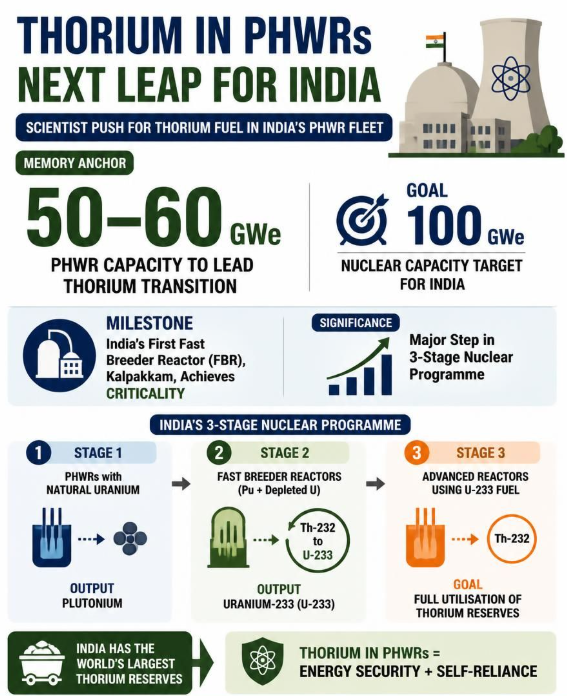
- India is expanding its indigenous PHWR fleet and plans to derive a substantial share of its targeted nuclear capacity from this technology.
- Using thorium in PHWRs could begin the transition towards the third stage earlier rather than waiting for the full deployment of breeder reactors.
- The key condition is that thorium use should not significantly increase electricity costs or uranium requirements.
-
Significance
- Strengthens energy security and strategic autonomy.
- Provides a pathway for long-term utilisation of domestic thorium resources.
- Supports India’s low-carbon energy transition and growing electricity demand.
- Can accelerate the three-stage nuclear programme by creating an additional route for thorium utilisation.
Conclusion
Early thorium integration into PHWRs could bridge India’s present nuclear capabilities with its long-term thorium-based energy vision. It represents an attempt to convert India’s unique resource advantage into greater energy security, technological self-reliance and low-carbon growth.
