

Understanding Concerns Around Sanchar Saathi
Indian Express
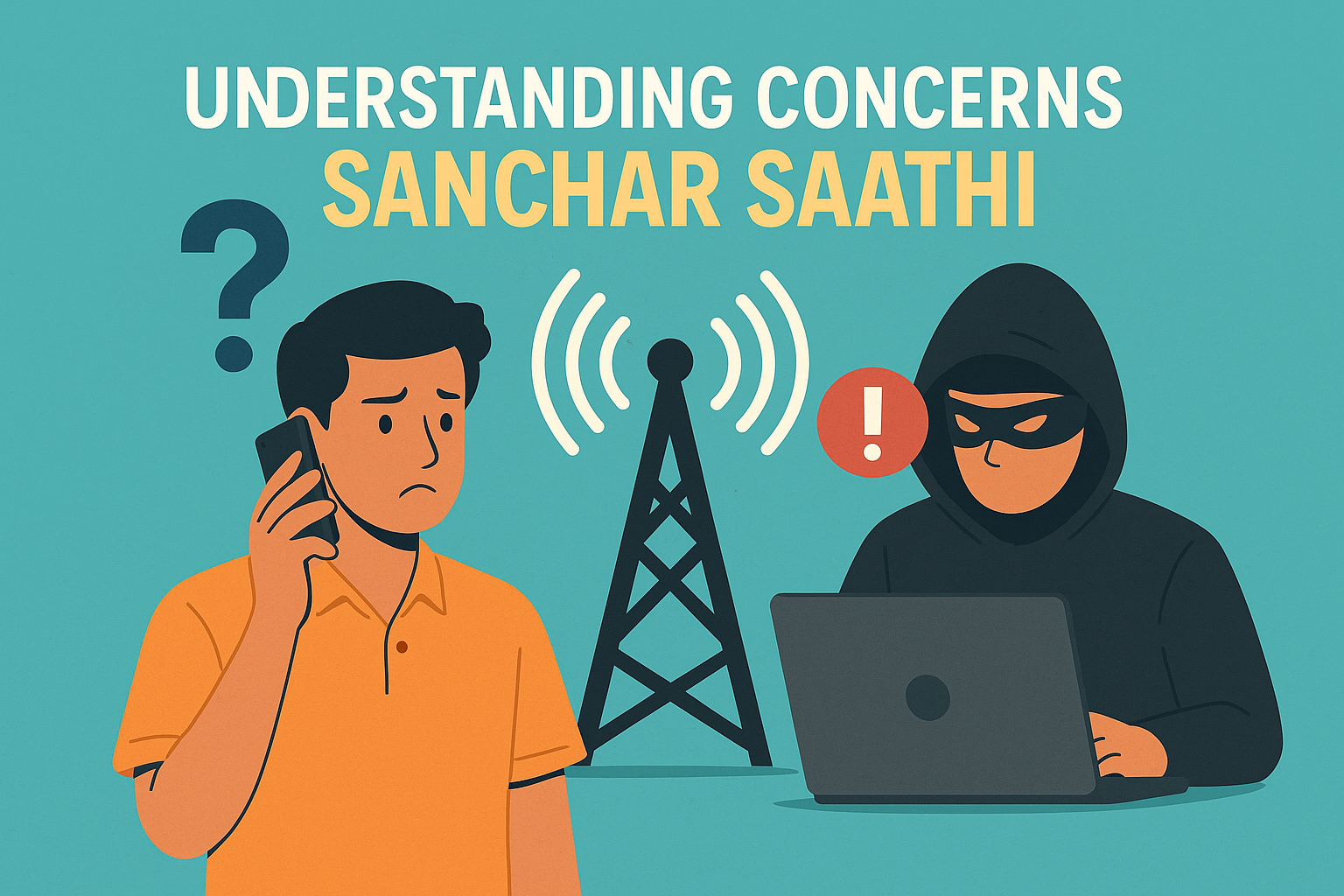
1. Key Arguments of the Article
A. Purpose and Function of Sanchar Saathi
The Department of Telecommunications (DoT) launched Sanchar Saathi as a tool to:
- Detect digital fraud.
- Help users identify SIMs issued in their name.
- Block stolen devices.
- Flag suspicious phone numbers using AI and data aggregation techniques.
B. Concerns Raised
The article highlights significant apprehensions regarding:
- Surveillance and privacy violations
- Potential mass data collection.
- Unclear consent mechanisms.
- Possibility of misuse by state authorities.
- Opaque or inconsistent privacy documentation
- Conflicting privacy policies across website and FAQ sections.
- Lack of transparency on data storage, purpose limitation, and retention.
- Technical flaws
- Errors in identifying numbers associated with a user.
- Risks of incorrect flagging or blocking.
- Need for regulatory clarity
- Absence of alignment with India’s Digital Personal Data Protection Act (DPDPA), 2023.
- Ambiguity on whether the State can collect this scale of personal metadata without explicit consent.
C. Government’s Stand
- Claims the tool is meant solely for cybersecurity and fraud prevention.
- Emphasises benefits for citizens—blocking stolen phones, identifying fraudulent SIMs, preventing misuse.
2. Author’s Stance
The writer maintains a cautious and critical stance.
They recognise the utility of fraud detection but emphasise grave concerns regarding:
- Lack of informed consent.
- Ambiguous privacy practices.
- Potential for state overreach.
The article argues for strict legal safeguards and transparency before deployment at scale.
3. Biases or Underlying Assumptions
Possible implicit biases
- A civil-liberties leaning perspective that prioritises privacy over state security considerations.
- Assumes the worst-case misuse scenario rather than government safeguards.
- Places greater trust in international privacy norms over domestic administrative assurances.
However, the critique is grounded, data-backed, and not activist in tone.
4. Pros and Cons of Sanchar Saathi (As per the article)
Pros
- Helps users detect fraud SIMs.
- Blocks stolen phones quickly via CEIR.
- Enhances cybersecurity ecosystem.
- Improves consumer rights in telecom services.
- Assists law enforcement in identifying misuse.
Cons
- Unclear privacy safeguards and consent mechanisms.
- Risk of mass surveillance through call log metadata access.
- Lack of uniform privacy policy documentation.
- Potential over-collection of personal data.
- Scope creep—future expansion of surveillance capabilities.
- Open-source but not fully open to public scrutiny for all modules.
5. Policy Implications
A. For Digital Governance
- The initiative shows India’s push towards digital-enabled fraud control, but requires:
- Purpose limitation
- Data minimisation
- Clear audit trails
- Independent oversight mechanisms
B. For Privacy Law Implementation
Sanchar Saathi must align with:
- Data Protection Act provisions on:
- Notice
- Consent
- Data fiduciary responsibilities
- Storage limitation
C. For National Security
- Strengthens national databases and reduces telecom misuse.
- However, unregulated metadata collection poses long-term constitutional risks.
D. For Citizens
- Useful tool but may create trust deficit if opaque.
- Risk of wrongful blocking or misattribution of SIM connections.
6. Constitutional & Legal Concerns (From the second article)
The legal analysis focuses on:
A. Consent Mechanism Lacks Clarity
- Consent must be free, informed, specific, unambiguous – as per Puttaswamy judgment.
- Current system may not meet constitutional threshold.
B. “Function Creep” Risk
- Data collected for fraud detection may be reused for surveillance, violating privacy jurisprudence.
C. Third Test of Proportionality
From the Puttaswamy (2017) judgment:
- Legality – is there a law enabling the data collection?
- Necessity – is it necessary for the objective?
- Proportionality – does the intrusion match the need?
Sanchar Saathi may not fully comply with all three.
D. Lack of Sunset Clause or Data Retention Framework
- Risk of indefinite storage of personal metadata.
7. Real-World Impact
Positive
- Fraud detection becomes easier.
- Citizens gain transparency over SIM misuse.
- Telecom security improves.
- Increased reporting of stolen devices.
Negative
- Risk of chilling effect on communication (loss of anonymity).
- Risk of wrongful prosecution if data is misinterpreted.
- Normalisation of surveillance tools by the State.
- Reduced trust in government digital services.
8. UPSC GS Paper Alignment
GS Paper 2
- Government policies and interventions.
- Citizen rights, privacy, constitutional protections.
- Role of technology in governance.
GS Paper 3
- Cybersecurity.
- Data protection, telecom regulation.
- Ethical use of AI and digital tools.
GS Paper 4
- Ethics of surveillance and state power.
- Balancing public good with individual rights.
Essay
- “Data privacy vs Digital Governance”
- “State surveillance in a democracy”
9. Balanced Summary
Sanchar Saathi represents a significant step in strengthening India’s digital fraud detection framework. Its intentions—protecting users, blocking stolen devices, and preventing telecom misuse—are legitimate and valuable. However, the initiative suffers from unclear privacy safeguards, inconsistent policy documentation, and concerns regarding mass surveillance.
The lack of explicit consent, undefined data retention policies, and opaque collection processes raise constitutional concerns under the Puttaswamy privacy principles.
For Sanchar Saathi to truly gain public trust, the government must:
- Provide clearer legal frameworks,
- Ensure transparency,
- Align with DPDPA principles, and
- Institute independent oversight.
10. Future Perspectives
- Introduce a clear statutory basis for telecom surveillance tools.
- Establish a Privacy Oversight Board for digital governance.
- Adopt privacy-by-design in all government apps.
- Conduct third-party audits of Sanchar Saathi's code and data practices.
- Provide opt-out options or graded consent mechanisms.
- Improve public communication to avoid perception of mass surveillance.
- Align with global principles (OECD, GDPR-like frameworks).
