

Vande Mataram, its six stanzas and a settled question
Indian Express
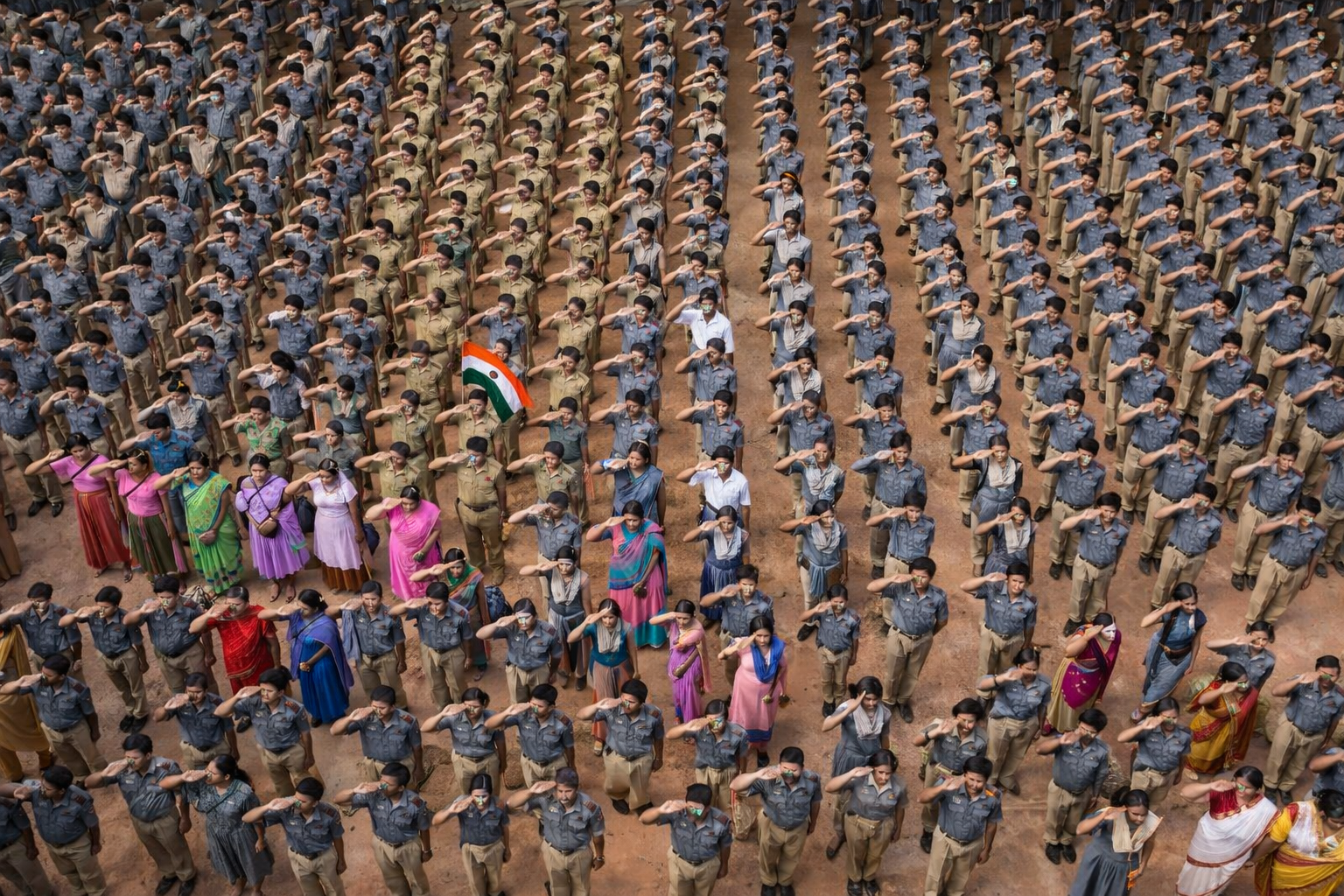
Context and Core Theme
The article revisits the historical, constitutional and judicial position on Vande Mataram, particularly in light of recent directives regarding its public performance. It argues that the controversy around the National Song is largely settled in constitutional law: respect is mandatory, but compulsion to sing is not.
The central thesis is that constitutional wisdom lies in balancing national symbolism with individual liberty.
Key Arguments Presented
Historical compromise during the freedom struggle
The article recalls the Constituent Assembly-era consensus that only the first two stanzas of Vande Mataram—free from explicitly religious imagery—would be treated as the National Song. This compromise aimed to preserve inclusivity in a plural society.
Distinction between respect and compulsion
The author emphasises that while citizens must show respect toward national symbols, they cannot be compelled to sing. The Supreme Court’s jurisprudence (notably the Bijoe Emmanuel case) protects freedom of conscience under Article 19(1)(a) and Article 25.
Misinterpretation of patriotism
The article cautions against equating refusal to sing with lack of patriotism. Constitutional morality, it argues, protects dissent and conscience even in symbolic matters.
Limited legal enforceability
The Prevention of Insults to National Honour Act mandates respect, but does not criminalise silent non-participation if no disrespect is shown.
Pluralism as constitutional core
The piece frames the debate as a test of India’s commitment to secular constitutional values rather than cultural assertion alone.
Author’s Stance
The author adopts a liberal-constitutional stance, firmly defending the right not to sing while endorsing respect for national symbols. The tone is assertive yet grounded in constitutional jurisprudence, positioning the issue as legally settled rather than politically negotiable.
Biases and Perspective
Civil liberties bias
The article strongly prioritises individual freedom of conscience over majoritarian sentiment.
Minimalist nationalism lens
National pride is framed as voluntary and internal rather than performative and enforced.
Limited engagement with emotional-cultural arguments
The piece does not deeply explore the cultural symbolism or historical emotional weight of Vande Mataram for nationalist movements.
Pros and Cons of the Position
Pros
- Reinforces constitutional supremacy
- Protects minority rights and freedom of belief
- Prevents politicisation of national symbols
- Clarifies settled legal position
Cons
- May be perceived as underplaying emotional-national sentiment
- Risks public misunderstanding between “non-compulsion” and “disrespect”
- Leaves room for recurring political mobilisation around symbolism
Policy Implications
Clarity in administrative circulars
Government guidelines must carefully distinguish between respect requirements and compulsion to avoid legal overreach.
Civic education emphasis
Schools and institutions should teach constitutional values alongside national symbolism to reduce confrontation.
Judicial precedent reinforcement
Administrative authorities must align with Supreme Court rulings to prevent unnecessary litigation.
Balancing pluralism and unity
Policy must safeguard both inclusive nationalism and fundamental rights.
Real-World Impact
- Educational institutions may face pressure in implementing guidelines.
- Minority communities may seek reassurance regarding freedom of conscience.
- Political actors may continue symbolic mobilisation.
- Courts may see renewed petitions if enforcement crosses constitutional boundaries.
UPSC GS Paper Alignment
GS Paper II (Polity & Governance)
- Fundamental Rights (Articles 19 and 25)
- Constitutional morality
- National symbols and statutory framework
GS Paper IV (Ethics)
- Respect versus coercion
- Pluralism in public life
Essay Paper
- “Constitutional morality versus majoritarian morality”
- “Unity in diversity: symbolism and substance”
Balanced Conclusion and Future Perspective
The article convincingly argues that the constitutional position on Vande Mataram is neither ambiguous nor recent—it is the product of historical compromise and judicial clarity. Respect for national symbols is mandatory; forced expression is not.
Going forward, the durability of India’s democratic fabric depends on preserving this delicate balance. National unity is strengthened when patriotism is voluntary and rooted in constitutional values, not compelled conformity. The real test is not whether citizens sing in unison, but whether the Republic upholds liberty alongside reverence.
