

Wetlands as a national public good
The Hindu
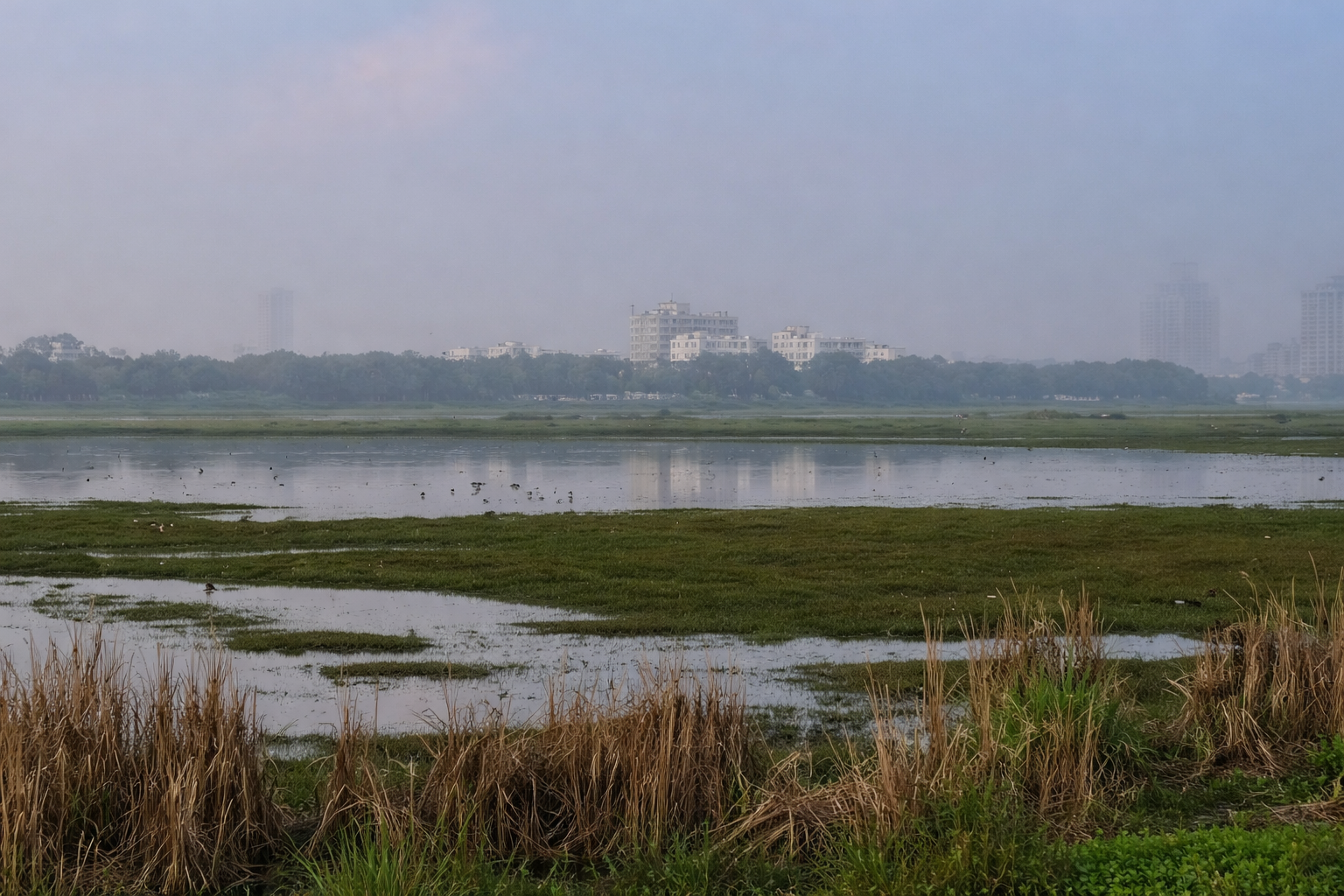
Overview of the Article
The article frames wetlands not as isolated ecological assets but as a national public good that underpins water security, biodiversity, climate resilience and livelihoods. Using the occasion of World Wetlands Day, it critiques India’s project-centric, fragmented conservation approach and argues for a shift towards basin-level, science-led and community-integrated wetland governance.
Key Arguments
Wetlands as life-support systems
Wetlands regulate floods, recharge groundwater, purify water, support fisheries and agriculture, and act as carbon sinks. Their value lies in ecological functions rather than land-use potential.
Rapid degradation despite legal frameworks
Despite policies and rules, a large proportion of India’s wetlands have degraded due to encroachment, pollution, hydrological disruption and infrastructure-led development.
Project-based conservation is inadequate
The article argues that isolated restoration projects fail because wetlands function as part of larger catchments and socio-ecological systems.
Need for watershed- and landscape-scale planning
Effective conservation requires integrating wetlands into river basin planning, urban development, agriculture and climate adaptation strategies.
Community stewardship is central
Local communities are presented not as threats but as custodians whose livelihoods and traditional knowledge are essential for sustainable wetland management.
Author’s Stance and Bias
Stance
The author adopts a strongly ecological and governance-reform-oriented stance, advocating systemic change in how wetlands are valued and managed.
Biases
There is a clear conservationist bias that prioritises ecological integrity over short-term developmental or infrastructure objectives. Economic trade-offs and political constraints are underplayed.
Pros Highlighted
Holistic framing
By defining wetlands as public goods, the article elevates them from sectoral concerns to national development priorities.
Governance focus
It moves beyond awareness to structural issues—institutions, coordination, and policy coherence.
Alignment with climate adaptation
Wetlands are convincingly linked to disaster risk reduction and climate resilience.
Limitations and Gaps
Implementation realism
While the vision is strong, practical challenges of inter-departmental coordination and enforcement are not deeply explored.
Urban development pressures
The tension between urbanisation and wetland protection is acknowledged but not resolved with concrete policy tools.
Fiscal and capacity constraints
Limited discussion on funding mechanisms and administrative capacity at state and local levels.
Policy Implications
Treat wetlands as core infrastructure
Wetlands should be integrated into water management, urban planning and climate policies, not treated as peripheral environmental concerns.
Strengthen institutional coordination
Clear roles across environment, water, urban development and agriculture departments are essential.
Community-linked conservation
Policies must incentivise livelihood-compatible conservation rather than exclusionary protection models.
Data-driven monitoring
Regular mapping, ecological assessment and public data access are critical for accountability.
Real-World Impact
If current trends continue, wetland loss will intensify floods, water scarcity and biodiversity decline, especially in urban and coastal regions. Conversely, reimagining wetlands as public goods can enhance climate resilience, protect livelihoods and reduce long-term disaster costs.
UPSC GS Paper Linkages
GS Paper III – Environment & Ecology
Wetlands, biodiversity conservation, ecosystem services.
GS Paper II – Governance
Institutional coordination, environmental regulation, community participation.
GS Paper III – Disaster Management & Climate Change
Flood mitigation, climate adaptation, nature-based solutions.
Conclusion and Future Perspective
The article makes a compelling case that India’s wetland crisis is fundamentally a governance crisis. Conservation cannot succeed through isolated projects or symbolic protection alone. The future lies in recognising wetlands as shared national assets—embedded in landscapes, economies and communities. Whether India can translate this ecological insight into administrative action will determine not just wetland survival, but broader water and climate resilience in the decades ahead.
