

When Genes Raise Cholesterol, Diet May Make a Difference

When Genes Raise Cholesterol, Diet May Make a Difference
GS Paper: GS-II (Health) | GS-III (Science and Technology: Genomics) |
Source: TOI
Why in News?
A study of 1,020 adults in Chennai, CURES-165 (Chennai Urban Rural Epidemiology Study), published in PLOS ONE by Dr Mohan's Diabetes Specialities Centre and the Madras Diabetes Research Foundation, found that a high-quality diet can offset a genetic predisposition to high LDL ("bad") cholesterol.
Key Findings
• Researchers studied three genetic variants (TCF7L2, FTO and another, e.g., rs1588413) and combined them into a genetic risk score; diet quality was assessed using the Indian Diet Quality Score.
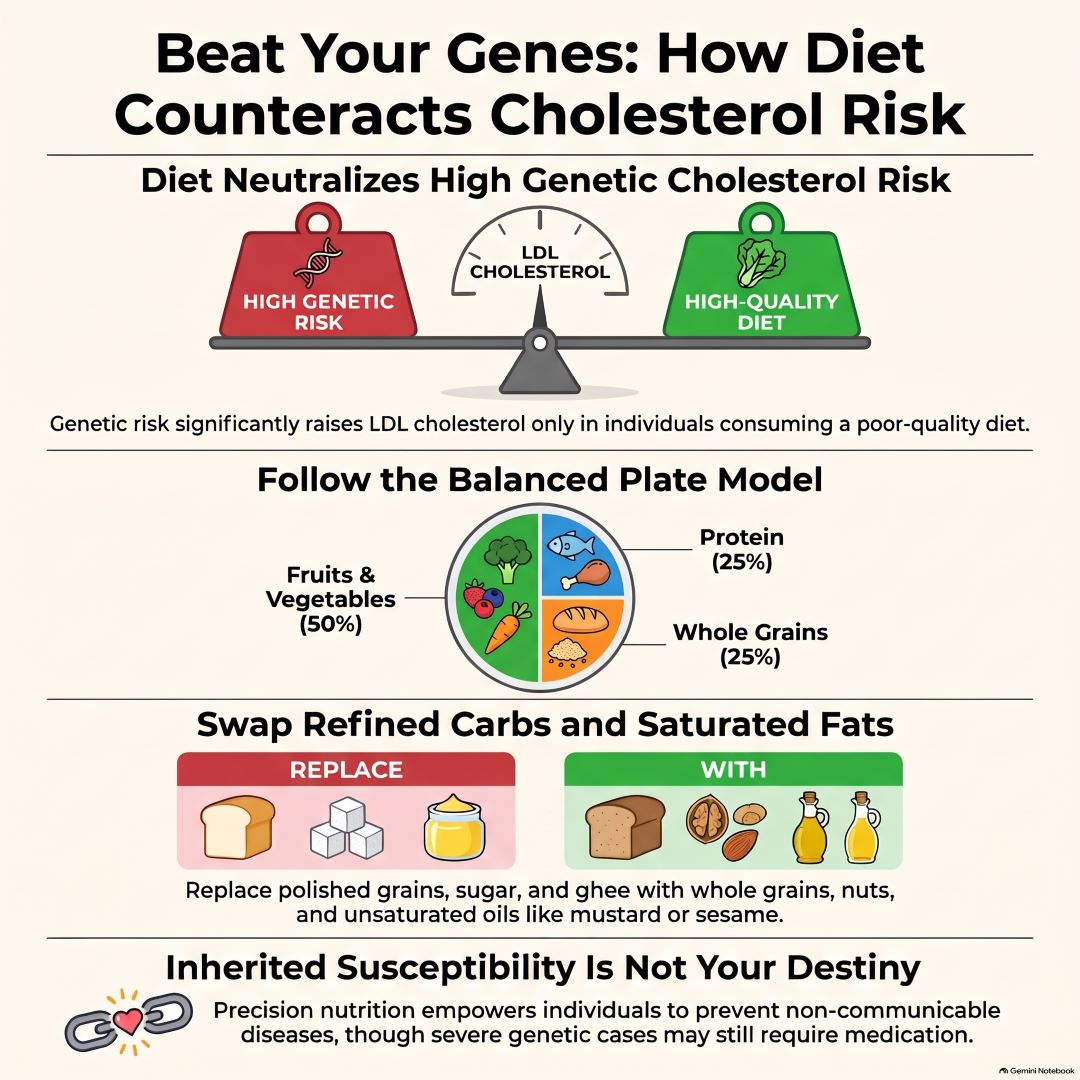
• A higher genetic risk was associated with significantly higher total and LDL cholesterol in those eating a poor-quality diet. The effect was not significant in medium- and high-quality diet groups, showing gene-diet interaction.
• Genetic risk was also linked to higher fasting blood glucose and glycated haemoglobin (HbA1c, 2-3 month blood sugar average).
Dietary Messages
• Refined carbohydrates (polished white rice, maida, sugar and sweetened drinks) get converted to fat in the liver, raising triglycerides and small dense LDL particles that are more harmful.
• Saturated and trans fats (ghee, butter, coconut and palm oil, vanaspati) raise LDL. Prefer unsaturated oils (mustard, groundnut, sesame).
• Plate model: half vegetables and fruit; one quarter protein (dal, pulses, dairy); one quarter whole grains (millets, whole wheat, brown rice).
• Swaps: hand-pounded rice, whole-wheat phulkas, roasted chana or nuts in place of fried snacks, less sugar in chai, and whole fruit rather than juice.
• Diet lowers LDL by varying degrees; those with a strong genetic risk may still need statins or other drugs.
Significance
• Supports precision nutrition and the idea that inherited susceptibility is not destiny. It informs India's strategy for NCDs (cardiovascular disease, diabetes) which cause the majority of deaths.
• Limitation: a Chennai urban sample, so findings are not necessarily generalisable (the ICMR-INDIAB study shows regional differences in staple foods and diabetes).
Quick Revision: Mains Linkages
• Demography + Jobs: Articles 1, 3, 5 and 6 connect to the demographic dividend, which needs quality jobs, especially for women.
• Agriculture + Environment: Article 2 connects to subsidy reform, climate (nitrous oxide) and groundwater.
• Household finance + Inclusive growth: Articles 3 and 4 on debt, savings and the K-shaped recovery.
• Health: Article 7 on NCDs and precision nutrition.