

Why carbon capture is key to achieving net-zero goal
Indian Express
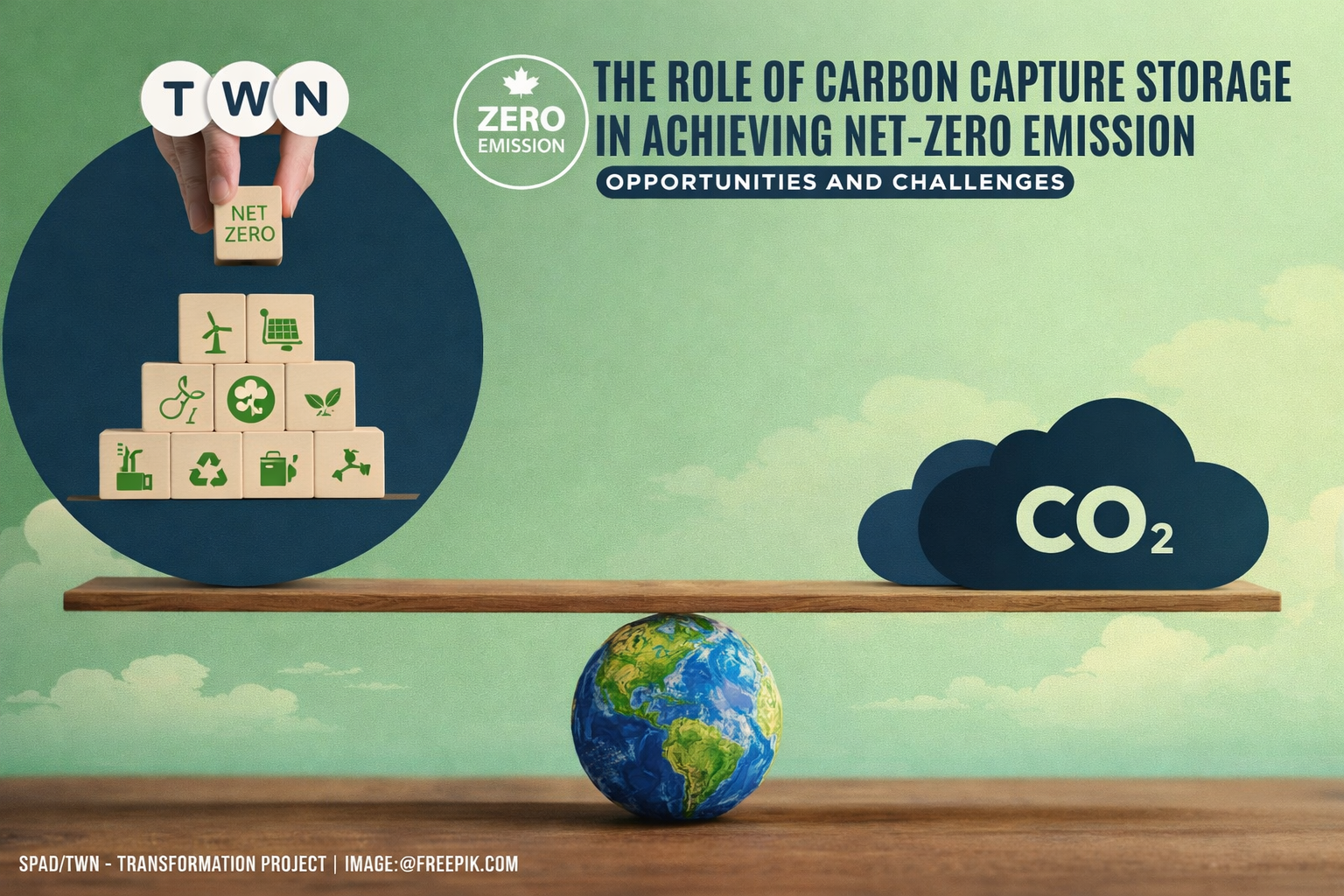
Overview of the Article
The article makes a case for carbon capture, utilisation and storage (CCUS) as an indispensable pillar of India’s net-zero strategy, especially for hard-to-abate sectors such as steel, cement, fertilisers and refining. It argues that while renewables and electrification are necessary, they are insufficient on their own to eliminate process emissions and legacy fossil-based infrastructure. The piece situates CCUS as a transition-enabling technology rather than a substitute for decarbonisation.
Key Arguments
Hard-to-abate sectors need CCUS
Certain industrial processes emit carbon intrinsically (e.g., calcination in cement). For these, CCUS is presented as the only viable mitigation option at scale.
Renewables alone cannot deliver net-zero
The article stresses that energy transition pathways relying solely on renewables, electrification and efficiency will leave residual emissions that must be captured.
India’s emissions trajectory demands flexibility
Given India’s development needs and existing asset base, CCUS provides a pragmatic bridge between growth and climate commitments.
Technology readiness and cost remain challenges
While global CCUS capacity is expanding, deployment remains limited due to high costs, infrastructure gaps and uncertain revenue models.
Public policy support is decisive
Budgetary allocations, viability gap funding, carbon markets and regulatory clarity are highlighted as essential to make CCUS commercially viable.
Author’s Stance and Bias
Stance
The author adopts a pragmatic, techno-policy stance, positioning CCUS as unavoidable for achieving net-zero without undermining industrial growth.
Biases
There is a mild techno-optimistic bias. The article leans towards supply-side solutions and gives relatively less attention to demand reduction, material efficiency and lifestyle-based mitigation.
Pros Highlighted
Enables industrial decarbonisation
CCUS allows emissions reduction in sectors otherwise locked into carbon-intensive processes.
Protects economic competitiveness
By decarbonising existing industries, CCUS helps avoid future trade barriers and carbon border measures.
Supports just transition
It reduces the risk of abrupt asset stranding and job losses in heavy industry regions.
Complements clean energy
The article frames CCUS as additive to renewables, not a rival.
Cons and Critiques
High cost and energy intensity
CCUS significantly increases production costs and energy use, raising concerns about affordability.
Risk of fossil fuel lock-in
Critics argue that CCUS may prolong dependence on fossil fuels rather than accelerate transition.
Infrastructure and governance gaps
Transport, storage liability, monitoring and long-term stewardship frameworks are underdeveloped.
Limited scalability so far
Despite decades of discussion, global deployment remains modest relative to emissions scale.
Policy Implications
Targeted sectoral deployment
CCUS policy should focus on genuinely hard-to-abate sectors, avoiding blanket application.
Carbon pricing and market creation
Without credible carbon markets or price signals, CCUS projects will struggle financially.
Public–private risk sharing
State support is required to de-risk early projects through grants, guarantees and infrastructure development.
Integration with industrial policy
CCUS must align with green hydrogen, renewable power expansion and industrial decarbonisation roadmaps.
Real-World Impact
If scaled effectively, CCUS can significantly reduce industrial emissions while preserving growth and employment. Poorly designed deployment, however, could divert resources from cheaper mitigation options or delay structural transition. The real-world outcome will depend on policy discipline, sectoral prioritisation and transparent monitoring.
UPSC GS Paper Linkages
GS Paper III – Environment & Climate Change
Net-zero pathways, mitigation technologies, hard-to-abate sectors.
GS Paper III – Indian Economy
Industrial policy, technology adoption, competitiveness.
GS Paper II – Governance
Public policy design, climate finance, regulatory frameworks.
Conclusion and Future Perspective
The article convincingly argues that carbon capture is not optional if India is serious about net-zero, especially given its industrial structure and development priorities. However, CCUS should be viewed as a targeted transition tool, not a blanket solution. The future challenge lies in integrating CCUS with broader decarbonisation strategies—ensuring it accelerates, rather than delays, India’s shift to a low-carbon economy.
