

Why Does India Need Bioremediation?
The Hindu
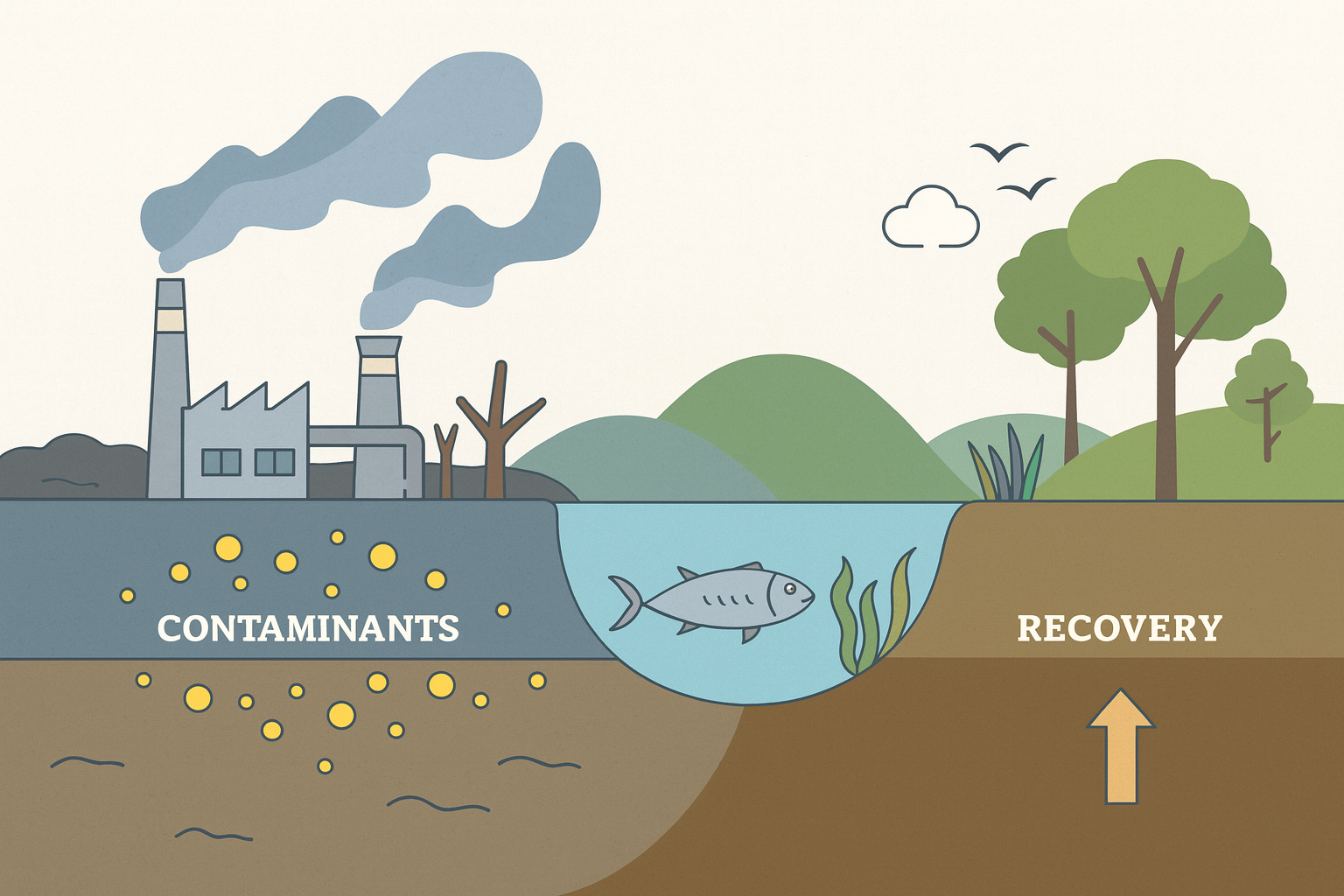
1. Key Arguments Presented in the Article
a. India’s environmental crisis is accelerating
- Rapid industrialisation and urbanisation have degraded soil, water, and air.
- Rivers like Ganga and Yamuna remain polluted due to untreated sewage and industrial effluents.
- Landfills and heavy-metal contamination are worsening ecological health.
b. Bioremediation offers a scientific and sustainable solution
- Uses microorganisms, fungi, algae, plants, and microbes to detoxify pollutants.
- Converts harmful chemicals into harmless by-products.
- Two types highlighted:
- In situ bioremediation (treatment at the contamination site)
- Ex situ bioremediation (soil/water removed, treated elsewhere)
c. Modern biotechnology enhances traditional microbiology
- New techniques use:
- Genetically modified microbes
- Engineered enzymes
- Precision biochemistry
- These biotechnologies can degrade pesticides, plastics, oil residues, and even heavy metals more efficiently.
d. India has initiated programmes but lacks scale
- Department of Biotechnology (DBT) supports multiple pilot projects.
- Collaboration with industries and academic institutions exists but is fragmented.
- Clear national guidelines and regulatory frameworks are still missing.
e. Risks and regulatory gaps must be addressed
- Genetically modified microbes may cause unintended ecological impacts.
- India lacks:
- Certification standards
- Site-specific monitoring
- Public awareness
- Trained professionals
2. Author’s Stance
The article adopts a pro-bioremediation, reform-oriented, and optimistic stance:
- Strongly argues that India must mainstream bioremediation.
- Emphasises the synergy with government initiatives (Swachh Bharat, Namami Gange).
- Advocates for scaling biotechnology responsibly.
The tone is constructive, highlighting both opportunities and risks.
3. Possible Biases Present
a. Pro-innovation bias
- The article highlights benefits more prominently than risks.
- Overlooks cost concerns, maintenance challenges, and scalability issues.
b. Limited critique of government performance
- Refers to existing programmes but doesn't critically evaluate execution failures or funding gaps.
c. Underplays the role of community behaviour
- Pollution is not only technological but also behavioural (waste segregation, industrial compliance, civic action).
4. Pros and Cons of Bioremediation (As Highlighted)
Pros
- Eco-friendly and cost-effective compared to chemical remediation.
- Suitable for large-scale sites like landfills, oil spills, sewage rivers.
- Restores ecosystems and enhances biodiversity.
- Reduces dependence on landfills and chemical treatment plants.
- Aligns with circular economy and sustainable development goals.
Cons
- India lacks large-scale adoption mechanisms.
- GM microbes pose ecological risks.
- Slow process compared to chemical treatment (especially for heavy metals).
- Requires skilled manpower, rigorous monitoring, and public engagement.
- Regulatory vacuum may cause misuse.
5. Policy Implications
a. Need for a National Bioremediation Mission
- Similar to Namami Gange but applied to solid waste, soil remediation, industrial effluent zones.
b. Capacity building
- Train biotechnologists, microbiologists, municipal staff.
- Establish specialised remediation labs across states.
c. Strong regulatory oversight
- Biosafety norms for GM microbes.
- Site-specific risk assessment.
- Certification for bioremediation service providers.
d. Integration with existing flagship schemes
- Swachh Bharat Mission
- National Clean Air Programme (NCAP)
- Smart Cities
- AMRUT
e. Public participation
- Awareness on waste disposal.
- Citizen science-based pollution monitoring.
6. Real-World Impact
Positive
- Reduction in landfills and open dumpsites.
- Cheaper remediation for developing regions.
- Cleaner rivers and groundwater.
- Reduced disease burden linked to pollution.
- Boost to India’s biotechnology sector.
Negative / Risks
- Improperly managed microbial release can disturb ecological balance.
- Pilot projects may fail due to lack of funding or municipal capacity.
- Industries may resist regulatory oversight.
7. Alignment with UPSC GS Papers
GS Paper 3: Environment, Ecology, Biotechnology
- Pollution control & waste management
- Bioremediation technologies
- Challenges of urbanisation
- Environmental governance
GS Paper 2: Governance & Policy
- Role of government schemes (DBT, Swachh Bharat, NCAP)
- Need for regulatory reforms
GS Paper 1: Society
- Impact of pollution on health and livelihoods
GS Paper 4: Ethics
- Environmental ethics, intergenerational equity
8. Balanced Summary
The article highlights that India’s environmental degradation needs urgent, scientifically robust solutions. Bioremediation—using microorganisms and biotechnology—offers a sustainable route to detoxify polluted soil, water and industrial sites. While India has initiated pilot projects through the Department of Biotechnology, the country still lacks a comprehensive regulatory framework, skilled manpower, and public awareness.
The potential is significant: cleaner rivers, restored ecosystems, and new opportunities in green biotechnology. However, the risks of genetically modified organisms, inadequate monitoring, and weak institutional capacity must be addressed. For India to fully harness bioremediation, it must adopt a mission-mode strategy that combines innovation with strong regulation, public participation, and interdepartmental coordination.
9. Future Perspectives
- Establish a National Bioremediation Centre for innovation and regulation.
- Encourage public–private partnerships for scalable field applications.
- Integrate bioremediation into district-level environmental action plans.
- Use the technology for mine reclamation, oil spills, and toxic waste zones.
- Foster India’s leadership in global green biotechnology.
