

Why Pollution Affects North Indian Cities More Than South & West
Indian Express
1. Key Arguments of the Article
a. No major Indian city achieved safe AQI levels (2015–2025)
- According to Climate Trends’ analysis, all major cities recorded unhealthy AQI in most years.
- Delhi remains the worst affected, with AQI often above 180–250 post-festivals.
b. North Indian cities suffer prolonged pollution spikes
- Cities like Delhi, Lucknow, Varanasi, Patna, Ahmedabad experienced extremely high AQI (>200) for extended periods.
- South and west India saw comparatively cleaner air, though still not “good”.
c. Geography shapes pollution intensity
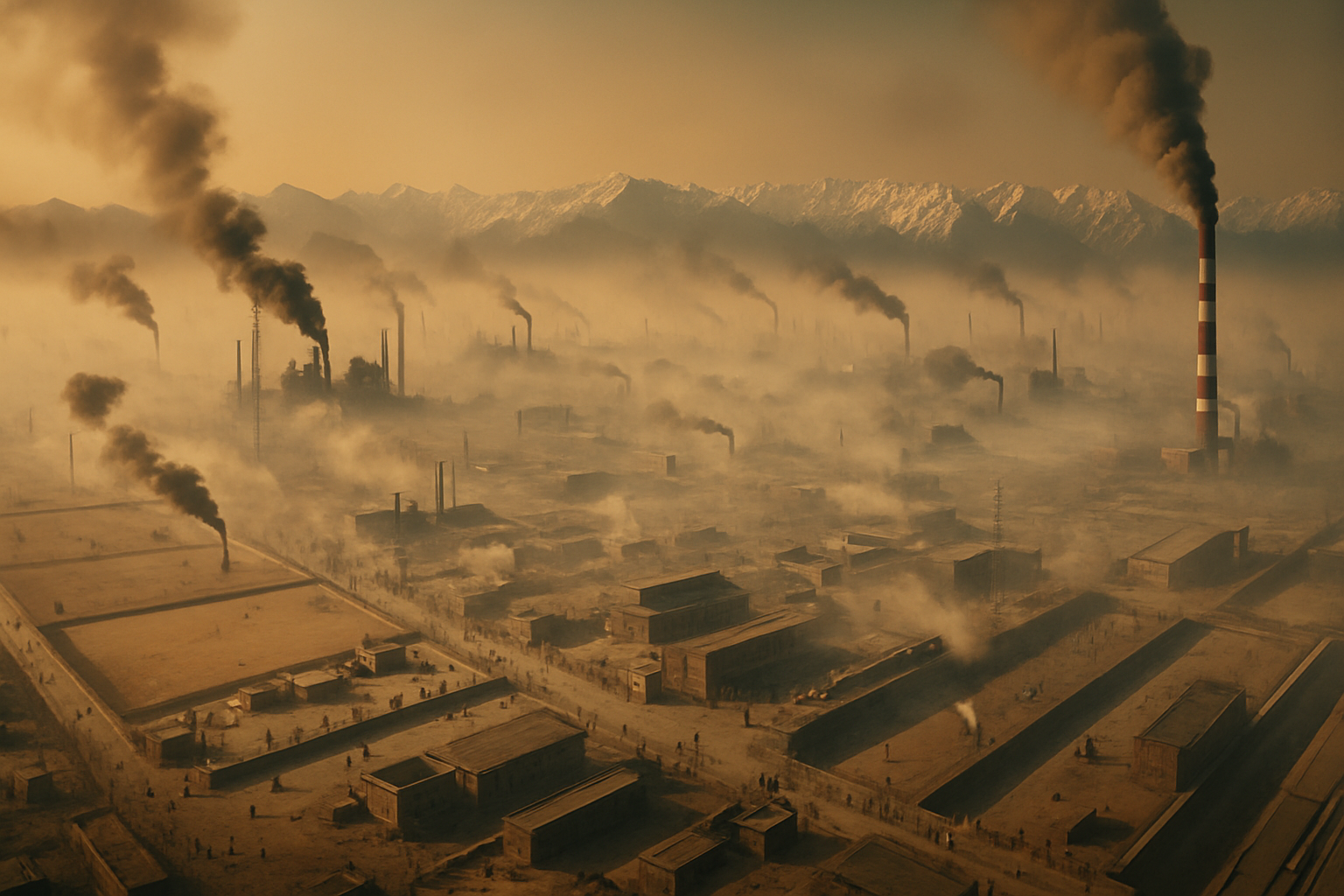
- Indo-Gangetic Plains (IGP) are landlocked.
- Bounded by the Himalayas in the north → pollution gets trapped.
- Dense urban structures → increased “surface roughness.”
- Winter winds weaken → reduced dispersion.
- Inversion layer during winter traps pollutants near ground level.
d. Meteorology worsens winter pollution
- During December–February:
- Lower boundary layer height.
- Cool air trapped under warm air → “atmospheric lid”.
- Vertical mixing stops → pollutants accumulate.
e. Cities of south and west benefit from geography
- Coastal winds and stronger dispersion.
- Higher humidity and less dust loading.
- Less crop residue burning.
2. Author’s Stance
- The author takes a scientific, explanatory stance, attributing differences in AQI primarily to:
- Geography
- Meteorology
- Urban form
- The tone is neutral, non-political, and data-driven.
- The report positions pollution as structural, not merely behavioural or administrative.
3. Possible Implicit Biases
a. Overemphasis on geography
- While geography is a major factor, the article underplays:
- Administrative failures
- Lack of enforcement
- Industrial emissions
- Road dust & transport emissions
b. Limited reference to socio-economic factors
- Population density, construction booms, energy use patterns remain under-discussed.
Despite this, the coverage remains objective, relying heavily on data.
4. Pros and Cons of the Arguments
Pros
- Highlights scientifically accurate causes of pollution variation.
- Brings attention to structural constraints (Himalayas, IGP geography).
- Uses long-term AQI data (2015–2025) for empirical credibility.
- Educates readers about seasonal meteorology (inversion, boundary layer).
Cons
- Lacks focus on governance gaps.
- Minimizes role of local emissions such as:
- Industrial clusters
- Brick kilns
- Vehicular growth
- Construction emissions
- Underexplores health and economic impacts.
5. Policy Implications
a. Region-specific pollution policy needed
North India needs:
- Aggressive winter pollution preparedness plans.
- Smog towers, GRAP enforcement, dust control.
- Industrial emissions monitoring.
- Crop residue management (biomass procurement, PUSA decomposer).
South/west need:
- Urban mobility improvements.
- Reducing vehicular emissions.
b. Metropolitan cooperation
Delhi NCR requires multi-state coordination involving:
- Haryana
- Punjab
- UP
- Rajasthan
c. Infrastructure solutions
- More continuous air monitoring stations.
- Urban green buffers.
- Reducing surface roughness via planned development.
d. Data-driven early warning systems
- Satellite monitoring for stubble burning and dust storms.
6. Real-World Impact
North India
- Higher disease burden (asthma, COPD, cardiovascular diseases).
- Economic losses from reduced productivity and healthcare costs.
- Long-term effects on children’s cognition and lung function.
South & West
- Some cities now trending towards moderate AQI → risk of complacency.
- Rapid urbanisation may escalate pollution in future (e.g., Bengaluru).
7. UPSC GS Paper Alignment
GS Paper 1
- Urbanisation and associated issues.
- Geographic factors affecting climate.
GS Paper 2
- Governance gaps in pollution control.
- Centre–state coordination.
GS Paper 3
- Environment: air pollution, meteorology, climate change.
- Disaster management (public health crisis).
- Pollution control technologies.
GS Paper 4
- Ethical responsibility to safeguard public health.
8. Balanced Summary
The article effectively explains why north Indian cities suffer more from pollution than southern and western parts of the country. The key reasons lie in geography—the plateau, Himalayas, landlocked plains, and winter meteorological patterns that trap pollution. While air quality improved slightly after 2019, no major city reached healthy AQI levels over the decade. The analysis highlights an urgent need for region-specific policy interventions and multi-state coordination.
However, the article underemphasizes governance failures and over-relies on geographical explanations. Effective pollution reduction must combine meteorological understanding with strict enforcement, clean energy transitions, mobility reforms, and agricultural support.
9. Future Perspectives
- Develop a long-term Indo-Gangetic Airshed Model for coordinated interventions.
- Promote green transport and electric mobility at scale.
- Strengthen municipal enforcement and dust mitigation.
- Invest in crop residue management and alternative incomes for farmers.
- Integrate pollution control with climate adaptation frameworks.
- Expand public awareness on behavioural contributions to pollution.
