

Decoding new UGC regulations
Hindustan Times
Key Arguments
Standardisation of academic appointments
The regulations aim to create uniform eligibility norms for faculty recruitment and promotion, including qualification requirements, selection processes and service conditions.
Centralisation of regulatory authority
The UGC’s expanded role is portrayed as strengthening central oversight over universities, including state-funded institutions, thereby reducing institutional discretion.
Impact on inclusion and diversity
Critics argue that the regulations dilute provisions meant to promote social diversity, especially concerning reservations, local representation and disadvantaged groups.
Procedural opacity and speed
The article notes that the regulations were notified with limited stakeholder consultation, triggering apprehensions among universities and faculty associations.
Political and legal contestation
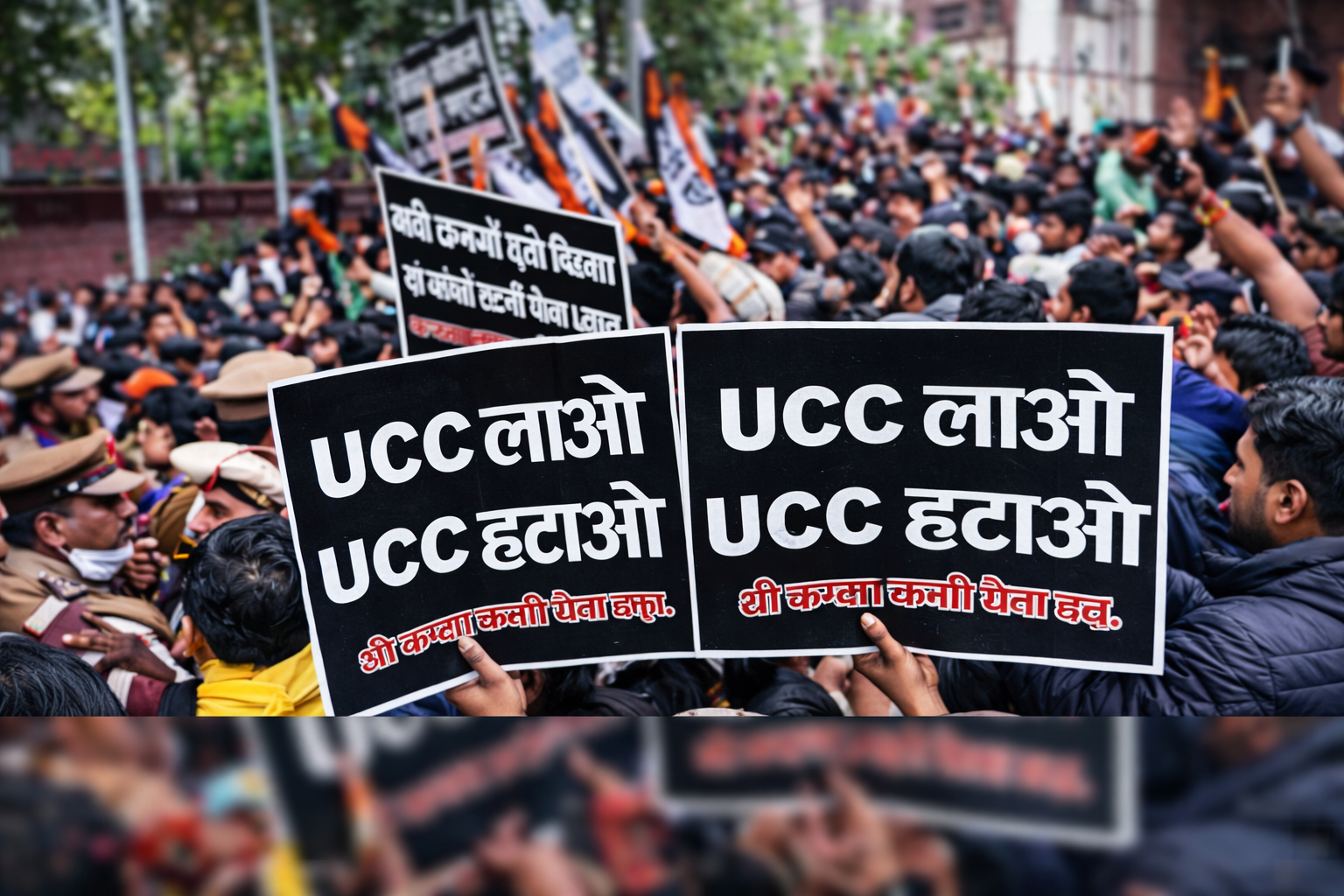
Protests, suspensions of officials, and statements from state governments reflect the regulations becoming a flashpoint in Centre–State relations and campus politics.
Author’s Stance and Bias
Stance
The author adopts a sceptical and interrogative stance, foregrounding dissenting voices and constitutional concerns over executive overreach.
Biases
There is a noticeable emphasis on opposition narratives—academic freedom, social justice and federalism—while the government’s rationale of efficiency and quality control receives comparatively limited elaboration.
Pros Highlighted
Uniform quality benchmarks
Standardised norms may reduce arbitrariness and variation in faculty recruitment across institutions.
Transparency in appointments
Clear eligibility criteria can potentially curb patronage, nepotism and ad-hoc hiring practices.
National comparability
The framework may enhance mobility of faculty and comparability of academic credentials nationwide.
Cons and Concerns
Erosion of institutional autonomy
Universities fear loss of academic freedom in shaping faculty profiles suited to local and disciplinary needs.
Federal tensions
State universities perceive the regulations as infringing upon state powers in education, a subject in the Concurrent List.
Social inclusion risks
Rigid criteria may indirectly disadvantage candidates from marginalised backgrounds and regional institutions.
Campus unrest
The manner of implementation risks prolonged protests, litigation and administrative disruption.
Policy Implications
Higher education governance
The episode underscores the tension between central regulation and institutional autonomy in India’s higher education system.
Centre–State relations
Education policy emerges as another arena of contestation in India’s federal structure.
Need for consultative policymaking
The backlash highlights the importance of stakeholder engagement in reforms affecting universities and academic labour.
Real-World Impact
In the short term, the regulations have triggered protests, legal scrutiny and political mobilisation, potentially delaying academic appointments and admissions. In the long run, their impact will depend on interpretation, implementation flexibility and judicial outcomes. Universities may face tighter compliance burdens, while faculty recruitment patterns could shift significantly.
UPSC GS Paper Linkages
GS Paper II – Governance
Regulatory institutions, transparency, accountability, federalism.
GS Paper II – Polity
Centre–State relations, constitutional distribution of powers, autonomy of institutions.
GS Paper I – Society
Education, social justice, access and equity in higher education.
Conclusion and Future Perspective
The article presents the new UGC regulations as more than a technical reform; it frames them as a test case for balancing quality control with autonomy, and central authority with diversity. While the intent to standardise and professionalise higher education governance has merit, the absence of broad consultation and sensitivity to social and federal realities has fuelled resistance. Going forward, the sustainability of these regulations will depend on dialogue, adaptive implementation and judicial clarity, without which reform risks deepening mistrust between the state and the academic community.
