

EAM outlines four key priorities for India’s BRICS 2026 chairship
The Statesman
Context and Significance
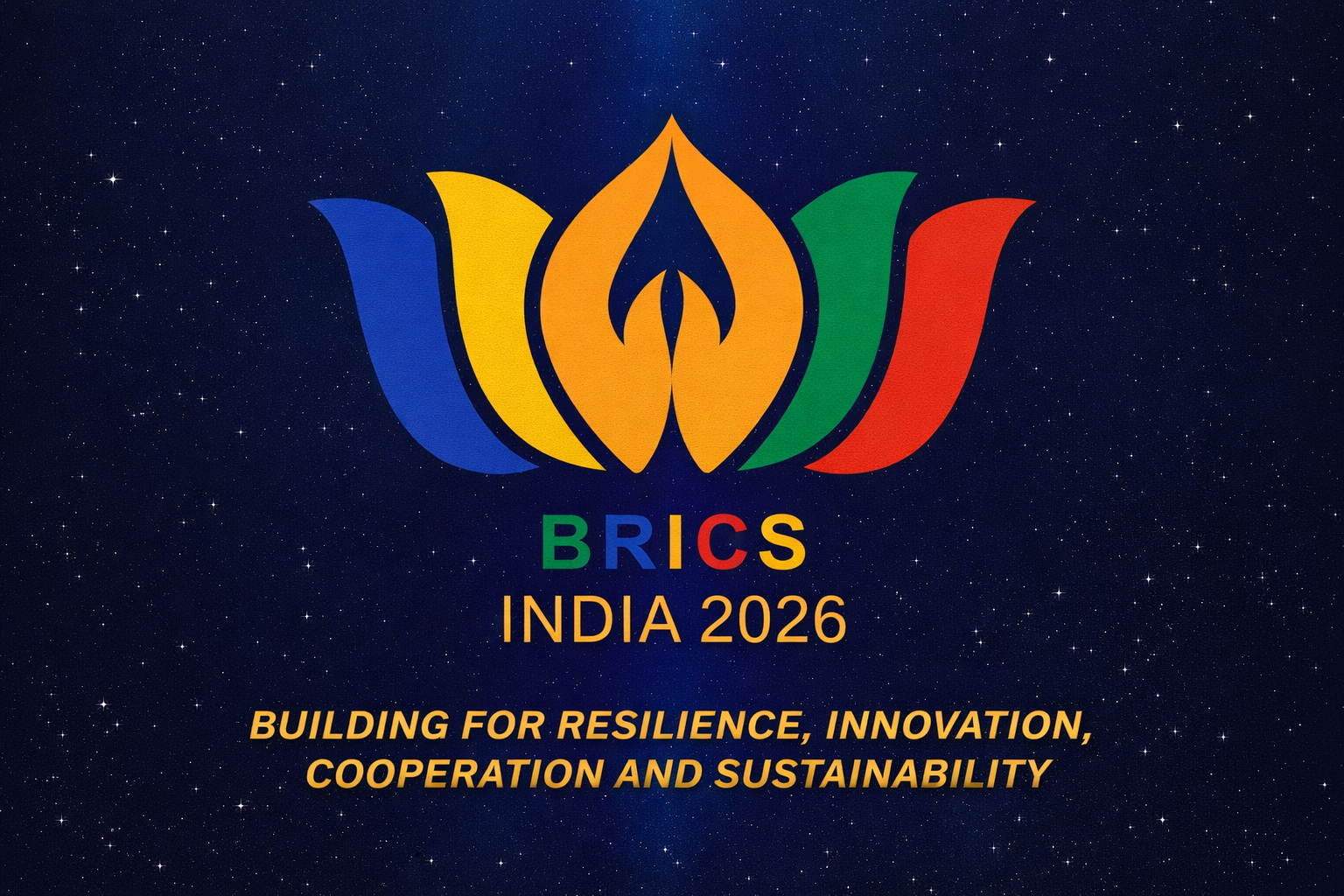
The article reports External Affairs Minister S. Jaishankar’s articulation of India’s four priority pillars for its BRICS 2026 chairship—Resilience, Innovation, Cooperation, and Sustainability—within a broader narrative of people-centric and “human-first” multilateralism. Coming at a time of fragmented global governance, geopolitical churn, and credibility deficits in existing institutions, the statement seeks to position India as both a bridge-builder and agenda-setter in the Global South.
The piece is primarily descriptive, yet it carries implicit strategic messaging aligned with India’s evolving foreign policy posture.
Key Arguments and Claims
1. Reframing BRICS as a Functional Multilateral Platform
The article argues that India’s chairship aims to move BRICS beyond symbolism towards practical cooperation, especially in:
- Supply chains
- Agriculture and health
- Disaster risk reduction
- Energy and clean transitions
The emphasis is on delivery rather than declaratory politics.
2. Resilience as a Core Organising Principle
Resilience is presented as:
- Economic (shock absorption, supply chain diversification)
- Institutional (capacity to withstand global crises)
- Social (people-centric development)
This reflects learning from recent shocks—pandemics, financial instability, and geopolitical disruptions.
3. Innovation and Emerging Technologies
The EAM stresses:
- Start-ups, MSMEs, and new technologies
- Innovation as an equaliser for developing countries
- Technology-driven development pathways rather than aid-dependent models
Innovation is framed as a tool for inclusive growth, not elite technological dominance.
4. Sustainability with Development Sensitivity
The article highlights India’s attempt to:
- Balance climate action with development needs
- Promote clean energy without imposing uniform pathways
- Emphasise nationally determined transitions
This echoes India’s long-standing stance on climate equity.
5. Reform of Global Governance
Implicit in the article is the claim that:
- Existing multilateral institutions (UN, IMF, WTO, World Bank) inadequately reflect contemporary realities
- BRICS can complement, not replace, these bodies
- India will push for reformed multilateralism that is more representative and inclusive
Authorial and Institutional Stance
The stance is clearly supportive and aligned with official policy:
- The article functions more as an explanatory brief than a critical interrogation
- Government framing is largely accepted at face value
- Emphasis is on intent, vision, and leadership rather than constraints
This is consistent with the genre of diplomatic reporting.
Biases and Editorial Limitations
1. Official Narrative Bias
- The article reproduces ministerial statements with minimal critical scrutiny
- Divergences within BRICS (China-Russia vs India-Brazil-South Africa dynamics) are underplayed
2. Under-examined Feasibility
- No assessment of BRICS’ institutional capacity or decision-making limits
- No discussion of past BRICS deliverables versus rhetoric
3. Strategic Silences
- Tensions within BRICS on geopolitics and global order
- China’s disproportionate economic weight within the grouping
- Internal contradictions between “people-centric” rhetoric and elite-driven diplomacy
Pros and Cons of the Position Outlined
Pros
- Articulates a coherent and values-based framework
- Aligns Global South priorities with India’s development experience
- Positions India as a consensus-builder rather than a bloc-leader
- Reinforces India’s post-G20 diplomatic momentum
Cons
- Heavy reliance on normative language without concrete metrics
- Risks over-stretching BRICS’ functional scope
- May face resistance from members with competing strategic agendas
Policy Implications
1. Foreign Policy
- India consolidates its role as a voice of the Global South
- Reinforces strategic autonomy through plurilateral diplomacy
2. Global Economic Governance
- Push for diversification of development finance and supply chains
- Potential strengthening of South-South cooperation mechanisms
3. Climate and Energy Policy
- Greater legitimacy for differentiated climate pathways
- Emphasis on clean energy transitions aligned with national contexts
4. Technology and Development
- Opportunity to shape norms around inclusive digital public infrastructure
- Risk of uneven implementation across BRICS economies
Real-World Impact and Constraints
- Success will depend on institutional follow-through, not rhetoric
- Divergent geopolitical interests within BRICS may limit consensus
- India’s credibility will hinge on translating chairship priorities into measurable outcomes, especially for developing economies
UPSC GS Paper Alignment
GS Paper II – International Relations
- India’s role in multilateral and plurilateral groupings
- Reform of global governance institutions
- South-South cooperation
GS Paper III – Economy & Environment
- Supply chain resilience
- Sustainable development and clean energy transitions
- Innovation ecosystems and MSMEs
GS Paper IV – Ethics
- People-centric governance
- Equity and fairness in global decision-making
Balanced Conclusion and Future Perspective
The article captures India’s attempt to redefine leadership in a fractured world order—not through dominance, but through agenda-setting rooted in resilience, innovation, and inclusivity. While the vision articulated for India’s BRICS 2026 chairship is normatively appealing and strategically coherent, its credibility will ultimately rest on implementation, internal BRICS cohesion, and tangible benefits for developing societies. For India, the challenge lies in converting diplomatic language into durable institutional outcomes, ensuring that BRICS evolves from a forum of convergence into an engine of cooperative action in an increasingly uncertain global system.
