

For Putin, a political win; for India, a stable partner
Indian Express
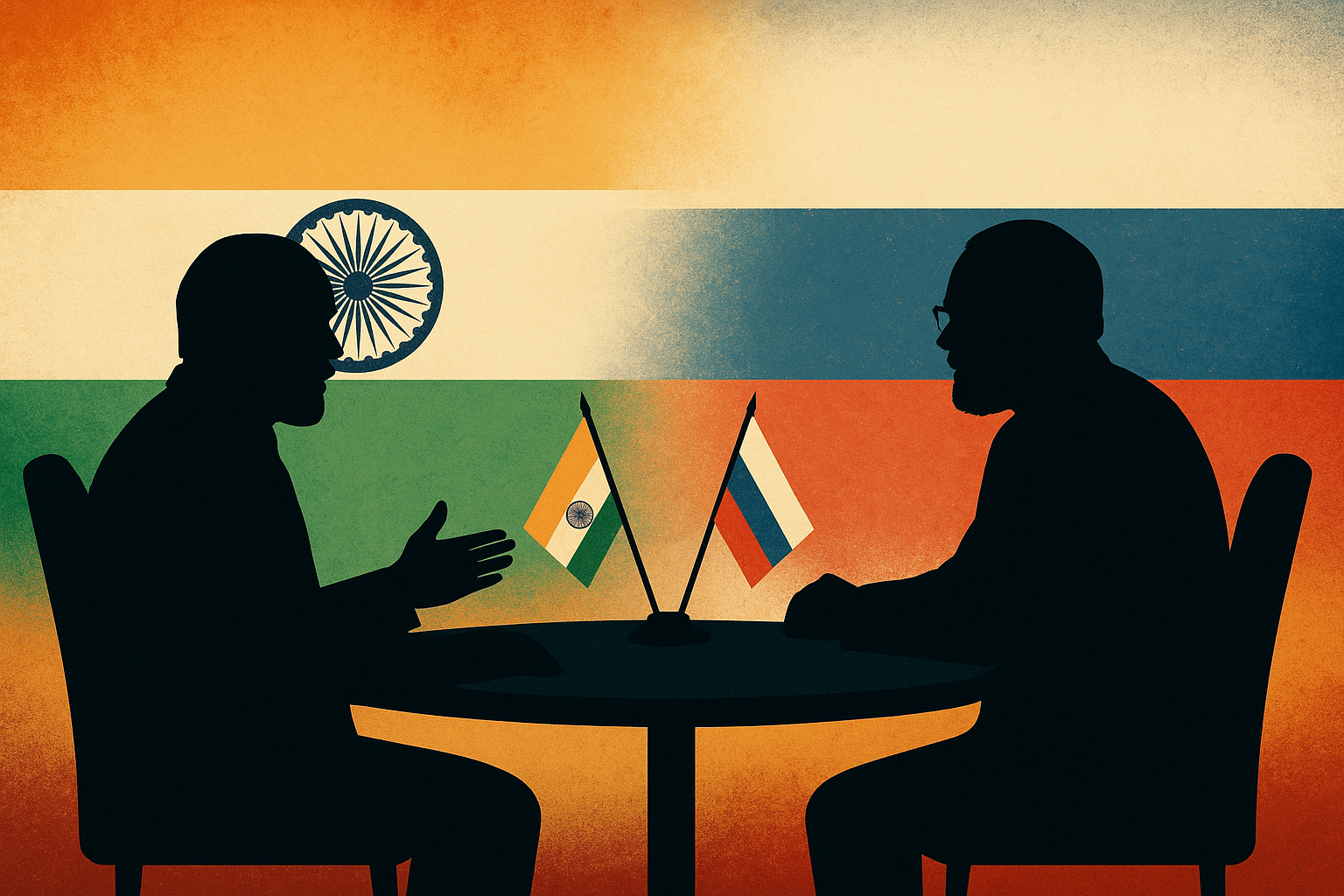
KEY ARGUMENTS PRESENTED
- Russia Gains Diplomatic Legitimacy
Putin’s visit symbolises India’s willingness to engage despite Western sanctions and Russia’s pariah status in Europe. - India Gains Strategic Stability
India values Russia as a critical defence partner, energy supplier, and geopolitical balancer. - Ukraine War Alters Perceptions but Not Core Interests
India–US ties have grown, but India cannot fully distance itself from Russia due to defence dependence and long-standing institutional linkages. - Economic and Commercial Cooperation Is Expanding
Both nations aim for a trade target of USD 100 billion by 2030. - Defence Collaboration Remains the Centrepiece
Russia remains the only partner willing to share certain sensitive technologies, such as nuclear submarines, anti-missile systems, and small modular reactors. - Europe and the US React Differently
Europe may feel discomfort at India’s warm reception for Putin, but India prioritises autonomy and national interest, not alignments. - India’s Challenge: Navigate US Rivalry and Maintain Balance
India must manage its growing partnership with the US while ensuring Russia does not drift closer to China in ways that harm Indian interests.
AUTHOR’S STANCE AND POSSIBLE BIASES
- Realist and Strategic-Autonomy Lens
Saran consistently supports India’s “strategic autonomy” doctrine. His tone favours pragmatic foreign policy over moral judgment. - Implicit Pro-Engagement Bias
While noting Russia’s aggression in Ukraine, he downplays normative concerns and foregrounds geopolitical compulsions. - Selective Emphasis on Defence Dependence
The analysis gives significant weight to defence ties, less to whether India is gradually diversifying away from heavy dependence on Russian platforms. - Underrepresentation of Domestic Political Variables
Internal Russian politics, public perception in India, or potential long-term reputational costs are minimally discussed.
PROS OF THE ARGUMENT (Strengths)
1. Historically Grounded Explanation
The article accurately traces the origins of India–Russia ties to Indo-Soviet strategic coordination during the Cold War and explains continuity.
2. Clear Identification of Mutual Interests
Defence, energy, nuclear cooperation, and geopolitics are highlighted effectively.
3. Realistic Assessment of Russia’s Isolation
Russia’s need for diplomatic validation amid sanctions is well captured.
4. Balanced Presentation of India’s Dilemma
The tension between deepening India–US ties and maintaining Russia as a stable partner is explained with nuance.
CONS OF THE ARGUMENT (Limitations and Missing Dimensions)
1. Limited Discussion of Russia–China Convergence
The article briefly mentions China but does not sufficiently explore the implications of a deepening Moscow–Beijing axis for India.
2. Underplayed Risks of Overdependence
India’s defence dependency on Russia is treated as a strength, but the risks—sanctions exposure, supply chain vulnerabilities, outdated platforms—are not critically evaluated.
3. Insufficient Examination of India’s Long-Term Strategy
No detailed assessment of India’s diversification towards Western defence sources or indigenous manufacturing.
4. Lack of Engagement with Global Normative Criticism
India’s neutrality on Ukraine faces ethical scrutiny; this dimension is not fully acknowledged.
5. Economic Relations Are Overstated
Despite the USD 100 billion target, actual structural asymmetries (hydrocarbon-heavy trade, payment challenges) are not discussed.
POLICY IMPLICATIONS (UPSC GS-II and GS-III Alignment)
- Foreign Policy: Strategic Autonomy
India must continue balancing between major powers while prioritising national interest. - Defence Modernisation
The partnership with Russia is vital for existing inventories, but diversification is necessary for future readiness. - Energy Security
Discounted Russian oil has helped India manage inflation, but long-term reliance on geopolitically unstable suppliers is risky. - Multilateral Diplomacy
India’s tightrope walk between G7 nations and Russia impacts its positioning in platforms such as BRICS and the G20. - Indo-Pacific Dynamics
As India aligns more with the US in maritime strategy, maintaining Russia’s trust becomes complex. - Technology and Nuclear Cooperation
Russia’s willingness to share niche defence and nuclear technologies enhances India’s capabilities.
REAL-WORLD IMPACT ASSESSMENT
- Short-Term Diplomatic Gains for Russia
India offers Moscow political legitimacy at a time when Western capitals ostracise Putin. - Continued Benefits for India’s Defence Sector
Joint ventures, spare parts, and legacy systems ensure operational continuity. - Geopolitical Balancing Act
India’s hosting of Putin demonstrates its refusal to be drawn into Cold War-style alignments. - Potential Tensions with the West
Though manageable, US and European dissatisfaction could influence negotiations in technology transfers or trade. - Risk of Russia Tilting Further Toward China
A weakened Russia overly dependent on China may not always align with Indian interests.
BALANCED CONCLUSION
The article presents a cogent, historically informed argument that Putin’s visit strengthens India–Russia relations in a politically significant moment. It effectively captures the strategic logic that binds both nations. However, the analysis remains largely realist and state-centric, underplaying normative concerns, long-term risks, and structural vulnerabilities in the relationship.
India’s diplomacy today must navigate an evolving triangle involving Russia, China, and the US. As India modernises its defence ecosystem and expands its global footprint, its relationship with Russia will remain important but cannot remain static. The future trajectory will depend on Russia’s post-Ukraine positioning, India’s defence diversification, and the stability of the global order.
FUTURE PERSPECTIVES (Useful for UPSC Mains Answers)
- Gradual but firm diversification of defence imports
- Strengthening indigenous defence manufacturing to reduce geopolitical risks
- Continuous engagement with Russia without being drawn into its conflicts
- Balancing ties with the US and Russia through multi-alignment
- Monitoring the Russia–China axis and its implications for India’s security
- Pursuing economic partnerships beyond hydrocarbons for sustainable growth
India’s foreign policy success lies in managing contradictions, not choosing sides. Putin’s visit, as the article argues, highlights India’s ability to maintain strategic equilibrium in an unstable world.
