

Gold Prices in 2026: A 25% Correction After a Record Rally

Gold Prices in 2026: A 25% Correction After a Record Rally
Source: The Indian Express
Why in News?
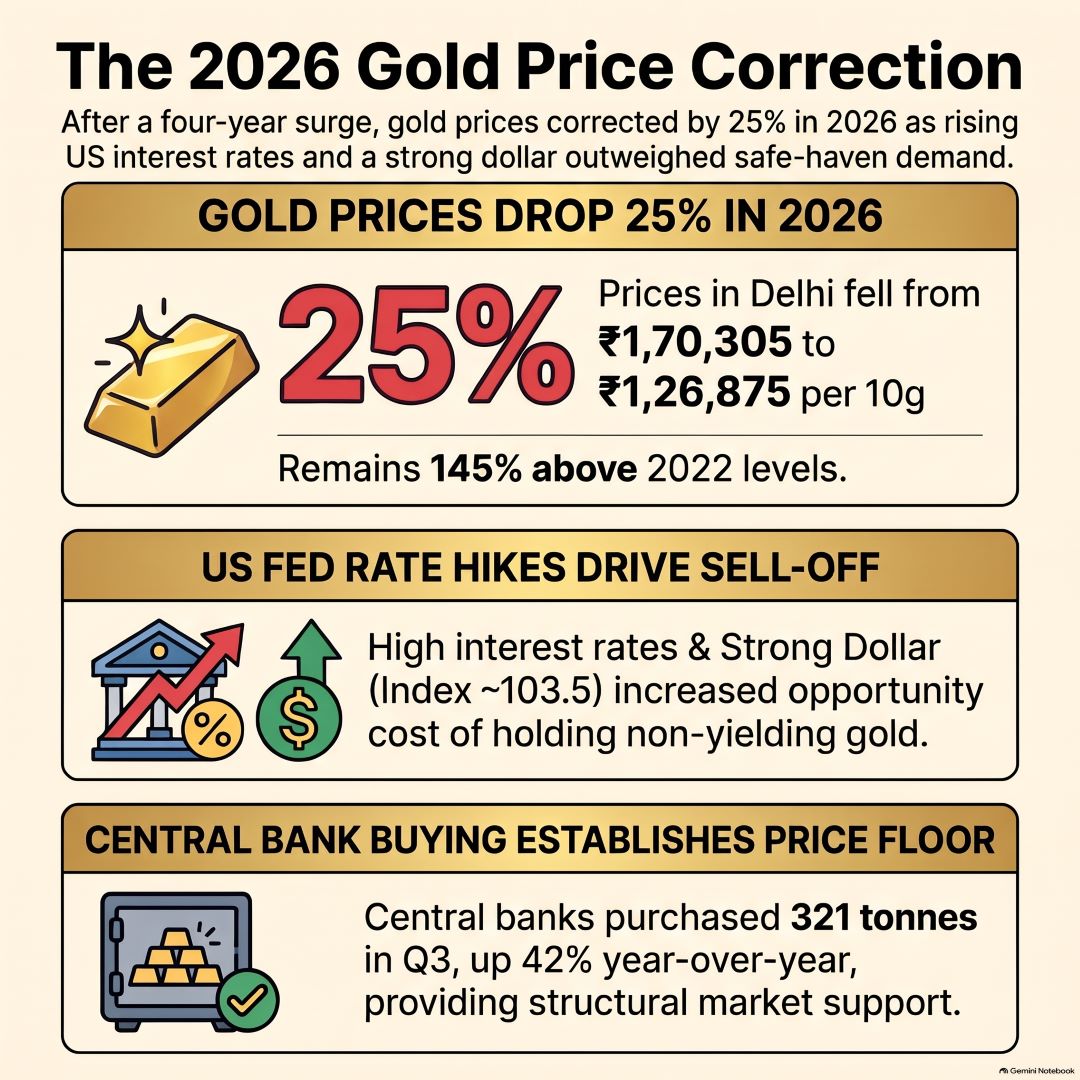
Gold in Delhi fell about 25% between 28 February and 20 November 2026, from ₹1,70,305 to ₹1,26,875 per 10 grams (24-carat), as markets priced further US interest rate hikes. The fall follows a four-year rally, so it is a correction and not a full reversal.
Background
|
Date |
Delhi 24-carat, ₹ per 10 g |
Change from 2022 |
|
26 Feb 2022 |
51,715 |
- |
|
24 Feb 2024 |
64,185 |
+24% |
|
28 Feb 2026 |
1,70,305 |
+229% |
|
20 Nov 2026 |
1,26,875 |
+145% |
- Gold rose about 165% in the two years before February 2026 and about 230% in four. Even now it is about 98% above its February 2024 price.
- Gold pays no interest or dividend, so its value rests on being a store of value in times of inflation and uncertainty. World Gold Council data since 1971 show it has beaten US and global consumer prices over the long run, and global net demand averages about 3,200 tonnes a year.
- Gold is priced in dollars, so in India the rupee rate, import duty and taxes decide the final price.
Key Highlights
- Global price: Spot gold was about $3,870 an ounce on 17 November, around 30% below its January record and at a one-year low. It had fallen about 15% in the 12 weeks to 13 November.
- Fed repricing: The US Fed held rates at 3.75-4.00% on 28 October by 10-2, with two members voting for a hike. Markets put a quarter-point hike on 9 December at 90-94%. October US consumer prices rose 0.4% in the month, above forecast.
- Dollar and yields: The dollar index was near 103.5, close to a 19-month high, and the US 10-year yield about 5.1%. Both raise the cost of holding non-yielding gold. Other central banks, including the Bank of Japan and the European Central Bank, have also moved towards higher rates.
- Safe-haven bid not working: Reported tanker attacks near the Strait of Hormuz would normally lift gold, but higher oil raises inflation and rate-hike bets, so the interest rate channel is outweighing the safe-haven one.
- Why it rallied earlier: Heavy government borrowing, persistent inflation, wars and tensions, and central banks buying gold since the 2008 crisis.
- What still supports gold: Central bank buying of 321 tonnes in the third quarter (up 42% on the year) and a record 4,256 tonnes held in gold ETFs. Jewellery demand fell 17% and bar and coin demand 19% on high prices.
- India: The effective import duty on gold and silver was raised to 15% from 13 May 2026, as IIFL reports, so domestic prices stay above global ones. The rupee was near ₹93.5 per dollar. India's gold demand in the third quarter was 162 tonnes, down 29% on the year, and October gold ETF inflows fell 22% to ₹3,474 crore. Gold-loan lenders and jewellers have come under pressure.
- Inflation link: Retail inflation rose to 6.09% in October, above the RBI's 6% upper limit for the first time in about two years, which raises the odds of tighter policy at the RBI's early-December meeting.
Conclusion
The 2026 fall is a correction within a long rally, driven by higher interest rates and a stronger dollar. Gold's next move depends on the Fed and the RBI, with central bank buying as the main floor.