

Greater Accountability
The Statesman
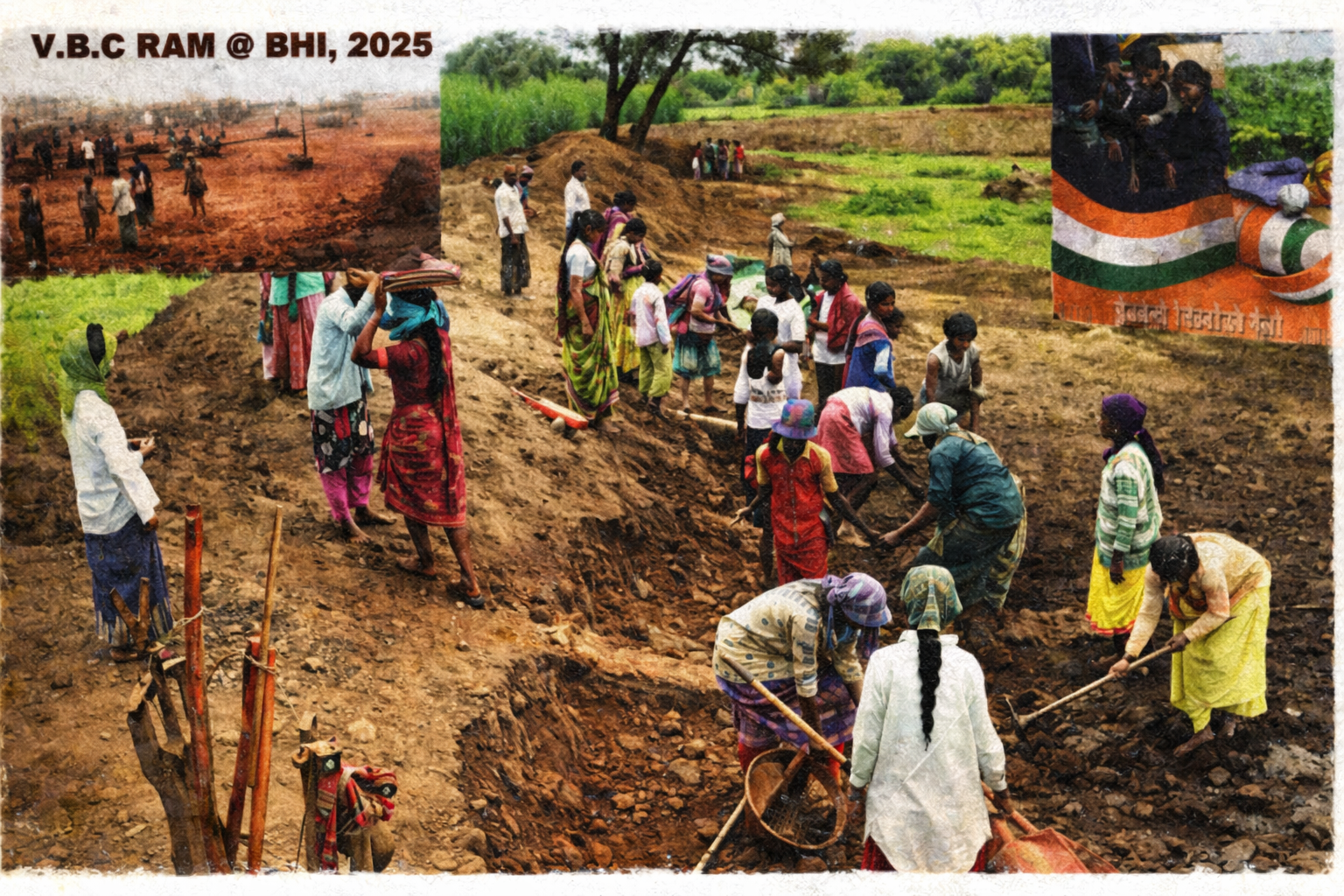
Core Theme and Context
The article focuses on the restructuring and tightening of accountability mechanisms within rural employment and development programmes, particularly in the context of revamped monitoring frameworks, digitisation, and institutional oversight. It frames accountability as the missing link between policy intent and grassroots delivery, arguing that leakages, inflated claims, and weak supervision have historically diluted outcomes.
The piece situates these reforms against persistent concerns of corruption, inefficiency, and credibility deficits in large-scale welfare and employment schemes.
Key Arguments Presented
1. Accountability as the Foundation of Welfare Effectiveness
The article argues that increased budgetary allocations or scheme expansion alone cannot improve outcomes unless accompanied by robust accountability structures. Monitoring, audits, and verification are presented as essential to ensure that benefits reach intended beneficiaries.
The underlying claim is that governance quality, not funding volume, determines welfare impact.
2. Digitisation and Institutional Oversight as Correctives
The article highlights administrative measures such as:
- Digital attendance and payment systems
- Independent verification and audits
- Strengthening of monitoring institutions
These are portrayed as tools to curb ghost beneficiaries, inflated employment claims, and delayed payments.
3. Reducing Leakages to Restore Public Trust
A key argument is that accountability reforms are necessary not merely for fiscal prudence but for restoring citizen trust in state programmes. Leakages are framed as moral and institutional failures that erode the legitimacy of welfare interventions.
4. Centre–State Coordination Challenges
The article acknowledges that implementation depends heavily on state and local administrative capacity. While central guidelines may tighten oversight, uneven state-level execution remains a structural challenge.
This introduces a federal dimension to the accountability debate.
5. Balancing Control with Access
Implicitly, the article recognises that excessive procedural rigidity can delay payments or exclude genuine beneficiaries. However, it argues that the cost of weak oversight is far higher than the inconvenience of compliance.
Author’s Stance
The author adopts a firmly pro-accountability, governance-first stance:
- Strongly supportive of tighter monitoring and audits
- Views leakages as systemic failures rather than isolated aberrations
- Sees accountability as empowerment, not restriction
The tone is corrective and reformist, favouring administrative discipline over populist flexibility.
Implicit Biases and Editorial Leanings
1. Governance-Centric Bias
The article prioritises administrative control and oversight, with limited attention to:
- Ground-level capacity constraints
- Digital exclusion among vulnerable groups
- Implementation fatigue among frontline workers
2. Anti-Populist Framing
There is an implicit critique of welfare expansion without safeguards, which may underplay the political and social imperatives behind rapid programme scaling.
3. Limited Beneficiary Voice
The narrative is institution-centric, focusing more on systems than on beneficiaries’ lived experiences of delays, errors, or exclusions.
Pros and Cons of the Argument
Pros
- Correctly identifies accountability as central to welfare success
- Emphasises transparency and fiscal responsibility
- Aligns welfare delivery with institutional credibility
- Highlights the need for monitoring beyond mere expenditure tracking
Cons
- Underplays risks of exclusion due to digitisation
- Limited discussion on grievance redressal mechanisms
- Does not sufficiently address frontline administrative overload
- Assumes uniform administrative capacity across states
Policy Implications
1. Strengthening Welfare Governance
The article implies the need for:
- Independent audits
- Clear accountability hierarchies
- Time-bound grievance redressal
2. Technology with Safeguards
Digitisation must be accompanied by:
- Offline alternatives
- Human oversight
- Capacity-building at local levels
3. Cooperative Federalism
Accountability reforms require alignment between central objectives and state implementation capacity, avoiding one-size-fits-all mandates.
Real-World Impact
- Reduced leakages can improve fiscal efficiency
- Better monitoring may enhance programme credibility
- Risk of exclusion if systems are overly rigid
- Long-term improvement in welfare outcomes if accountability is balanced with access
For rural citizens, the impact depends on whether accountability strengthens delivery without denial.
UPSC GS Paper Alignment
GS Paper II – Governance and Social Justice
- Welfare schemes
- Accountability and transparency
- Centre–State relations
GS Paper III – Economy
- Public expenditure efficiency
- Rural employment and livelihoods
GS Paper IV – Ethics in Governance
- Accountability in public service
- Ethical use of public funds
- Trust between state and citizens
Balanced Conclusion and Future Perspective
The article makes a persuasive case that accountability is not an administrative luxury but a democratic necessity in large welfare programmes. Without credible monitoring, welfare risks becoming fiscally expensive and socially ineffective.
However, the future challenge lies in:
- Designing accountability systems that are inclusive, not exclusionary
- Strengthening local administrative capacity
- Ensuring that technology serves beneficiaries rather than disciplines them
Ultimately, greater accountability must translate into greater trust and better outcomes, not merely tighter control.
