

Handloom: Weaving India's Heritage into Global Growth

Handloom: Weaving India's Heritage into Global Growth
Relevance: GS Paper III (Indian Economy, Inclusive Growth, MSMEs/Cottage Industry) | GS Paper I (Indian Art and Culture)
Why It Matters?
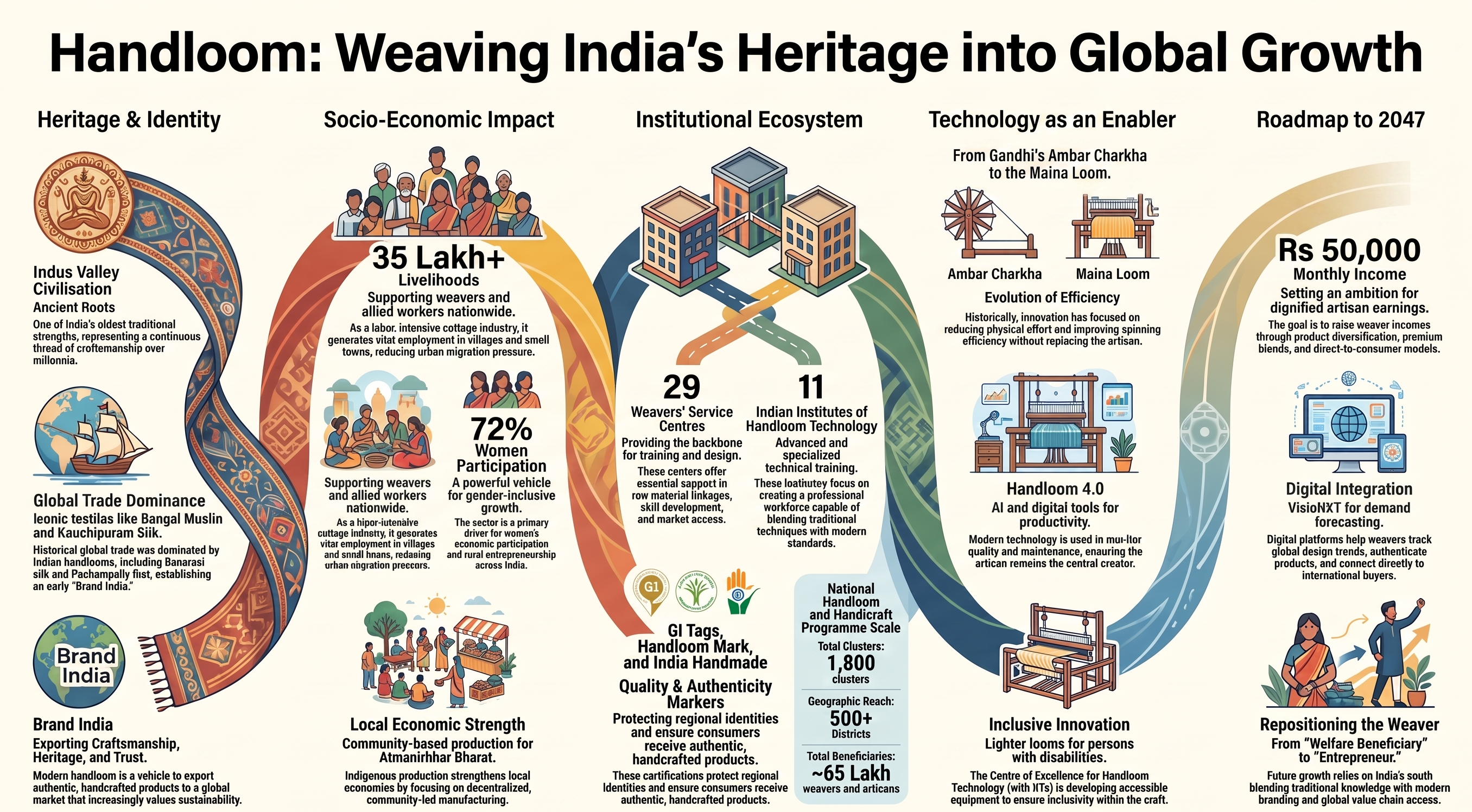
India's path to Viksit Bharat 2047 requires converting traditional strengths, not just technology, into growth engines. Handloom — tracing back to the Indus Valley Civilisation and once dominant in 18th-century global trade (Bengal muslin, Banarasi silk, Kanchipuram silk, Pochampally Ikat) — sits at the intersection of heritage, sustainability, and inclusive development, with rising global demand for authentic, handcrafted products offering India a chance to export not just textiles but craftsmanship, heritage, and trust as "Brand India."
Economic and Social Significance
The sector supports over 35 lakh weavers and allied workers, with nearly 72% women — making it a significant vehicle for women's economic participation and rural entrepreneurship. As a labour-intensive cottage industry, it generates village- and small-town-level livelihoods, strengthens local economies, reduces migration pressure, and aligns with Atmanirbhar Bharat through indigenous, community-based production.
Existing Institutional Support
Current schemes include the Raw Material Supply Scheme, handloom clusters, improved looms, skill development, Producer Companies, GI tags, the Handloom Mark, India Handmade certification, Urban Haats, and Design Resource Centres — backed institutionally by 29 Weavers' Service Centres (training, design, raw material, market linkages) and 11 Indian Institutes of Handloom Technology (advanced/specialised training). The proposed National Handloom and Handicraft Programme aims to strengthen 1,800 clusters across 500+ districts, benefiting approximately 65 lakh weavers and artisans.
Technology as Enabler, Not Replacement
Innovation has historically strengthened handloom — from Gandhi's Ambar Charkha (improved spinning efficiency and self-reliance) to modern devices like Assam's Maina Loom and the Chitranjan Handloom, which reduce physical effort. The Centre of Excellence for Handloom Technology (with IITs) is developing lighter, more accessible looms, including for persons with disabilities, while "Handloom 4.0" uses digital tools and AI to monitor productivity, quality, and maintenance — guided by the principle that technology must empower, not replace, the artisan.
The Way Forward
Digital platforms (e.g., VisioNXT) can forecast demand, track design trends, authenticate products, and connect weavers directly to global consumers. Product diversification (premium silk, natural/sustainable fibres, innovative blends) combined with stronger branding, certification, e-commerce, and direct-to-consumer models can raise artisan incomes — with an ambition of around Rs 50,000/month as a dignified income target. This requires repositioning weavers as entrepreneurs, innovators, and designers — not mere welfare beneficiaries — through better access to finance, technology, branding, and global value chains, with India's youth potentially revitalising the sector by blending traditional knowledge with modern design and entrepreneurship.
Significance for Mains
Handloom advances Viksit Bharat 2047 through self-reliance (indigenous production), inclusivity (women- and rural-led livelihoods), prosperity (value addition and exports), and cultural confidence (global heritage) — but modernisation must preserve the regional identity and human craftsmanship distinguishing handloom from mass production. Connects well with other GS III cottage-industry/rural-livelihood themes (MSME policy, GI tag protection) and to the broader "heritage as economic asset" theme relevant for GS I culture questions.
