

Human brain can grow new cells, remain sharp even in 80s: Study
Times Of India
Core Theme of the Article
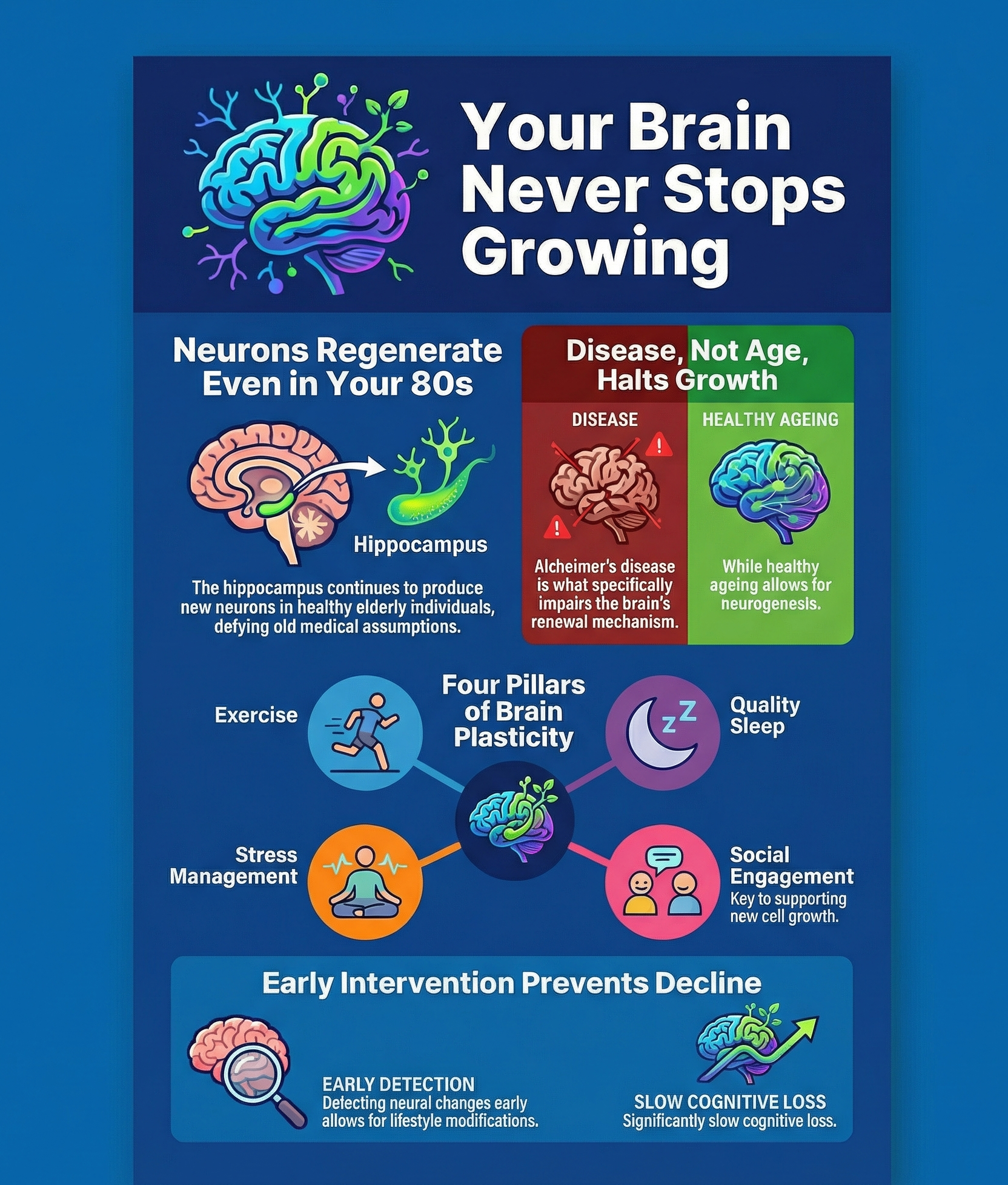
The article reports scientific findings that the human brain retains the capacity to generate new neurons (neurogenesis) even in advanced age, particularly in the hippocampus. However, this regenerative process is disrupted in individuals with Alzheimer’s disease.
The central argument: ageing does not eliminate brain plasticity, but neurodegenerative diseases impair the renewal mechanism.
Key Arguments Presented
1. Neurogenesis Persists into Old Age
The study challenges the long-held belief that adult brains cannot generate new neurons. Evidence suggests continued neuron formation in the hippocampus, even among elderly individuals.
2. Alzheimer’s Disease Impairs Renewal
While healthy ageing brains show neurogenesis, Alzheimer’s patients exhibit significantly reduced neural stem cell activity.
3. Brain Plasticity is Linked to Lifestyle
Exercise, sleep, stress management, and social engagement are highlighted as factors that may support brain health.
4. Implications for Early Intervention
Early detection and lifestyle modification may slow cognitive decline.
Author’s Stance
The tone is cautiously optimistic.
• Encourages positive ageing narrative
• Supports evidence-based neuroscience
• Emphasises preventive health measures
The stance blends scientific reporting with public health awareness.
Possible Biases and Framing
Optimistic Ageing Bias
The article promotes a hopeful perspective on ageing, potentially underplaying variability in cognitive decline.
Lifestyle Emphasis Bias
While lifestyle factors are important, the article may oversimplify complex neurodegenerative processes.
Study-Centric Framing
Relies heavily on a single study without broader academic contestation.
These biases are moderate and consistent with health journalism norms.
Strengths of the Article
• Challenges outdated neurological assumptions
• Connects research findings to practical lifestyle advice
• Bridges basic science and public awareness
• Clarifies distinction between normal ageing and pathology
Limitations
• Limited discussion of methodological limitations of the study
• Does not deeply explore causation versus correlation
• Overlooks socioeconomic determinants of brain health
• Does not address public health infrastructure gaps
Policy Implications
1. Public Health Strategy
Shift focus toward preventive cognitive health programs.
2. Geriatric Healthcare Expansion
Strengthen neurodegenerative screening and early diagnosis infrastructure.
3. Research Investment
Support neuroscience and ageing research.
4. Lifestyle Promotion Campaigns
Encourage physical activity, mental stimulation, and social engagement among elderly populations.
Real-World Impact
Short Term
• Increased awareness about cognitive ageing
• Reduced fatalism about ageing and memory decline
Medium Term
• Growth in preventive neurology services
• Demand for early Alzheimer’s screening
Long Term
• Potential reduction in dementia burden through early intervention
• Greater emphasis on healthy ageing policies
UPSC GS Alignment
GS Paper II – Health
• Public health policy
• Ageing population
• Preventive healthcare
GS Paper III – Science & Technology
• Neuroscience
• Biotechnology and regenerative medicine
GS Paper I – Society
• Demographic ageing
• Social support systems for elderly
GS Paper IV – Ethics
• Dignity of elderly
• Equity in healthcare access
Essay Relevance
• “Ageing with dignity: policy challenges”
• “Science reshaping human potential”
Balanced Editorial Assessment
The article effectively reframes ageing as a dynamic biological process rather than inevitable decline. By distinguishing between normal ageing and neurodegenerative disease, it reduces stigma.
However, policy translation requires more than lifestyle advice. Structural healthcare investment and equitable access to diagnosis and treatment are critical.
Future Perspective
India, with a rapidly ageing population, must prepare for:
• Rising dementia burden
• Expanded geriatric care
• Integration of neuroscience into preventive health policy
If scientific optimism is matched by systemic preparedness, ageing can be managed with resilience. If not, demographic ageing may strain healthcare systems.
Final Editorial Judgment:
The study offers hope—but hope must be institutionalised through research funding, preventive care, and inclusive health policy.
