

India-EU FTA to cut tariffs on USD 33 billion worth of exports: Govt
The Statesman
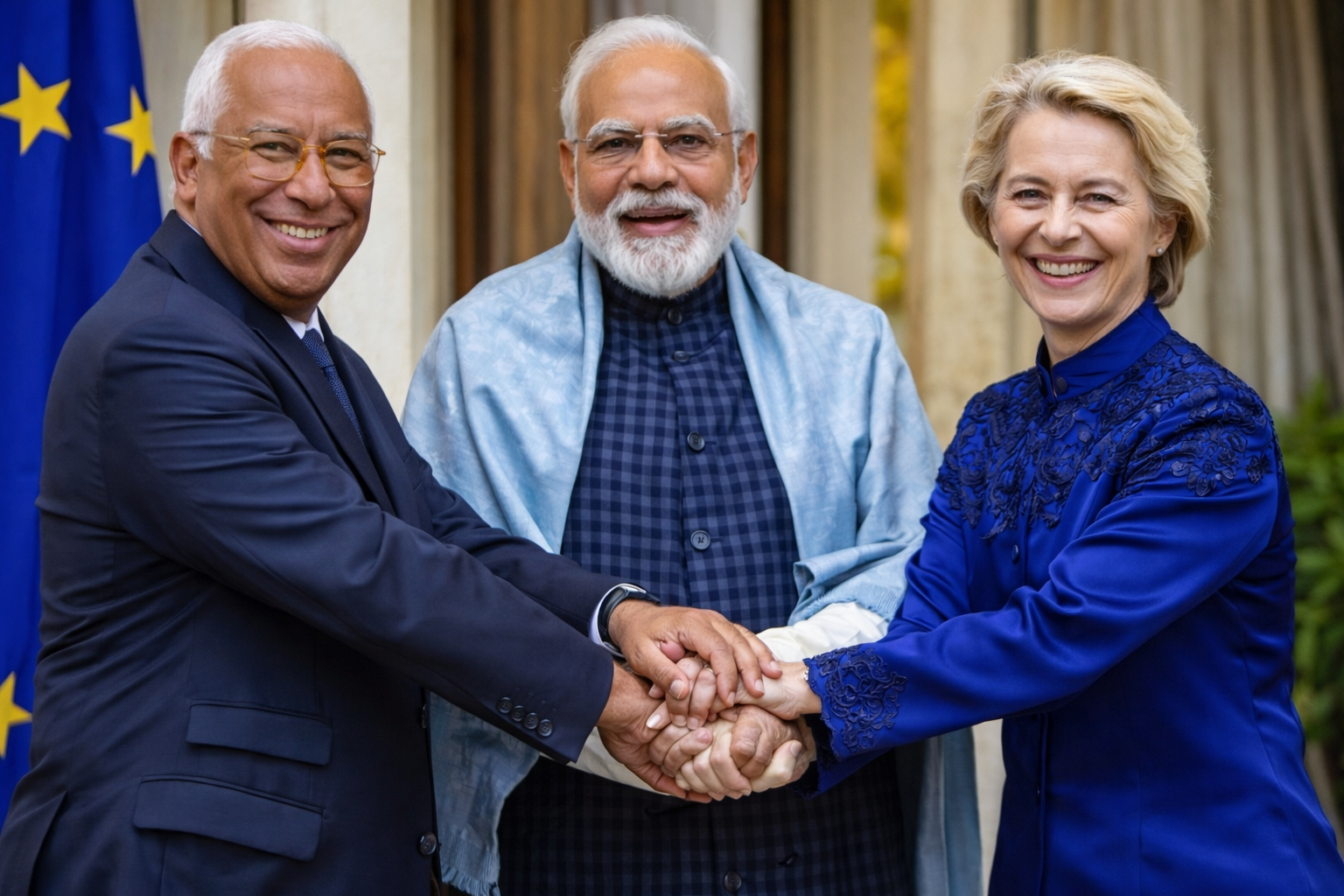
Key Arguments
Significant tariff liberalisation
The central claim is that a large share of Indian exports—particularly labour-intensive and manufacturing sectors—will gain preferential or zero-duty access to EU markets.
Boost to labour-intensive sectors
Sectors such as textiles, apparel, footwear, leather, gems and jewellery, engineering goods, and automobiles are highlighted as major beneficiaries.
Strategic economic partnership
The FTA is framed not merely as a trade deal but as a pillar of long-term India-EU strategic and economic relations amid global supply-chain realignments.
MSMEs and services inclusion
The agreement is projected to benefit MSMEs and services sectors through regulatory cooperation, easier market access, and mobility frameworks.
Rules-based trade architecture
The article stresses that the FTA will be modern, balanced and aligned with global trade norms, covering goods, services, digital trade, and sustainability.
Author’s Stance and Bias
Stance
The article adopts a strongly optimistic and government-aligned tone, presenting the FTA as an unequivocal economic win for India.
Biases
Potential adjustment costs, compliance challenges, and asymmetries in negotiating power are largely understated. EU non-tariff barriers and regulatory strictness receive limited scrutiny compared to the emphasis on tariff gains.
Pros Highlighted
Export competitiveness
Lower tariffs enhance price competitiveness of Indian goods in a high-value market.
Employment generation
Labour-intensive sectors could see job creation, supporting inclusive growth.
Supply-chain integration
The deal can help India integrate deeper into European value chains, especially in manufacturing and technology.
Strategic diversification
Reduces dependence on a narrow set of trade partners amid global economic uncertainty.
Cons and Risks
Non-tariff barriers remain
EU standards on environment, labour, and product safety may dilute effective market access.
Uneven sectoral gains
Export-oriented firms may benefit more than small producers and informal workers.
Domestic adjustment pressures
Imports from the EU could intensify competition for Indian manufacturers in certain sectors.
Over-reliance on headline numbers
Tariff cuts do not automatically translate into export growth without competitiveness and compliance readiness.
Policy Implications
Trade strategy shift
Signals India’s renewed engagement with comprehensive FTAs after years of cautious protectionism.
Domestic reforms imperative
Quality standards, logistics, skilling and MSME support must align with FTA commitments.
Regulatory harmonisation
Requires careful balancing between global integration and policy autonomy.
Real-World Impact
If implemented effectively, the FTA could expand India’s export footprint in Europe, support manufacturing growth, and generate employment. However, without parallel domestic capacity-building, benefits may remain concentrated among larger firms and export hubs.
UPSC GS Paper Linkages
GS Paper III – Indian Economy
Foreign trade, FTAs, manufacturing, MSMEs, employment.
GS Paper II – International Relations
India-EU relations, economic diplomacy, strategic partnerships.
GS Paper III – Inclusive Growth
Impact of trade liberalisation on labour-intensive sectors.
Conclusion and Future Perspective
The article presents the India-EU FTA as a transformative trade milestone with substantial export gains. While the headline tariff reductions are significant, the long-term success of the agreement will depend on India’s ability to meet regulatory standards, enhance competitiveness, and ensure that benefits are broad-based. Going forward, the FTA should be seen not as an end in itself but as a platform for structural upgrading of India’s economy within a rules-based global trade order.
