

India–Taliban Relations: From Caution to Strategic Engagement

India–Taliban Relations: From Caution to Strategic Engagement
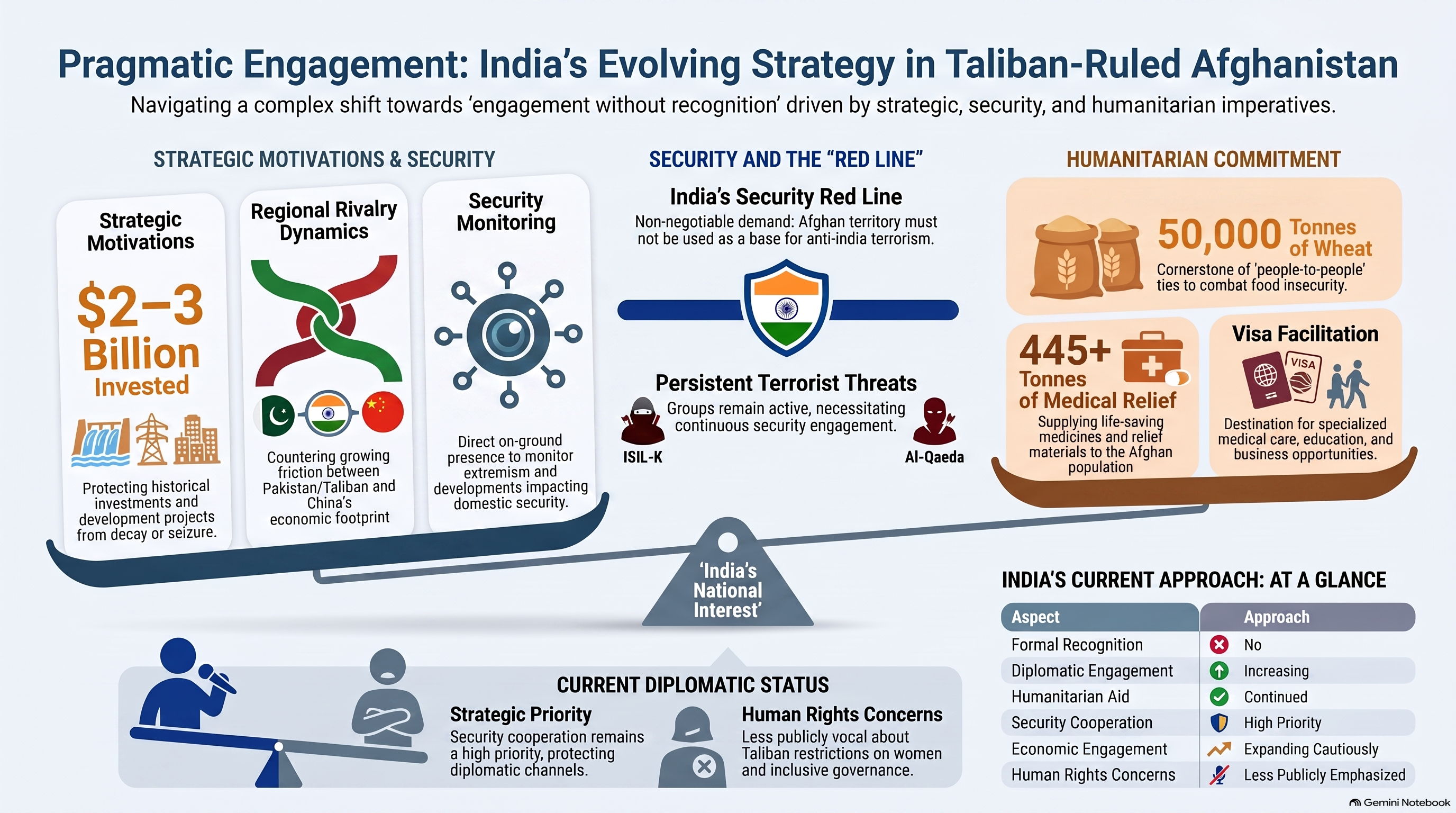
India’s approach towards Taliban-ruled Afghanistan has shifted from diplomatic withdrawal in 2021 to cautious engagement. New Delhi has not formally recognised the Taliban but is increasingly engaging with it to protect its interests and address regional security concerns.
Why India Is Engaging?
- Protecting investments: India has invested around $2–3 billion in Afghanistan since 2001 through development projects.
- Pakistan–Taliban tensions: Growing friction between Pakistan and the Taliban has created space for India.
- China’s growing presence: China’s increasing economic and strategic engagement makes continued Indian presence important.
- Regional security: Engagement allows India to monitor terrorism, extremism and developments affecting its security.
Key Developments
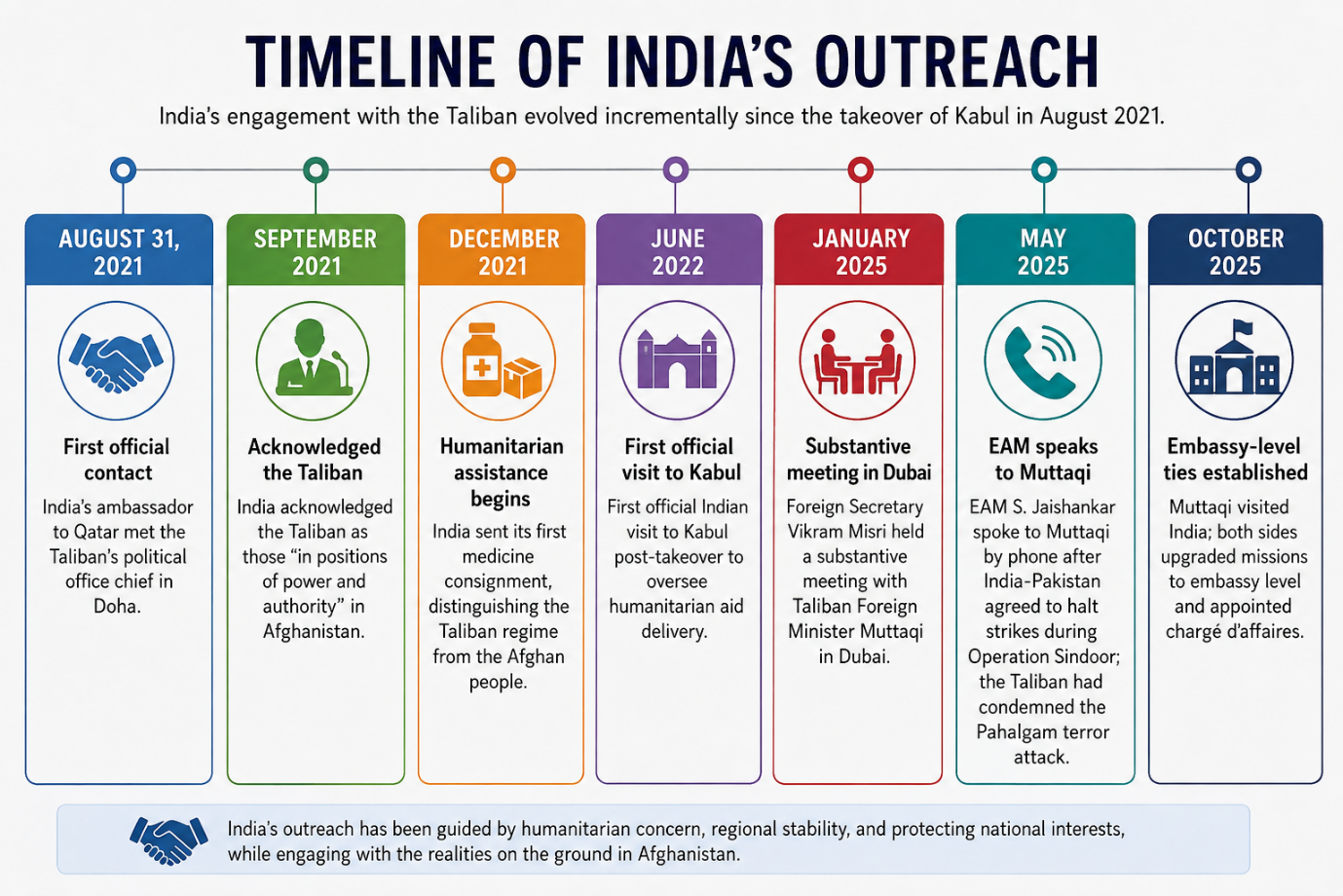
India’s Security Red Line
India’s key demand is that Afghan territory must not be used for anti-India terrorism.
Terrorist groups such as ISIL-K and Al-Qaeda remain active in Afghanistan. India therefore continues security engagement despite expanding diplomatic ties.
Humanitarian and Human Rights Dimension
India has continued humanitarian assistance, including:
- 50,000 tonnes of wheat
- Over 445 tonnes of medicines and relief material
- Visas for Afghans seeking medical, educational and business opportunities
However, India has become less vocal about Taliban restrictions on women and girls compared with its earlier position. This reflects the growing priority given to strategic and security interests.
Current Position
|
Aspect |
India’s Approach |
|
Formal recognition |
No |
|
Diplomatic engagement |
Increasing |
|
Humanitarian aid |
Continued |
|
Security cooperation |
High priority |
|
Economic engagement |
Expanding cautiously |
|
Human rights concerns |
Less publicly emphasised |
Significance for India
Engagement helps India retain influence in Afghanistan, protect its investments, counter Pakistan and China’s influence, maintain humanitarian links and monitor security threats.
However, excessive accommodation may create tensions with India’s traditional emphasis on democracy, human rights and inclusive governance.
Conclusion
India’s Taliban policy represents pragmatic engagement without formal endorsement. New Delhi must balance strategic interests and regional security with its concerns over terrorism, inclusive governance and human rights.
