

Issues surrounding UGC regulations
The Hindu
Overview of the Article
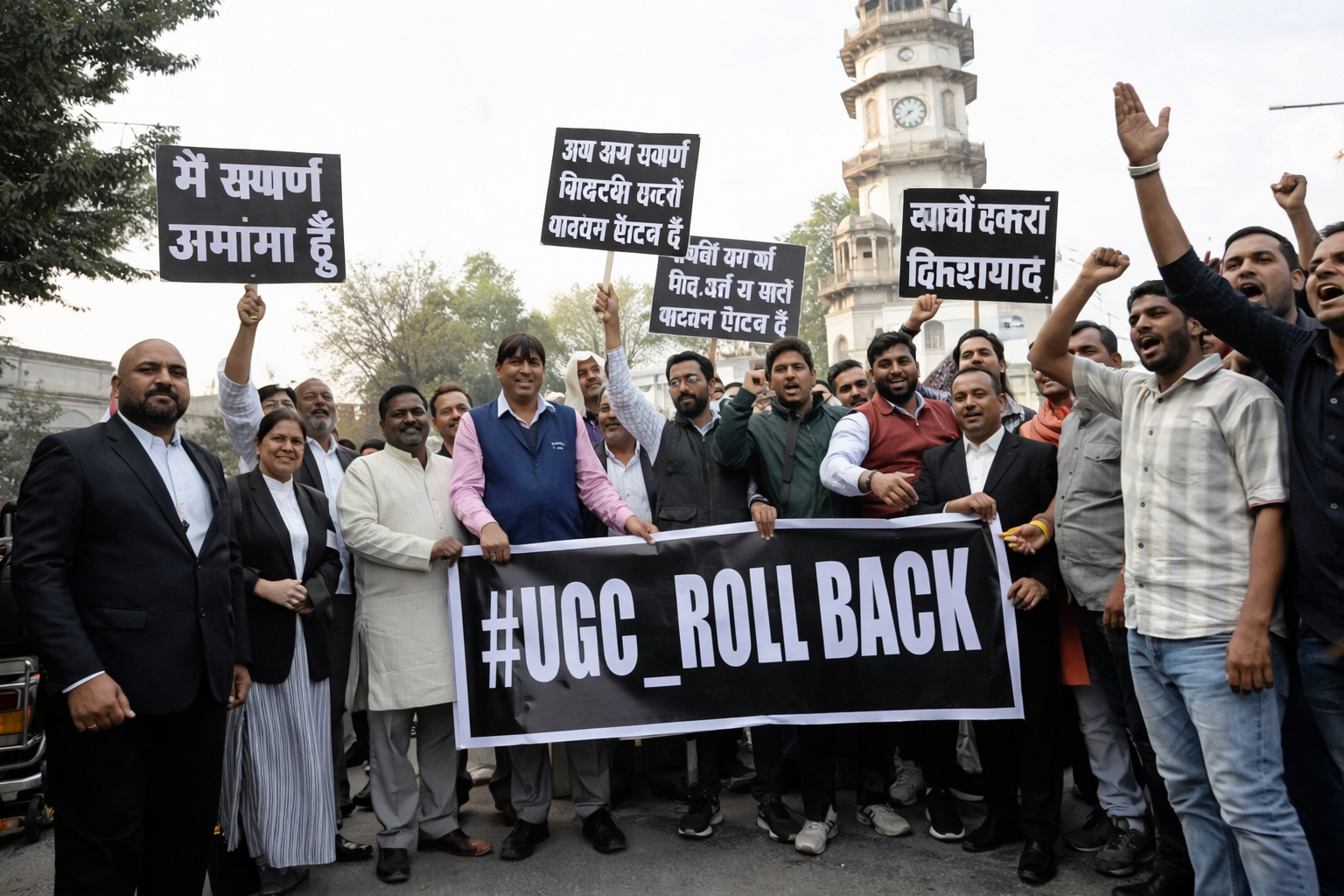
The article examines the controversy around the revised University Grants Commission (UGC) regulations on equity and inclusion, which were stayed by the Supreme Court. It explains the legal, constitutional and policy concerns raised against the new framework, particularly regarding the definition and handling of caste-based discrimination and its implications for higher education institutions.
Key Arguments
Judicial intervention as a constitutional safeguard
The Supreme Court’s stay is presented as a response to prima facie concerns that the revised regulations may dilute protections against caste-based discrimination guaranteed under the Constitution.
Contested definition of caste-based discrimination
A central issue is the UGC’s revised definition, which critics argue is narrower, ambiguous, and potentially excludes structural and institutional forms of caste discrimination.
Equity versus administrative clarity
The article highlights the tension between the UGC’s attempt to standardise grievance redressal mechanisms and the need to recognise lived social realities within campuses.
Impact on marginalised groups
Student groups and social organisations fear that the new framework may weaken safeguards for SC, ST and OBC students by shifting the burden of proof and narrowing actionable discrimination.
Institutional autonomy and regulatory overreach
The piece also raises questions about whether the UGC has exceeded its mandate by redefining sensitive constitutional concepts without adequate consultation.
Author’s Stance and Bias
Stance
The author adopts a largely analytical and cautionary stance, emphasising constitutional values of equality, dignity and substantive justice.
Biases
There is a discernible tilt towards protecting affirmative action and anti-discrimination frameworks. The administrative perspective of the UGC—such as concerns over misuse or procedural uniformity—receives comparatively less emphasis.
Pros Highlighted
Focus on constitutional morality
The article reinforces that equality in education must be substantive, not merely procedural.
Judicial oversight as a check
It underscores the role of courts in preventing regulatory dilution of fundamental rights.
Public debate on campus equity
The controversy has renewed attention on discrimination, grievance redressal and inclusivity in higher education.
Cons and Critiques
Limited discussion on misuse concerns
Arguments about false or motivated complaints are acknowledged but not deeply examined.
Operational challenges underplayed
The difficulty universities face in implementing broad and subjective definitions of discrimination is not fully explored.
Polarisation risk
The article does not sufficiently address how regulatory ambiguity can intensify campus conflicts rather than resolve them.
Policy Implications
Need for precise yet inclusive definitions
Regulations must balance legal clarity with recognition of structural discrimination.
Consultative regulation-making
Sensitive social issues require wider stakeholder engagement before policy finalisation.
Strengthening grievance mechanisms
Independent, transparent and time-bound redressal systems are crucial for credibility.
Alignment with constitutional values
Any regulatory framework must clearly align with Articles 14, 15 and 21.
Real-World Impact
The stay on the UGC regulations has created regulatory uncertainty for universities while reassuring marginalised communities about judicial protection. The final outcome will shape how campuses address discrimination, student rights and institutional accountability in the coming years.
UPSC GS Paper Linkages
GS Paper II – Polity & Constitution
Fundamental rights, equality before law, judicial review, role of regulatory bodies.
GS Paper II – Governance & Social Justice
Education policy, inclusion, protection of vulnerable groups.
GS Paper IV – Ethics
Equity, fairness, institutional responsibility, social justice.
Conclusion and Future Perspective
The article highlights that the debate over UGC regulations is not merely procedural but fundamentally constitutional. While regulatory clarity and misuse prevention are legitimate concerns, they cannot come at the cost of weakening safeguards against discrimination. Going forward, the challenge lies in crafting a framework that is legally robust, socially sensitive and administratively workable—one that strengthens trust in institutions while upholding the spirit of equality in higher education.
