

JHARKHAND TRIBAL VILLAGES BAN LIQUOR AND RESTRICT TOBACCO SALES

JHARKHAND TRIBAL VILLAGES BAN LIQUOR AND RESTRICT TOBACCO SALES
Context
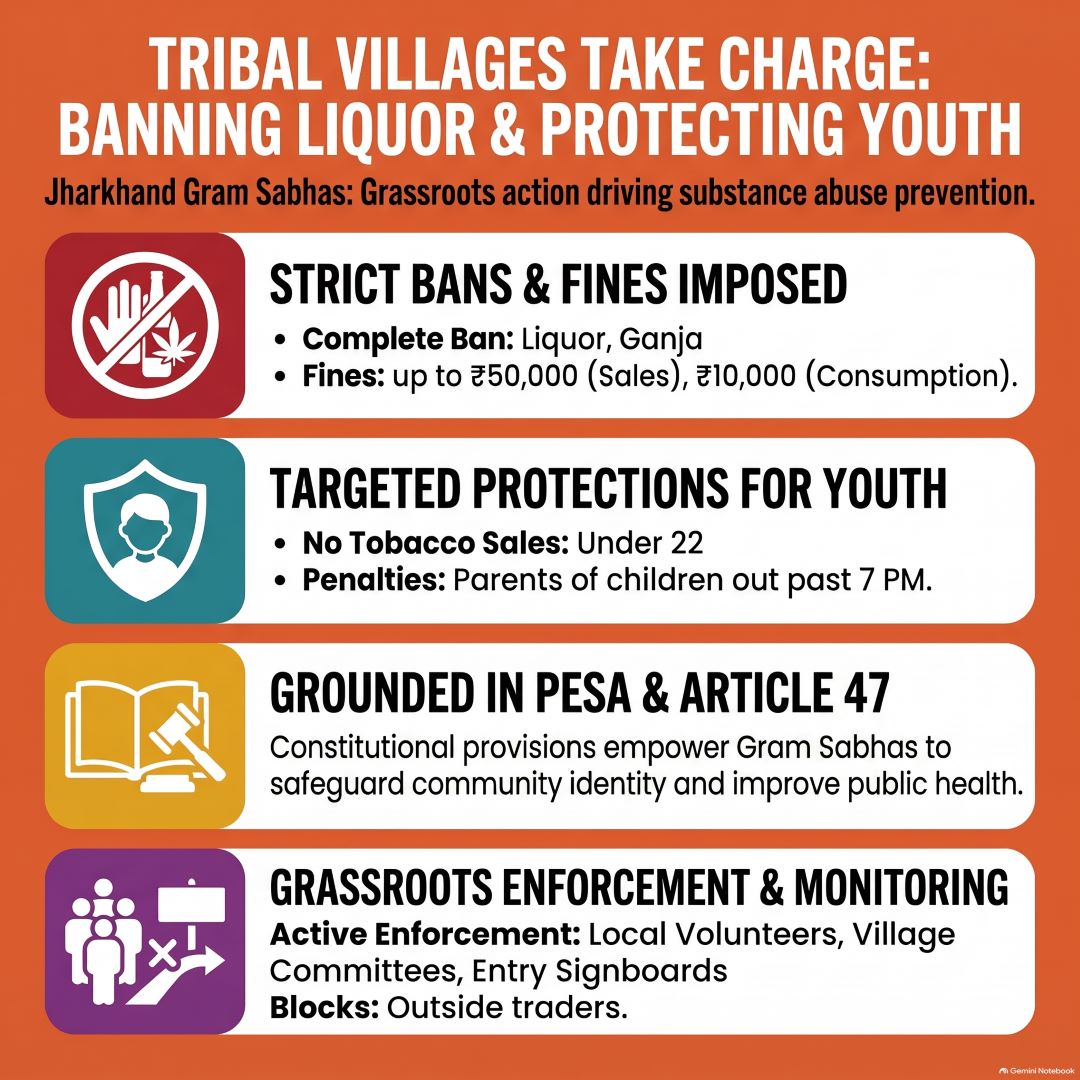
Tribal village bodies in West Singhbhum district of Jharkhand have introduced strict measures to curb substance abuse and protect children and young people. Gram sabhas in Bana Bij and neighbouring Baihatu have announced restrictions on liquor and ganja, penalties for violations and limits on tobacco sales to young people.
The initiatives reflect the role of community institutions in addressing addiction, maintaining social order and promoting public health.
Key Decisions Taken by Gram Sabhas
- Ban on Liquor and Ganja: Baihatu village has imposed a complete ban on the sale, purchase and consumption of liquor and ganja within its boundaries.
- Financial Penalties: A fine of ₹50,000 has been announced for selling liquor or ganja, while consumption may attract a fine of ₹10,000.
- Tobacco Restrictions: Two gram sabhas have decided to prohibit shopkeepers from selling tobacco products, including cigarettes and bidis, to individuals below 22 years of age.
- Protection of Children: The village bodies have proposed penalties for parents whose children are found roaming outside unnecessarily after 7 pm.
- Community Monitoring: Village committees have appointed office-bearers and volunteers to oversee implementation and monitor compliance.
- Restrictions on Outside Traders: Signboards at village entry points warn outside traders against selling prohibited substances.
Objectives of the Initiative
- Public Health: Reduce substance abuse and its associated health risks among tribal communities.
- Youth Protection: Prevent addiction, improve awareness and encourage healthier lifestyles among children and young people.
- Community Safety: Reduce social problems that village elders associate with substance abuse and unsupervised activities.
- Community Participation: Encourage collective decision-making through gram sabhas and local volunteers.
- Cultural and Social Preservation: Strengthen community-led mechanisms for maintaining social welfare and collective responsibility.
Constitutional and Legal Dimensions
- Article 243A: Recognises the Gram Sabha's role in exercising powers and performing functions as provided by state legislation.
- Panchayats (Extension to Scheduled Areas) Act, 1996 (PESA): In Scheduled Areas, PESA empowers Gram Sabhas and Panchayats to safeguard community traditions, cultural identity and community resources, subject to the Act's provisions.
- Article 47: Directs the State to improve nutrition, living standards and public health, and to endeavour to prohibit intoxicating drinks and harmful drugs except for medicinal purposes.
- Legal Limits on Village Resolutions: Community decisions must comply with applicable state and central laws. The authority to impose fines, restrict trade or regulate individual conduct depends on the relevant legal framework; a gram sabha resolution does not automatically override statutory rights or criminal law.
Significance
- Grassroots Governance: Demonstrates how local institutions can identify social problems and mobilise community action.
- Preventive Public Health: Community-level restrictions may complement awareness campaigns, counselling and addiction-treatment services.
- Participatory Governance: Collective resolutions can strengthen local ownership of social welfare initiatives.
- Scope for Replication: Similar community-led approaches may be considered elsewhere when supported by legal safeguards, public consultation and effective health services.
Challenges and Concerns
- Enforceability: The legal authority of village bodies to impose monetary penalties and restrictions must be clearly established.
- Individual Rights: Restrictions on movement, association and personal conduct must remain consistent with constitutional protections.
- Risk of Excessive Punishment: High fines may disproportionately affect low-income households and require transparent, lawful procedures.
- Need for Rehabilitation: Prohibition alone may not address the underlying causes of addiction; counselling, treatment and rehabilitation are also necessary.
- Implementation: Sustained monitoring, community cooperation and coordination with local authorities are essential for effective outcomes.
Way Forward
- Strengthen community-led awareness programmes on alcohol, tobacco and drug-related harms.
- Provide accessible counselling, de-addiction and rehabilitation services.
- Clarify the legal powers of gram sabhas and ensure village resolutions comply with applicable laws.
- Encourage voluntary participation, transparent procedures and proportionate enforcement.
- Combine preventive measures with livelihood support, youth engagement, education and recreational opportunities.
Conclusion
The initiatives in West Singhbhum highlight the potential of community institutions to address substance abuse and protect vulnerable groups. Their long-term effectiveness will depend on lawful enforcement, public participation and a balanced approach combining prevention, healthcare, rehabilitation and protection of individual rights.