

Kashi–Tamil Sangamam marks living unity of India’s traditions
Hindustan Times
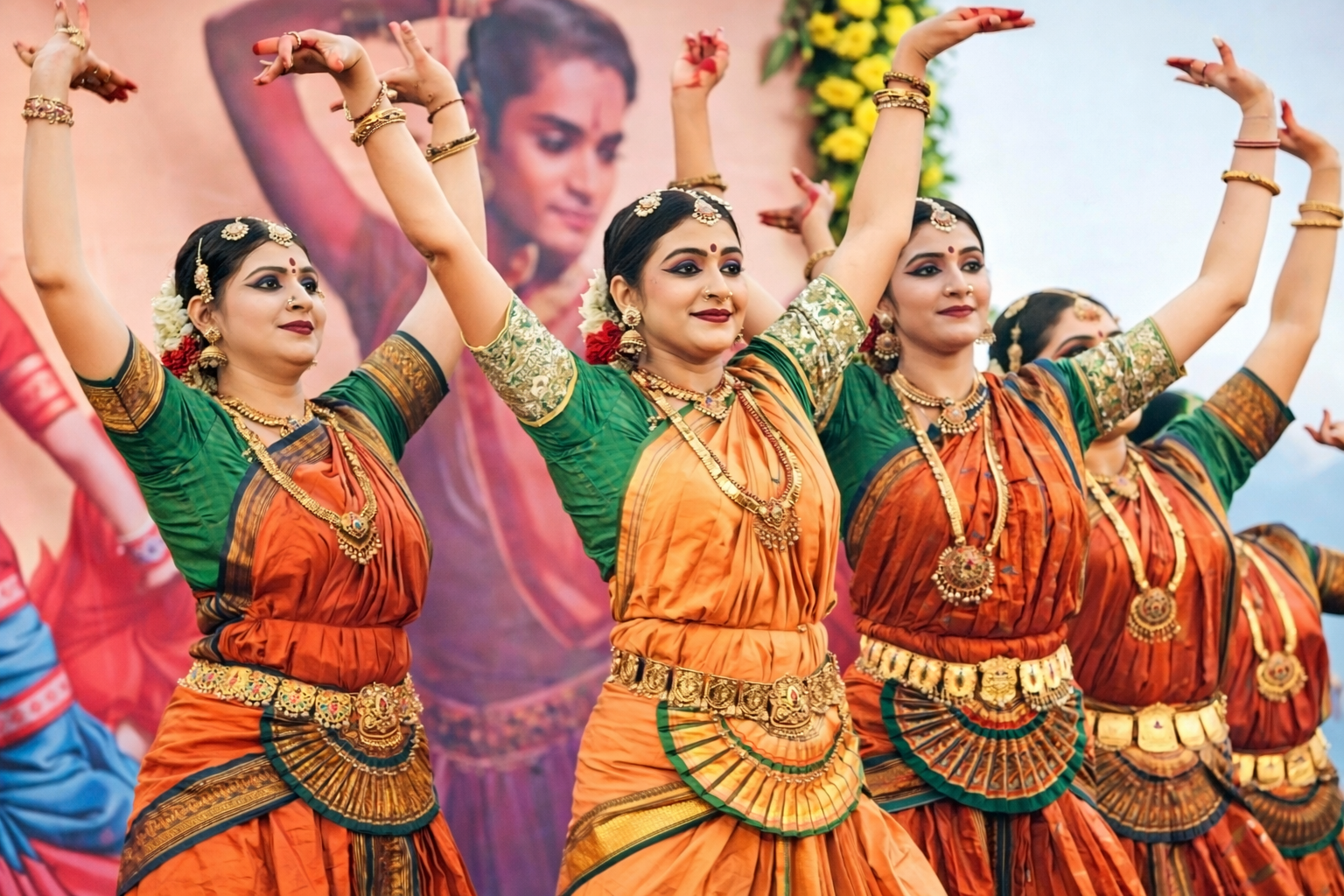
Context and Background
The article highlights the Kashi–Tamil Sangamam as a civilisational and cultural initiative aimed at reinforcing India’s historical unity by reconnecting Kashi (Varanasi) and the Tamil cultural world. It situates the programme within a long historical continuum of spiritual, linguistic, philosophical, and scholarly exchanges between North and South India, projecting the Sangamam as a living expression of India’s civilisational pluralism rather than a contemporary invention.
Key Arguments Presented
1. Civilisational Unity Beyond Political Boundaries
The core argument is that India’s unity is rooted in shared cultural, spiritual, and intellectual traditions, not merely in modern constitutional or political frameworks. The Kashi–Tamil linkage is presented as evidence of:
- Ancient networks of pilgrimage, learning, and philosophy
- Mutual influence between Sanskritic and Tamil traditions
- A continuous flow of ideas across regions despite linguistic diversity
2. Culture as a Living, Participatory Process
The article stresses that unity is not abstract or symbolic alone, but performed and lived through:
- Music, dance, literature, rituals, and language
- People-to-people participation rather than elite-only discourse
This positions culture as dynamic, evolving, and socially embedded.
3. National Integration Through Heritage
The Sangamam is framed as a soft but powerful instrument of national integration, countering narratives that portray India as a fragile or artificial union. Cultural continuity is presented as a binding force stronger than administrative integration.
4. State Facilitation of Cultural Revival
The article implicitly supports the idea that the state has a legitimate role in facilitating cultural rediscovery and civilisational dialogue, especially when such initiatives promote unity without erasing diversity.
Author’s Stance
The stance is affirmative and celebratory, portraying the Kashi–Tamil Sangamam as:
- A natural continuation of India’s civilisational ethos
- A corrective to fragmented or overly regionalised understandings of culture
- An inclusive platform reinforcing the idea of “unity in diversity”
The tone is reflective, reverential, and consciously civilisational rather than policy-technical.
Implicit Biases and Editorial Silences
1. Cultural Nationalism Tilt
- The article privileges a civilisational-nationalist interpretation of Indian unity.
- Alternative readings that emphasise historical conflicts, hierarchies, or exclusions within cultural traditions are largely absent.
2. Limited Critical Engagement
- There is little interrogation of:
- How inclusive participation actually is across caste, gender, and class
- Whether such initiatives risk selective representation of traditions
3. Underplayed Contemporary Challenges
- The article does not sufficiently connect cultural unity with:
- Present-day social inequalities
- Linguistic anxieties or fears of cultural homogenisation
Pros Highlighted
- Reinforces India’s plural yet interconnected civilisational identity
- Encourages inter-regional cultural literacy and mutual respect
- Strengthens soft integration beyond legal or administrative tools
- Counters narratives of cultural isolationism or regional fragmentation
Cons and Limitations
- Risk of romanticising the past without acknowledging internal diversities and tensions
- Possibility of symbolic celebration without sustained grassroots engagement
- Cultural initiatives may be perceived as top-down if not sufficiently decentralised
Policy Implications
1. Cultural Governance
- Validates the role of cultural diplomacy within national boundaries
- Encourages structured cultural exchange programmes across regions
2. Education and Social Integration
- Offers scope for integrating such civilisational linkages into:
- School curricula
- Higher education and research on Indian knowledge systems
3. Federal and Linguistic Sensitivity
- Necessitates careful design to ensure:
- Respect for regional autonomy
- Avoidance of cultural dominance narratives
Real-World Impact
- Enhanced inter-regional interaction and cultural tourism
- Increased public awareness of shared historical traditions
- Potential for long-term social cohesion if engagement is sustained and inclusive
- Short-term symbolic impact unless institutionalised through education and local participation
UPSC GS Paper Alignment
GS Paper I – Indian Culture and Society
- Salient features of Indian culture
- Unity in diversity
- Cultural traditions, art forms, and philosophical exchanges
GS Paper II – Governance
- Role of the state in promoting cultural integration
- National integration beyond coercive mechanisms
GS Paper IV – Ethics
- Values of harmony, fraternity, mutual respect, and cultural pluralism
Balanced Conclusion and Future Perspective
The article presents the Kashi–Tamil Sangamam as a compelling reminder that India’s unity is neither accidental nor purely political, but deeply civilisational and cultural. While its celebratory tone successfully underscores historical continuity and shared heritage, the initiative’s long-term relevance will depend on depth, inclusivity, and sustained engagement, rather than episodic symbolism. For a diverse and democratic India, such cultural dialogues must evolve into platforms that celebrate commonality while honestly engaging with difference, ensuring that unity remains living, participatory, and inclusive rather than merely commemorative.
