

Latest in Health Research: Flu Virus Mapping, Carrot Myths, and Artificial Sweeteners

Latest in Health Research: Flu Virus Mapping, Carrot Myths, and Artificial Sweeteners
Relevance: GS Paper III (Science & Technology, Health) | GS Paper II (Health Policy, Public Awareness)
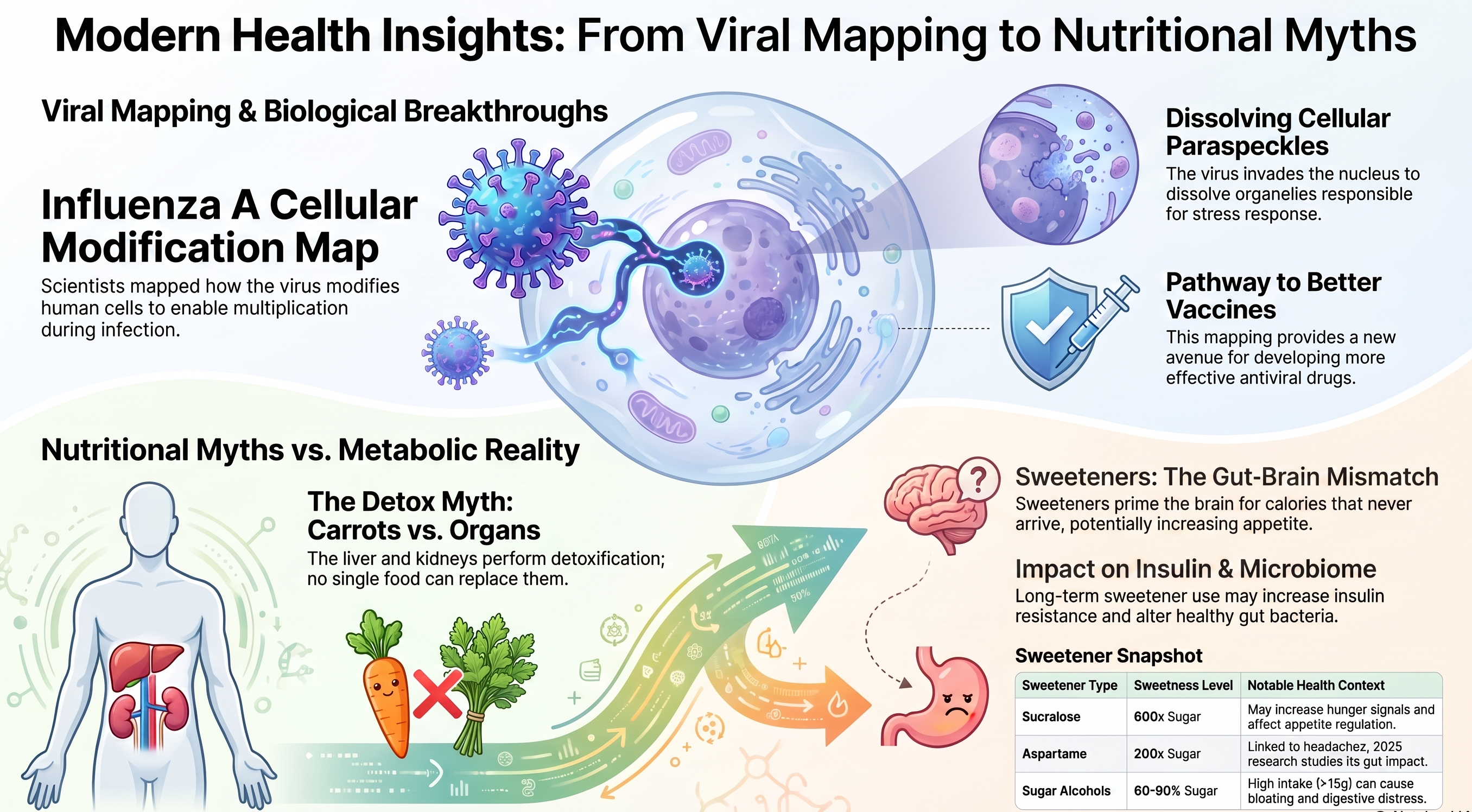
1. Viral Map Could Help Make Better Flu Shots
- German scientists have created a detailed map showing how the Influenza A virus modifies live human cells during infection, published in Nature Microbiology.
- The virus uses proteins to invade the cell nucleus and dissolve paraspeckles — tiny organelles that assist in stress response and gene regulation — enabling the virus to multiply.
- Researchers say this map could help create more effective flu vaccines and antiviral drugs, and opens a new avenue for studying flu-host interactions and viruses with pandemic potential.
2. Fiction vs Fact: Does Eating Carrots Detoxify the Body?
- Verdict: No scientific backing — this is a health myth, per Aditi Prasad Apte, nutritionist at Aster RV Hospital, Bengaluru.
- The human body already has a highly efficient detox system involving the liver, kidneys, and digestive tract; no single food can replace this natural process.
- Carrots do contain substantial fibre, beta-carotene, and antioxidants that improve digestion, support gut function, and enhance eye and skin health, and can assist the body in processing hormones like estrogen as part of a complete diet.
- However, carrots are not an instant solution for detoxification, bloating relief, or hormonal regulation.
3. How Artificial Sweeteners Affect Gut-Brain Signalling
- Artificial sweeteners, discovered accidentally by Johns Hopkins chemists (saccharin) last century, have long been seen as beneficial for diabetics and blood-sugar control — but are, at best, a "sweet bridge" in a zero-sugar journey.
- Impact on insulin resistance: Dr Ambrish Mithal (Max Healthcare, Delhi) notes long-term use can increase insulin resistance, since their effects on satiety are complex.
- Impact on appetite: Dr Prateek Sharma (Kansas University) explains sweet taste primes the brain/gut to expect calories; when those calories don't arrive, the brain receives no reward, sustaining the desire to eat — potentially raising blood sugar over time.
- A January 2025 study in Nature Metabolism found sucralose can affect hypothalamus mechanisms (which regulate appetite) by creating a mismatch between expected and actual calorie intake, influencing appetite regulation and metabolic responses.
- No proven weight-loss benefit: there is no trial demonstrating genuine long-term weight loss or craving reduction from artificial sweeteners; they are also hundreds of times sweeter than sugar, which can make normally sweet foods seem less appealing over time.
- Short-term vs long-term effects: replacing sugar with sweeteners can reduce calories short-term, but patients can still gain weight long-term; switching from cola to diet soda is a good short-term win, but reducing overall intake of such drinks remains the real goal.
- "Diet" ≠ calorie-free: e.g., sugar-free chocolate still has about 60% of regular chocolate's calories, due to fats, carbs, and other additives; most food products combine multiple sweeteners together.
- Bulking agents like maltodextrin and dextrose (used to make sweeteners pourable) are simple, high-glycemic-index carbs that can cause minor sugar spikes in large amounts — moderation remains key, consistent with WHO guidance.
- A July study by Cambridge researchers on cultured intestinal cells found certain artificial sweeteners slow or stop the growth of good gut bacteria; Dr Sharma notes some sweeteners can alter the gut microbiome and worsen glucose tolerance in some (not all) individuals.
- Crucially, sweeteners do not address root causes of sweet cravings — emotional eating, poor sleep, ultra-processed food consumption, or lack of satiety control.
Quick Reference: Types of Sweeteners
- Synthetic: Aspartame (200x sweeter; linked to headaches/indigestion); Sucralose (600x sweeter; may increase hunger signals); Saccharin (300-400x sweeter; metallic aftertaste); Acesulfame Potassium (200x sweeter; long-term gut microbiome effects under research).
- Sugar Alcohols (Polyols): Xylitol, Sorbitol, Maltitol (60-90% of sugar's sweetness; over 10-15g can cause bloating/cramps/diarrhoea); Erythritol (70% as sweet; gentler on stomach, excreted unchanged; heart disease links under study).
- Plant-based: Stevia (generally safe; excess/raw amounts may cause nausea/bloating); Monk fruit extract (expensive to process, often blended with erythritol/sugar commercially).
