

Let’s talk protection, not control | Ban cannot address full spectrum of risk
Indian Express
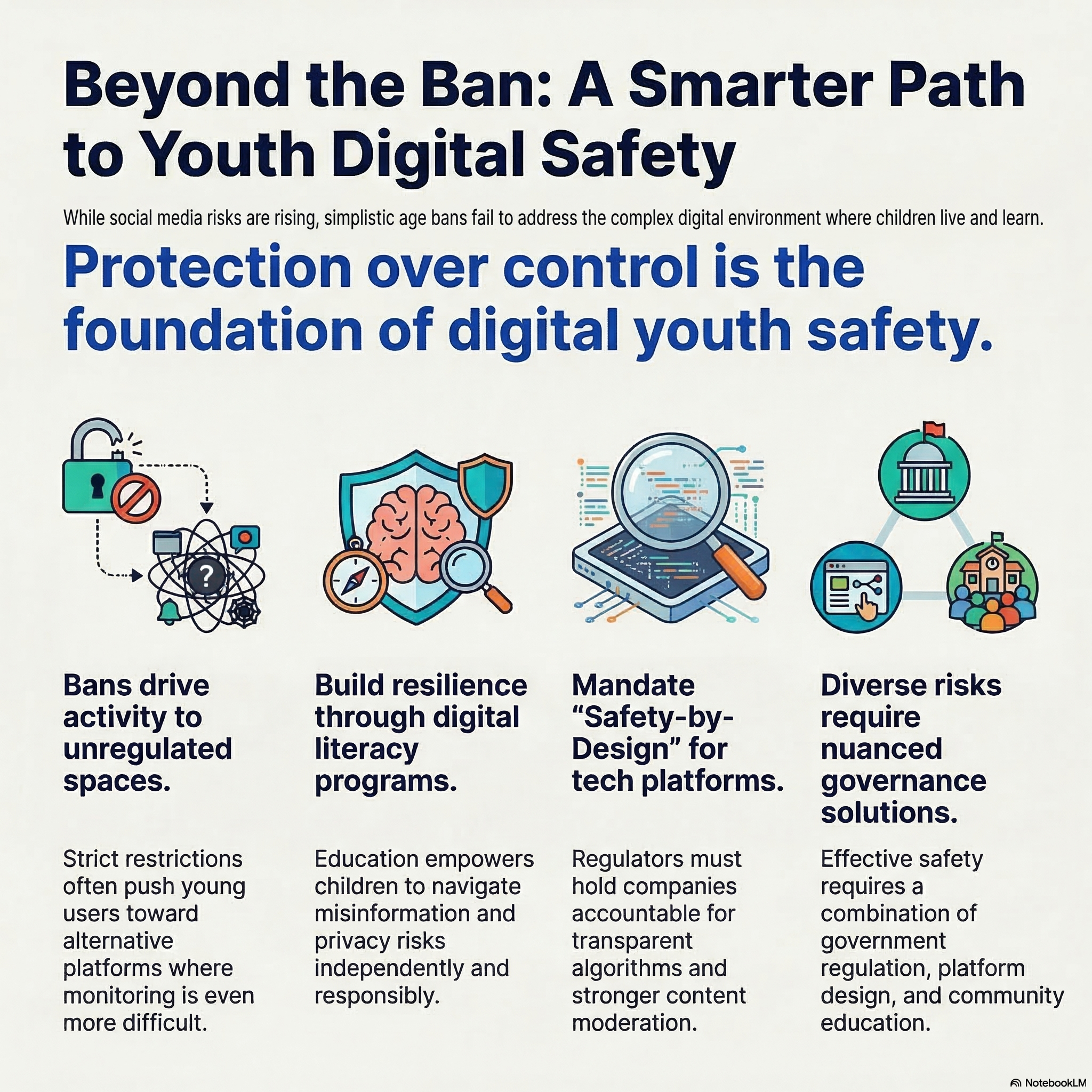
Key Arguments of the Article
Rising Concerns About Social Media and Youth
The article argues that increasing smartphone penetration and internet access have exposed young users to a variety of online risks. These include cyberbullying, misinformation, addictive content algorithms, and mental health challenges.
Parents, educators, and policymakers are increasingly concerned about the long-term impact of excessive social media usage on children and adolescents.
Proposal for Age-Based Restrictions
One approach discussed in the article is imposing a minimum age limit for social media access. Such restrictions aim to delay exposure to digital platforms until children reach a certain level of maturity.
Proponents believe that restricting early access could reduce psychological harm and unhealthy digital dependency.
Limitations of a Blanket Ban
The article argues that an outright ban cannot effectively address the full range of risks associated with social media. Digital environments are complex, and children may still access online content through alternative platforms or accounts.
Strict bans may also push online activity into less regulated spaces, making monitoring more difficult.
Need for Digital Literacy and Education
Instead of relying solely on bans, the article emphasises the importance of educating young users about responsible digital behaviour. Digital literacy programs can help children understand online risks, privacy issues, and responsible engagement with technology.
Education-based approaches encourage long-term behavioural change.
Role of Platform Regulation
The article suggests that technology companies should be required to design safer digital environments. Stronger content moderation, algorithm transparency, and child safety protections can reduce harmful exposure.
Platform accountability is considered essential for protecting vulnerable users.
Author’s Stance
The authors advocate a balanced approach that prioritises protection rather than strict control. They argue that while concerns about social media harms are legitimate, simplistic regulatory solutions such as age bans may not fully address the underlying problems.
The article supports a combination of education, responsible technology design, and targeted regulation.
Possible Biases
Technology Regulation Perspective
The article emphasises regulatory and educational approaches rather than restrictive bans.
Digital Inclusion Bias
It highlights the benefits of digital access and may therefore be cautious about overly restrictive policies.
Limited Cultural Context
The article focuses primarily on policy frameworks and may not fully address social and cultural variations in technology use.
Advantages of Protective Regulation
Safeguarding Children’s Well-being
Policies focused on digital safety can reduce exposure to harmful content and online harassment.
Promoting Responsible Digital Behaviour
Education programs equip young users with skills to navigate online environments safely.
Platform Accountability
Regulating digital platforms ensures that technology companies share responsibility for user safety.
Balanced Digital Access
Protection-based approaches allow children to benefit from digital opportunities while reducing risks.
Challenges and Limitations
Enforcement Difficulties
Age verification and enforcement mechanisms can be difficult to implement effectively.
Rapid Technological Change
Regulatory frameworks often struggle to keep pace with evolving digital platforms.
Digital Divide
Different socio-economic groups may experience varying levels of digital exposure and risk.
Overregulation Risks
Excessive restrictions could limit access to educational resources and digital opportunities.
Policy Implications
Strengthening Digital Literacy Programs
Schools should integrate digital safety education into curricula to build awareness and responsible online behaviour.
Child-Centric Technology Design
Platforms should adopt safety-by-design principles that protect young users from harmful algorithms and content.
Collaborative Regulation
Governments, educators, technology companies, and civil society must work together to address online risks.
Evidence-Based Policy
Regulation should be informed by research on digital behaviour and child psychology.
Real-World Impact
If protection-based policies are implemented effectively:
• Improved digital safety for children
• Increased awareness of responsible technology use
• Reduced exposure to harmful online content
If regulatory gaps persist:
• Rising digital addiction and mental health concerns
• Increased cyberbullying and misinformation exposure
• Weak accountability of technology platforms
Alignment with UPSC GS Papers
GS Paper II
Government policies on digital regulation, role of technology companies, governance challenges in the digital era.
GS Paper III
Technology and society, cyber safety, emerging digital risks.
GS Paper IV
Ethical use of technology, responsibility of institutions in protecting vulnerable groups.
Balanced Assessment
The debate over age-based restrictions on social media reflects broader challenges of governing digital technologies in a rapidly evolving information ecosystem. While protecting children from online harms is essential, blanket bans may not provide comprehensive solutions.
A balanced approach that combines education, responsible platform design, and targeted regulation appears more effective.
Future Perspective
As digital technologies continue to shape everyday life, societies will increasingly face complex questions about digital safety, privacy, and regulation. Developing adaptive policies that protect young users while preserving digital freedoms will be crucial.
For policymakers and civil services aspirants, the issue highlights the need for nuanced governance frameworks capable of addressing the social and technological dimensions of the digital age.
