

Making India’s Food System Climate-Proof

Making India’s Food System Climate-Proof
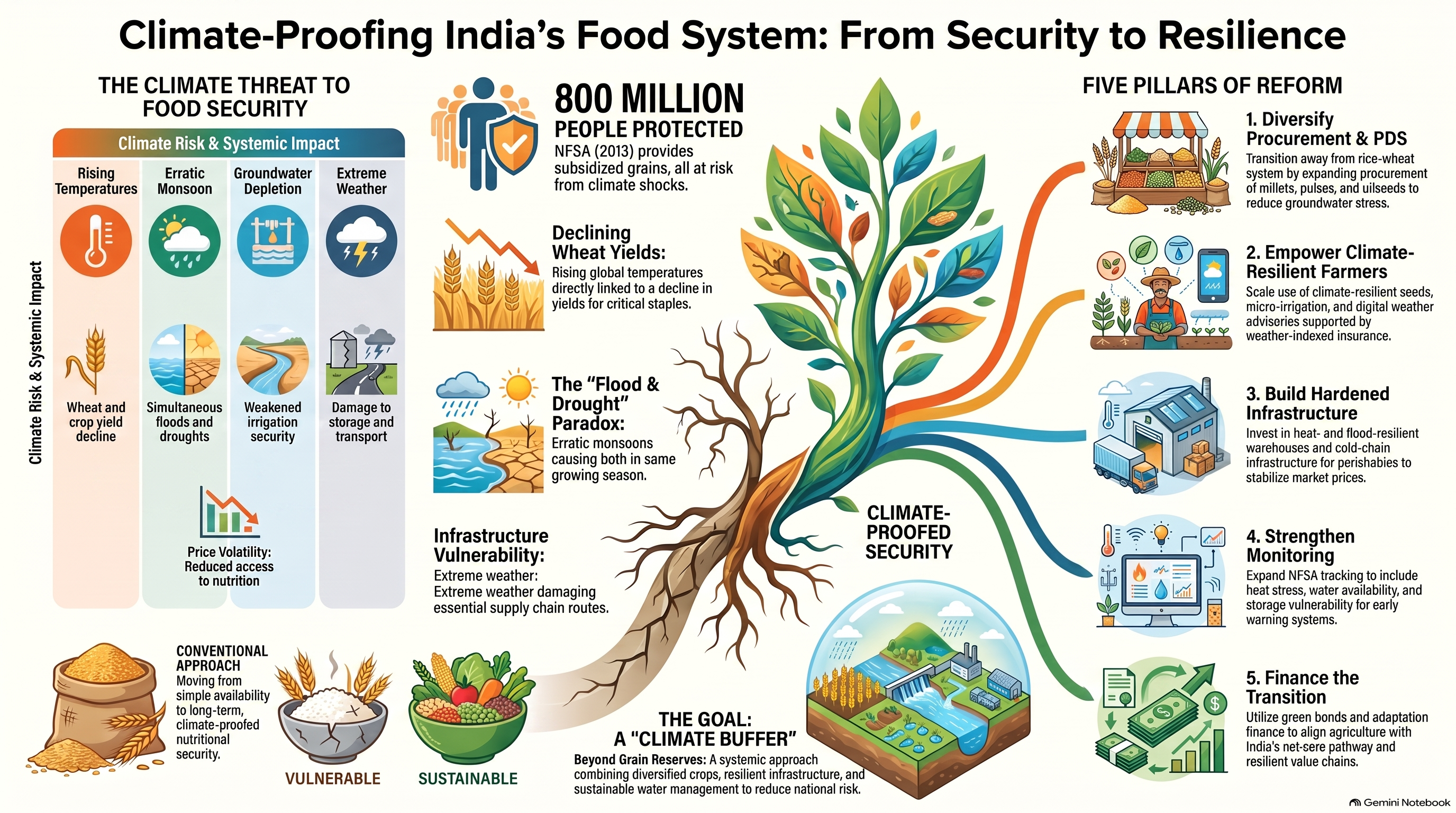
India has moved from food-aid dependence in the 1960s to becoming a major food producer with buffer stocks, procurement and the NFSA, 2013, which provides subsidised food grains to nearly 800 million people. The next challenge is ensuring affordable, nutritious and sustainable food security amid climate change.
Why Climate Change Threatens Food Security
|
Climate Risk |
Impact |
|
Rising temperatures |
Wheat and other crop yields decline |
|
Erratic monsoon |
Floods and droughts within the same season |
|
Groundwater depletion |
Weakens irrigation security |
|
Extreme weather |
Damages storage, roads and supply chains |
|
Food-price volatility |
Reduces access to nutritious food |
Key Reforms Needed
|
1. Diversify Procurement & PDS The rice-wheat system secured food supplies but has created regional and environmental risks, particularly groundwater stress.
2. Make Farmers Climate-Resilient Promote:
Public-private partnerships can accelerate research and delivery while public safety nets protect vulnerable farmers. 3. Build Resilient Infrastructure
4. Strengthen Monitoring NFSA monitoring should go beyond food-grain coverage and offtake to track heat stress, water availability, storage vulnerability and supply-chain resilience. Early warnings can help prevent climate shocks from becoming food crises. 5. Finance Climate Adaptation Use green bonds, adaptation finance, insurance and resilient agricultural value chains to fund the transition. Food-system planning should also be integrated with India’s net-zero pathway, linking agriculture, water, energy, transport and nutrition. |
Building a “Climate Buffer”
India's traditional buffer-stock approach can be expanded into a broader climate buffer:
Diversified crops + diversified procurement regions + resilient infrastructure + climate information + insurance + sustainable water management
This would reduce systemic risks just as grain reserves reduce the impact of poor harvests.
Conclusion
India need not abandon the institutions that delivered food security. Instead, NFSA, procurement, PDS and agricultural support systems must be climate-proofed. The next agricultural transformation should move India from conventional food security to sustainable and climate-resilient food security.
