

MNREGA gets new name, 125 days of employment
Morning Standard
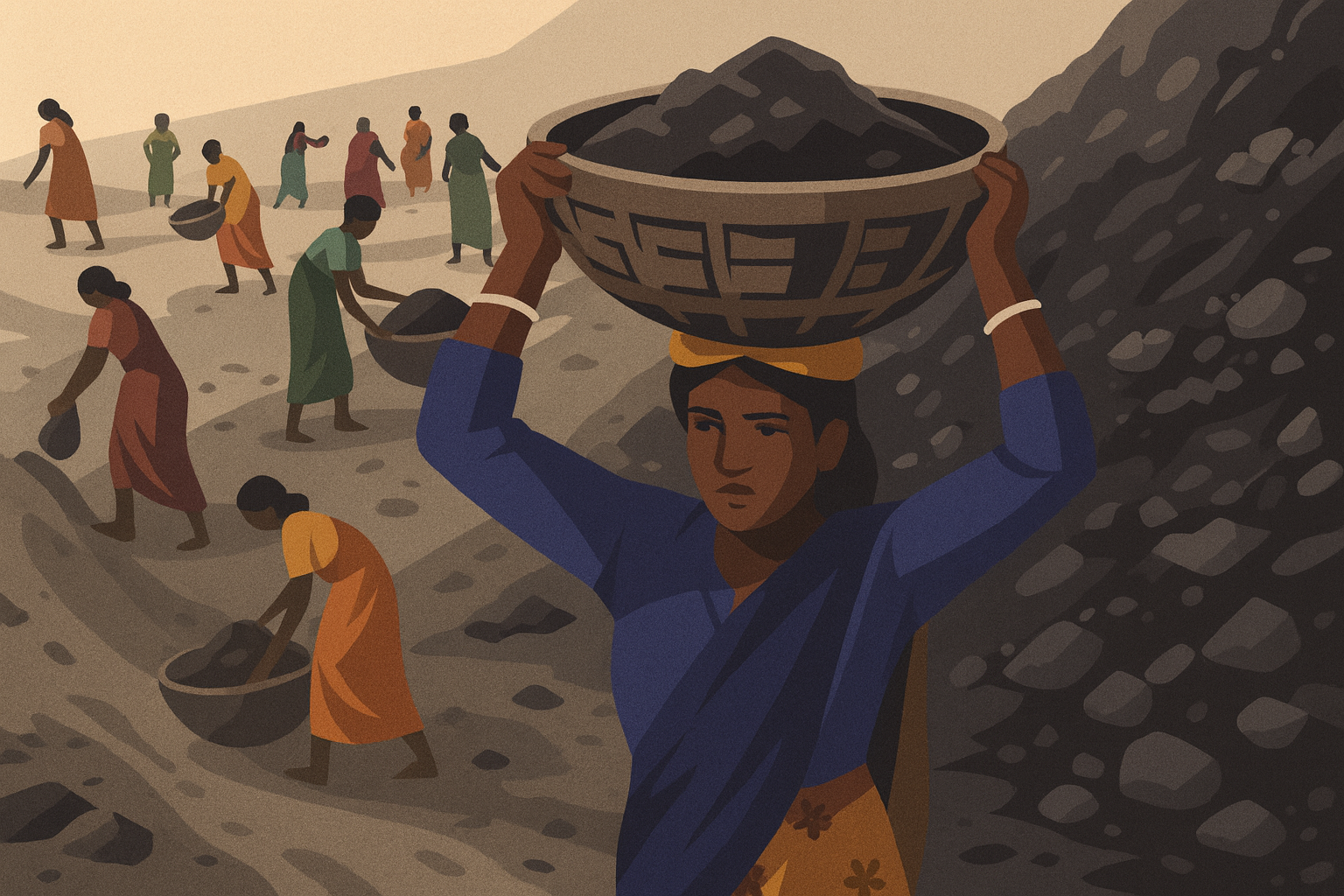
I. AUTHOR’S CENTRAL ARGUMENT
The article reports a proposed overhaul of India’s flagship rural employment scheme, involving renaming MNREGA, increasing guaranteed employment from 100 to 125 days, and revising wage levels. While presented as a reformative step to strengthen rural livelihoods, the piece underscores that the scheme continues to face structural issues—delayed payments, inadequate wage rates, fund constraints, and Centre–state friction, particularly highlighted by the West Bengal case.
The core argument implicit in the article is that policy announcements around MNREGA risk being undermined by implementation failures and political contestation, raising questions about the depth and sincerity of reform.
II. KEY ARGUMENTS PRESENTED
- Proposal to Increase Guaranteed Employment
– Employment guarantee proposed to rise from 100 to 125 days per rural household.
– Aimed at addressing rising rural distress, underemployment, and inflationary pressures. - Renaming of the Scheme
– MNREGA may be rechristened as Pujya Bapu Gramin Rozgar Yojana.
– The timing and symbolism of renaming are politically significant. - Revision of Wage Rates
– Proposal to revise wages to ₹240 per day, though still below statutory minimum wages in many states.
– Activists argue this institutionalises wage discrimination. - Persistent Payment Delays
– Large pending wage dues and delayed payments remain unresolved.
– The Centre attributes delays to procedural and compliance issues. - Centre–State Tensions
– West Bengal’s funding freeze since March 2022 illustrates politicisation of welfare delivery.
– States accuse the Centre of withholding funds for political reasons. - Structural Importance of MNREGA
– The scheme remains the world’s largest legal employment guarantee.
– It functions as a critical safety net during economic slowdowns and agrarian stress. - Administrative and Technological Changes
– Mandatory Aadhaar-based payment systems aim to reduce leakages but have excluded vulnerable workers.
III. AUTHOR’S STANCE AND POSSIBLE BIASES
- Cautiously Critical, Not Celebratory
– The article does not uncritically endorse the reforms and foregrounds implementation gaps. - Implicit Skepticism Toward Symbolic Politics
– Renaming is presented as politically loaded rather than administratively necessary. - Pro-Worker Sensitivity
– Greater emphasis on wage adequacy, payment delays, and worker rights. - Limited Fiscal Perspective
– The article does not deeply examine the Centre’s fiscal constraints or administrative burden. - State-Centric Framing
– West Bengal’s case is highlighted, which may skew perception of nationwide implementation.
IV. PROS OF THE ARTICLE (Strengths)
1. Highlights Ground-Level Implementation Issues
– Brings attention to delayed wages and funding bottlenecks.
2. Contextualises MNREGA’s Continued Relevance
– Reinforces the scheme’s importance amid rural distress and economic uncertainty.
3. Connects Policy Change to Federal Politics
– Shows how welfare delivery intersects with Centre–state relations.
4. Raises Wage Justice Concerns
– Flags the mismatch between MNREGA wages and statutory minimum wages.
5. UPSC-Relevant Framing
– Touches governance, welfare delivery, labour rights, and federalism.
V. CONS OF THE ARTICLE (Critical Gaps & Limitations)
1. Limited Analysis of Fiscal Sustainability
– Increasing workdays without assured funding may worsen delays.
2. Renaming Debate Overshadows Structural Reform
– Focus on nomenclature diverts attention from deeper governance reforms.
3. Underexplores Asset Creation Quality
– MNREGA’s role in durable asset creation and rural productivity is not discussed.
4. Technology Trade-offs Insufficiently Analysed
– Aadhaar-based systems reduce leakages but increase exclusion risks.
5. No Comparative Evaluation
– Past expansions (e.g., during COVID-19) and their outcomes are not examined.
VI. POLICY IMPLICATIONS (UPSC GS-II & GS-III RELEVANCE)
- Social Justice and Welfare (GS-II)
– Employment guarantee remains central to inclusive growth and dignity of labour. - Federalism and Cooperative Governance (GS-II)
– Funding freezes undermine trust between Centre and states. - Labour and Wage Policy (GS-III)
– MNREGA wages below minimum wages raise constitutional and ethical concerns. - Public Finance (GS-III)
– Expanding entitlements require predictable budgetary support. - Digital Governance
– Need to balance transparency with inclusion in welfare delivery systems.
VII. REAL-WORLD IMPACT ASSESSMENT
- Short-Term Rural Income Support
– Increased workdays can cushion households against inflation and joblessness. - Risk of Implementation Fatigue
– Without adequate funds, delays may worsen, eroding trust. - Political Polarisation of Welfare
– Renaming and fund disputes risk turning MNREGA into a partisan tool. - Exclusion Errors Persist
– Aadhaar-linked payments may marginalise elderly, migrant, and digitally excluded workers. - Labour Market Signal
– MNREGA continues to act as a wage floor influencing rural labour markets.
VIII. BALANCED CONCLUSION
The proposed renaming and expansion of MNREGA signal political intent to reinforce a flagship welfare programme. Increasing guaranteed employment days is potentially meaningful in an era of rural distress and volatile labour markets.
However, symbolic rebranding cannot substitute for systemic reform. Persistent issues—delayed payments, inadequate wages, Centre–state friction, and exclusionary digital processes—continue to weaken the scheme’s credibility. Without assured financing, timely payments, and respect for federal cooperation, the expansion risks remaining more rhetorical than real.
IX. FUTURE PERSPECTIVES (UPSC MAINS-READY INSIGHTS)
- Ensure MNREGA wages are indexed to minimum wages and inflation.
- Guarantee time-bound fund release to states.
- Strengthen grievance redress and social audits.
- Balance Aadhaar-based transparency with offline alternatives.
- Focus on quality asset creation linked to rural productivity.
- Depoliticise welfare delivery to preserve scheme credibility.
- Integrate MNREGA with climate-resilient rural infrastructure.
MNREGA’s true strength lies not in its name or announcements, but in consistent implementation, wage justice, and cooperative governance—the real tests of India’s commitment to inclusive development.
