

NITI Aayog launches DPI@2047 roadmap to advance inclusive growth
The Statesman
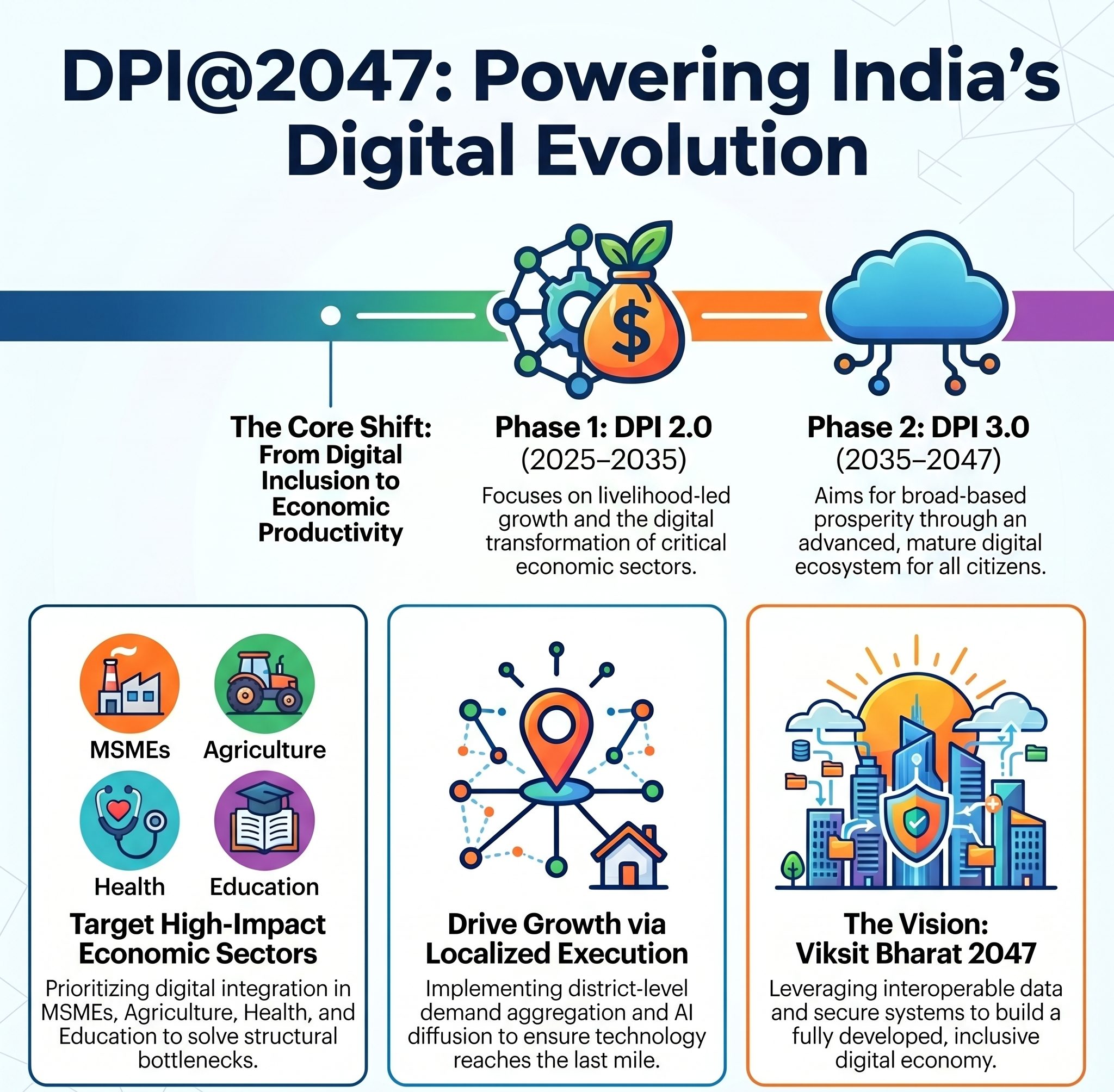
1. Core Theme
The article discusses the launch of DPI@2047 roadmap by NITI Aayog, aimed at:
- Leveraging Digital Public Infrastructure (DPI)
- Driving inclusive, productivity-led growth
- Transitioning India towards Viksit Bharat 2047
2. Key Arguments
(1) DPI as a Growth Engine
- DPI (e.g., Aadhaar, UPI, DigiLocker):
- Already transformed:
- identity
- payments
- service delivery
- Next phase:
- Expand DPI beyond welfare into:
- livelihoods
- markets
- productivity
(2) Two-Phase Roadmap
- DPI 2.0 (2025–2035):
- Livelihood-led growth
- Sectoral transformation
- DPI 3.0 (2035–2047):
- Broad-based prosperity
- Advanced digital ecosystem
(3) Sectoral Transformation Focus
- Target sectors:
- MSMEs
- Agriculture
- Health
- Education
- Objective:
- Address structural bottlenecks
(4) Key Enablers Identified
- Digital transactions
- Data sharing and interoperability
- Decentralised energy systems
- Credit access
(5) Execution Imperatives
Four core strategies:
- District-level demand aggregation
- Scaling technology adoption
- Promoting entrepreneurship
- Leveraging AI and data
(6) Shift from Inclusion to Productivity
- Earlier phase:
- Financial inclusion
- New phase:
- Productivity enhancement
- Income generation
(7) Role of Data and AI
- Open digital ecosystems:
- Enable innovation
- AI diffusion:
- Across citizens and enterprises
(8) Localisation of Implementation
- Focus on:
- district-level adoption
- contextual solutions
(9) Interoperability and Trust
- Emphasis on:
- secure data flows
- trust-based systems
(10) Long-Term Vision
- DPI as foundation for:
- Viksit Bharat 2047
- Inclusive digital economy
3. Author’s Stance
- Strongly pro-DPI and pro-digital governance
- Highlights:
- transformative potential of technology
- Tone:
- optimistic and policy-supportive
4. Biases in the Article
(1) Techno-Optimism Bias
- Assumes:
- technology will solve structural issues
- Underplays:
- digital divide
- implementation challenges
(2) Government-Centric Bias
- Focus on:
- policy initiatives
- Limited critique of:
- past DPI limitations
(3) Limited Social Perspective
- Less emphasis on:
- exclusion risks
- data privacy concerns
5. Pros and Cons
Pros
Forward-looking vision
- Aligns with long-term development goals
Integrated approach
- Links technology with growth
Sectoral focus
- Targets key economic areas
Cons
Implementation challenges
- Capacity constraints at local levels
Digital divide risks
- Unequal access
Data governance concerns
- Privacy, security
6. Policy Implications
(1) Digital Governance Expansion
- DPI becomes central to:
- policy delivery
(2) Institutional Strengthening
- Need for:
- local administrative capacity
(3) Data Protection Framework
- Strong legal safeguards required
(4) Skill Development
- Digital literacy and workforce training
(5) Inclusive Infrastructure
- Ensure:
- last-mile connectivity
7. Real-World Impact
Short-Term
- Expansion of digital services
- Improved efficiency
Medium-Term
- Productivity gains in:
- MSMEs
- agriculture
Long-Term
- Digital economy transformation
- Inclusive growth
8. UPSC GS Linkages
GS Paper II
- Governance
- E-governance
- Role of NITI Aayog
GS Paper III
- Digital economy
- Technology and growth
Essay Topics
- “Technology as a driver of inclusive growth”
- “Digital India and future development”
9. Critical Insight
The roadmap marks a transition from “access-based digital inclusion” to “productivity-driven digital transformation,” signalling a deeper integration of technology into economic structures.
10. Balanced Conclusion
The article effectively highlights:
- Potential of DPI in driving growth
- Strategic long-term vision
However:
- Success depends on:
- bridging digital divides
- ensuring data security
- strengthening institutional capacity
11. Way Forward
- Focus on:
- inclusive digital access
- Strengthen:
- governance frameworks
- Promote:
- public-private partnerships
Final Editorial Takeaway
DPI@2047 represents a bold vision to make digital infrastructure the backbone of India’s growth, but its success will depend on translating technological capability into equitable, secure, and widely accessible economic opportunities.
