

Nitrate contamination found ingroundwater of 26 states , UTs

Nitrate contamination found ingroundwater of 26 states , UTs
Context:
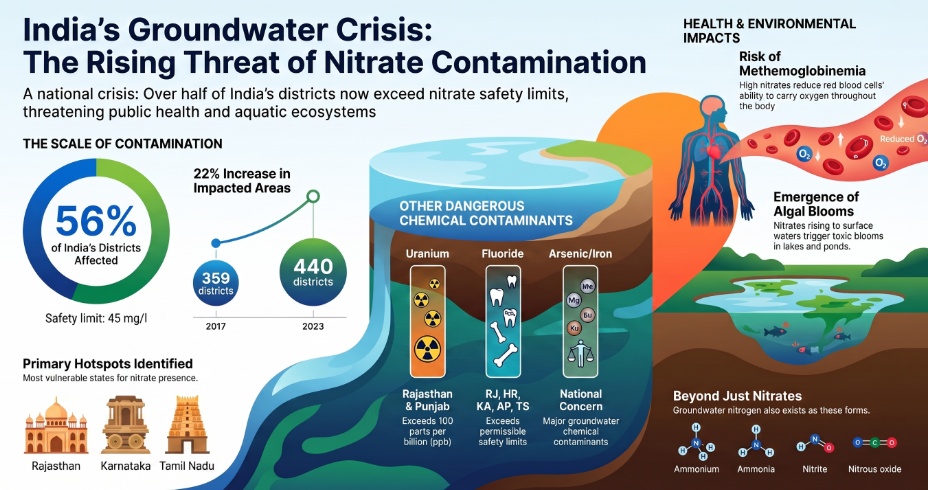
According to the Central Ground Water Board (CGWB) Annual Ground Water Quality Report 2025, approximately 20.71% of groundwater samples analyzed across 26 states and Union Territories showed nitrate concentrations above the permissible limit.
Current Status of Contamination
The government informed Parliament in August 2026 that nitrate pollution is no longer localized but has become a widespread national issue.
- Geographic Spread: Parts of 502 districts are now affected.
- Worst Affected States:
- Uttar Pradesh leads with 48 affected districts.
- Madhya Pradesh (44 districts), Tamil Nadu (38), and Maharashtra and Telangana (33 each) follow.
- Permissible Limit: The standard limit set by the Bureau of Indian Standards (BIS: 10500) is 45 mg/l. Any concentration above this is considered hazardous for drinking.
Major Causes of Nitrate Leaching
Unlike arsenic or fluoride, which are often geogenic (natural), nitrate contamination is primarily anthropogenic (human-caused):
- Excessive Fertiliser Use: The imbalanced application of synthetic nitrogenous fertilisers (Urea) is the biggest culprit. Excess nitrogen that crops don't absorb leaches into the shallow aquifers during rainfall or irrigation.
- Improper Waste Disposal: Seepage from septic tanks, soak pits, and open defecation in rural areas contributes significantly to nitrate loads.
- Livestock Waste: Large-scale dairy farming without proper manure management leads to nitrogen runoff into nearby water bodies and groundwater.
Health and Environmental Impacts
The rise in nitrate levels poses severe risks, particularly to vulnerable populations:
- Blue Baby Syndrome (Methemoglobinemia): In infants, nitrates interfere with the blood’s ability to carry oxygen, leading to a bluish skin tint and potentially fatal respiratory distress.
- Long-term Risks: Chronic ingestion is linked to colorectal cancer, thyroid disease, and neural tube defects in newborns.
- Eutrophication: When nitrate-rich groundwater reaches surface bodies (lakes/ponds), it causes algal blooms, depleting oxygen and killing aquatic life.

Government Initiatives
The Ministry of Jal Shakti and the Ministry of Chemicals and Fertilisers are implementing several measures:
- Jal Jeevan Mission (JJM): Prioritizes habitations affected by chemical contaminants; 10% weightage in fund allocation is given to such areas to provide safe piped water from alternative sources.
- Sustainable Farming: Promotion of Nano Urea, organic farming (Paramparagat Krishi Vikas Yojana), and balanced nutrient application (Soil Health Cards) to reduce leaching.
- Remedial Monitoring: The National Green Tribunal (NGT) has directed the government to complete a 'Baseline Water Quality Assessment Report' by September 2026 to track rising trends.

