

No major Indian city achieved safe air quality levels in a decade, shows study
Business Standard
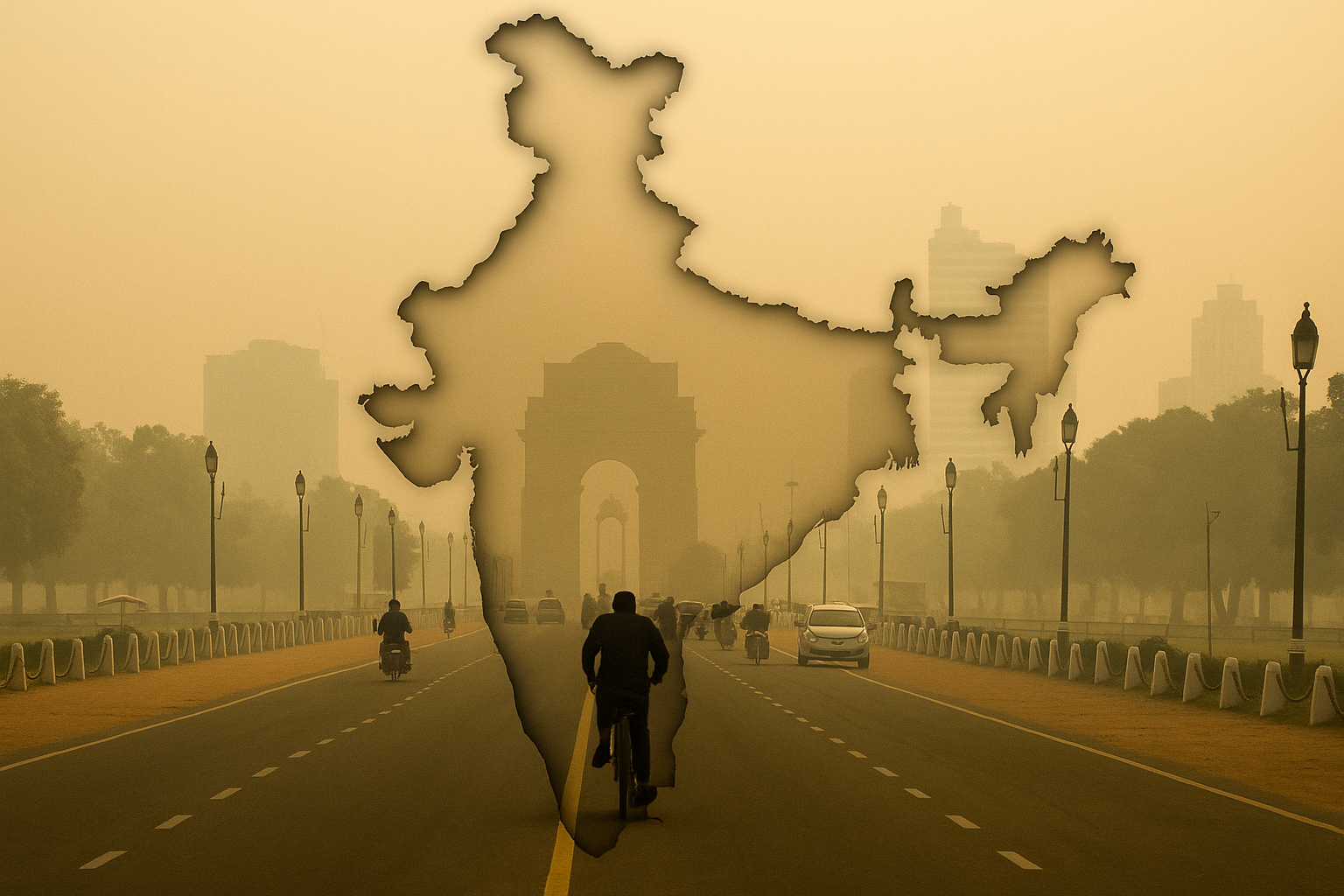
Key Arguments Presented
A. Air Pollution Trends Are Persistently Severe
- Over ten years, not a single metro city reached the AQI category of “Good” (<50).
- Delhi’s AQI has frequently crossed 300–400 (severe range).
- North Indian cities suffer acutely during winter due to:
- Temperature inversion,
- Low wind speeds,
- Stubble burning.
B. Meteorology Plays a Major Role
- Western disturbances caused heavy rains in parts of India, temporarily improving AQI.
- Lack of rain and long dry spells worsen pollutant accumulation.
C. Structural Drivers of Declining Air Quality
- Urbanisation, population growth, vehicular surge, industrial emissions, and construction dust.
- Weak enforcement of pollution norms.
- Ineffective waste and biomass burning management.
D. Seasonal Patterns Reinforce Pollution Cycles
- Winter sees sharp spikes.
- October–November crop residue fires worsen Indo-Gangetic plains.
- Festive season fireworks add short-term but significant pollutant loads.
3. Author's Stance
The tone is alarmist but data-driven.
The author emphasises:
- Failure of policy interventions,
- Scientific evidence showing persistent deterioration,
- The need for structural, technological, and governance reforms.
There is no explicit policy recommendation, but the criticism of current approaches is clear.
4. Biases Present
- Urban-centric bias: Focuses only on metropolitan cities, leaving rural or tier-2 pollution trends unexamined.
- Meteorology given heavy weight, which may underplay political-administrative failures.
- Limited coverage of successful interventions (e.g., cleaner fuels, BS-VI norms, EV push).
However, the article is mostly objective, supported by numerical evidence.
5. Pros and Cons of the Study Findings
Pros
- Strong empirical basis using decade-long AQI data.
- Clear evidence of failure to achieve safe air.
- Highlights multi-causal nature—meteorological, structural, behavioural.
- Raises urgency for long-term solutions beyond ad-hoc measures.
Cons
- Focus on cities only—rural exposure is unrepresented.
- AQI alone is not a complete health risk indicator—PM2.5 trends could be mentioned.
- Lack of analysis on socio-economic burden (health costs, productivity losses).
- Does not assess government actions comprehensively.
6. Policy Implications (UPSC GS Paper Mapping)
GS Paper 3: Environment
- Air Pollution and health effects.
- Urban environmental governance.
- Climate-meteorology interactions.
- Need for multi-sectoral pollution control strategy.
GS Paper 2: Governance
- Failure of regulation and enforcement.
- Centre-state coordination problems (e.g., stubble management).
- Public accountability and citizen participation.
GS Paper 1: Urbanisation
- Rapid urban expansion leading to stressed infrastructure.
- Migration and population pressure on cities.
GS Paper 3: Economy
- Pollution reduces productivity and increases healthcare costs.
- Impact on tourism, investment climate.
7. Real-World Impact
Public Health
- Increased respiratory diseases, asthma, cardiovascular deaths.
- Children and elderly most affected.
Economic Costs
- Lost productivity due to poor health.
- Higher health expenditure and insurance burdens.
- Pollution-linked slowdown in tourism and outdoor sectors.
Environmental Sustainability
- Urban heat island intensification.
- Ecological degradation (soil, water contamination).
- Impediment to India’s climate commitments.
Governance Challenges
- Fragmented institutional responsibility.
- Weak enforcement of air quality norms.
- Short-term seasonal measures overshadow long-term reforms.
8. Balanced Summary
The study presents a stark reality: no major Indian city reached safe air quality even once in ten years, revealing the severity and systemic nature of India’s pollution crisis.
Despite technological upgrades, policy initiatives, and seasonal improvements, structural factors—urban expansion, vehicular dependence, industrial pollution, construction, waste burning, and stubble management—continue to overshadow gains.
The findings underscore the need for coordinated, long-term, multi-sectoral interventions, not just winter-time reactive measures. Without robust policy enforcement, behavioural change, scientific planning, and investment in urban governance, safe air will remain elusive.
9. Future Perspective / Way Forward
- Strengthen Clean Air Action Plans (NCAP) with enforceable targets.
- Regional coordination among states on stubble burning.
- Massive scaling of EVs and public transport.
- Real-time dust control and construction monitoring.
- Industrial emission upgradation through cleaner technology.
- Urban green buffers and afforestation in hotspots.
- Strict waste burning enforcement.
- Citizen participation models for monitoring and awareness.
A combination of scientific, administrative, and behavioural strategies is essential to reverse the decade-long deterioration.
